What genetics tell us about the evolution of wolves to dogs

wolves

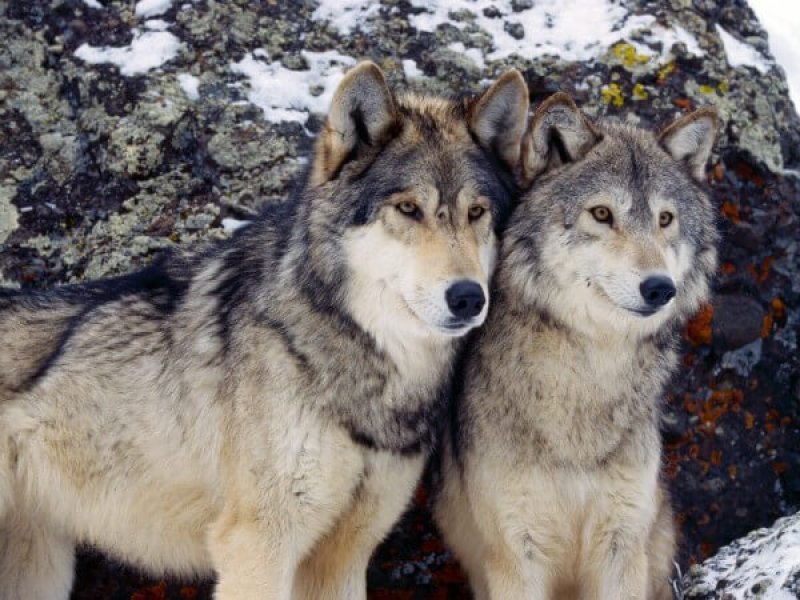
Who’s a good dog? The very first dogs, apparently, as a new genetic study reveals the sequence of events, begun thousands of years ago, that morphed wild wolves into (eventually) couchwarmers and ball catchers.

So far we know that Eurasian gray wolves were domesticated into dogs more than 10,000 years ago, and possibly as early as 40,000 years ago. But the big questions — how, why and exactly where — remain open to debate. A leading theory about how this happened is that wolves were selected for specific behavioral traits which, over time, led to changes in physical traits as well. And new research out today [June 27] appears to both confirm that hypothesis and explain why.

Dogs, [like] most other domesticated animals, exhibit a suite of traits — both physical and behavioral — generally called domestication syndrome…In the past few years, geneticists and evolutionary biologists have focused on neural crest cells (NCCs) as the catalysts for domestication syndrome.

The range of activities that NCCs do is enormous: the adrenal and pituitary systems, which are involved in aggression, fear and other behaviors, are derived from NCCs, but these cells are also involved in regulating physical traits such as pigmentation of skin and hair.

[Some] believe wolves self-domesticated by following the humans in search of edible scraps. Truth be told, we’ll probably never know how wolves became the first dogs.

Read full, original post: The First Dog: Genes Reveal Behavior Came First

{{ reviewsTotal }}{{ options.labels.singularReviewCountLabel }}
{{ reviewsTotal }}{{ options.labels.pluralReviewCountLabel }}
{{ options.labels.newReviewButton }}
{{ userData.canReview.message }}

Related Articles

Infographic: Global regulatory and health research agencies on whether glyphosate causes cancer

Infographic: Global regulatory and health research agencies on whether glyphosate causes cancer

Does glyphosate—the world's most heavily-used herbicide—pose serious harm to humans? Is it carcinogenic? Those issues are of both legal and ...

Most Popular

Screen Shot at AM
Facts & Fallacies Podcast: Right-wing politics bad for your health? Separating speculation from science
ChatGPT-Image-Jun-13-2026-11_51_39-AM
Viewpoint: COVID lab leak? Misguided backers of the lab leak theory refuse to give up
ChatGPT Image Jun 3, 2026, 03_54_37 PM
Viewpoint: “Turn on, tune in, drop out”—Kennedy embraces the Timothy Leary psychedelic revolution
drug look like ozempic
Six key health insights from taking weight-loss drugs
ChatGPT-Image-Jun-11-2026-01_15_03-PM
Selective Pressure, Selective Silence
Screenshot-2026-06-14-at-9.14.26-AM
‘Humanitarian catastrophe’: Trump’s USAID shutdown could help drive nearly 23 million deaths — including 5.4 million children — by 2030, Lancet study warns
ChatGPT Image Jun 3, 2026, 03_14_43 PM
Viewpoint: How Earthjustice became the poster child for the abuse of special interest activist funding
ChatGPT-Image-Jun-14-2026-09_41_44-AM-2
Viewpoint—‘The gleeful efficiency of an arsonist’: Administration’s health and science research cuts are ‘sabotaging’ America’s future
ChatGPT-Image-Mar-10-2026-01_39_01-PM
Viewpoint—“Miracle molecule” debunked: Why acemannan supplements don’t work
Screenshot-2026-06-14-at-9.53.54-AM
Is the World Cup a perfect storm for the spread of infectious diseases?
ChatGPT Image Jun 12, 2026, 02_32_14 PM
‘Have you asked your doctor?’: AMA launches campaign to counter health misinformation
Screenshot-2026-06-05-at-2.12.30-PM
Some plants can poison you. So how did humans figure out what is safe to eat?
glp menu logo outlined

Get news on human & agricultural genetics and biotechnology delivered to your inbox.