Will we soon be able to regenerate limbs?

maxresdefault
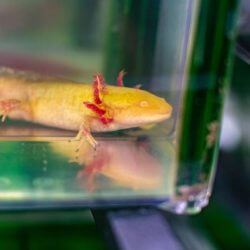
[Axolotl] salamanders stand out as the only vertebrates that can replace complex body parts that are lost at any age, which is why researchers seeking answers about regeneration have so often turned to them.

…

[However,] the axolotl’s enormous and repetitive genome stubbornly resisted sequencing. Then a European research team overcame the hurdles and finally published a full genetic sequence for the laboratory axolotl.

…

[T]he availability of the full axolotl genome sequence puts researchers in a much better position to answer major questions about how regeneration works in the animals. For example, does an axolotl regrow its limbs using unique genes? Or does it use genes that other animals (including humans) share, but does it control them differently? Those answers are still to come.

…

If regeneration is an ancient trait, mammals like humans could have some of the tools still kicking around in their genetic drawers. It may be that other healing processes we’ve evolved, such as scarring, get in the way and block regeneration from happening.

…

Based on her research, [Jessica] Whited thinks humans have more regenerative tools than we get credit for. If we could create the right environment in our bodies, we might be able to harness those tools. Someday, maybe, we could regrow limbs.

Read full, original post: Salamander’s Genome Guards Secrets of Limb Regrowth

Related Articles

Infographic: Global regulatory and health research agencies on whether glyphosate causes cancer

Infographic: Global regulatory and health research agencies on whether glyphosate causes cancer

Does glyphosate—the world's most heavily-used herbicide—pose serious harm to humans? Is it carcinogenic? Those issues are of both legal and ...

Most Popular

Nurturing Care Beneath the Crunchy Moms Logo
Crunchy Moms disinformation flood: Zuckerberg's Facebook has opened floodgates on measles and vaccines
Screenshot-2026-11-19-at-7.54.57-PM
European General Court sides with scientists, dismisses activist claims that glyphosate is toxically dangerous
Screenshot-2026-11-16-at-2.37.32-PM
30 years of GMO farming: Is the boom in glyphosate and glufosinate use harming the environment? Data show they’re the most sustainable choice
Stormlit Portrait Over Golden Mountains
Searching for life where no one thought to look: A renowned astrophysicist’s seemingly quixotic quest to explore Venus’s clouds
gut health
Health vs. hype on gut health: We are flooded by misinformation
Soybean Harvest in Cupped Hands
30 years of GMO farming: Defying cynics, we’ve had larger harvests, lower costs, and $385 billion in added global farmer income
Screenshot-2026-11-19-at-7.23.23-PM
Viewpoint: After a yearlong hiatus, the U.S. Preventive Services Task Force is back in business—gutted by RFK Jr. and promoting junk science
Screenshot-2026-11-18-at-2.44.24-PM
Why should thousands of Americans die every year waiting for a kidney transplant? There’s an easy fix to this morbid reality
ChatGPT-Image-Mar-10-2026-01_39_01-PM
Viewpoint—“Miracle molecule” debunked: Why acemannan supplements don’t work
Screenshot-2026-11-17-at-12.18.09-PM
Challenging glyphosate fear-mongering: Statewide Nebraska study finds no link between weedkiller use and non-Hodgkin lymphoma
glp menu logo outlined

Get news on human & agricultural genetics and biotechnology delivered to your inbox.