As ‘Dicamba drift’ crop damage declines, will EPA re-approve controversial herbicide?

Screen Shot at AM
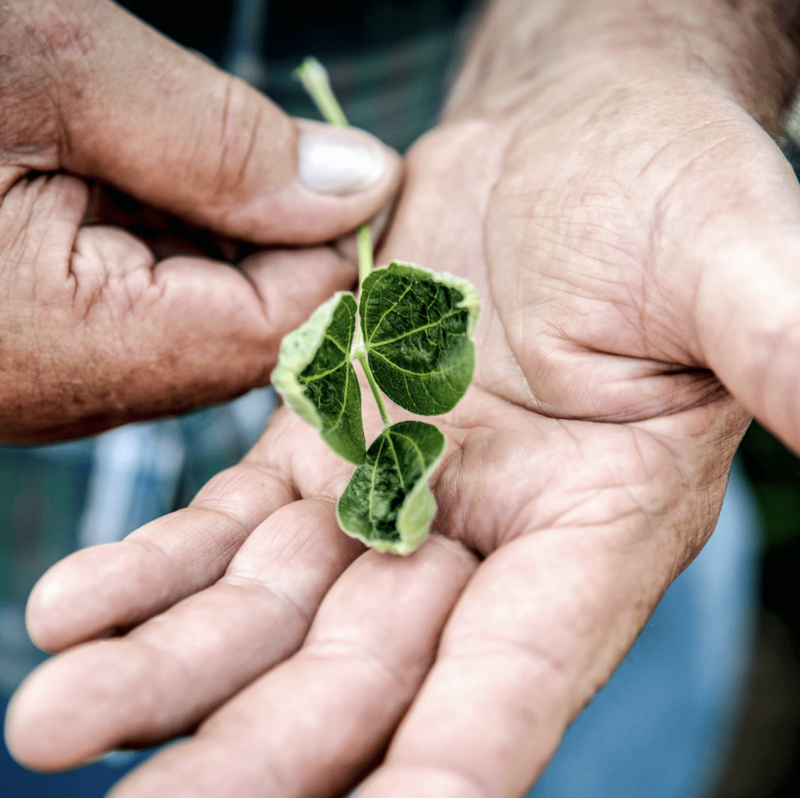
A farmer displays a soybean plant that shows signs of being affected by dicamba.

The world’s largest agribusiness expects the United States Environmental Protection Agency (EPA) to announce a renewal and an updated label for the herbicide dicamba in the coming weeks.

Following high drift and volatility complains in 2017, Bayer claims those numbers are lower this season thanks to mandatory training and spraying restrictions.

“We knew that training was key,” says Bob Reiter, new head of Research and Development for the Crop Science division of Bayer. “Helping growers to use the product in the right way makes all the difference in the world.”

According to  Bayer, by August this season there were 13 complaints per million acres of seed. That compares to 99 per million acres last year.

According to Dr. Kevin Bradley, professor of plant sciences at the University of Missouri, state departments of agriculture were investigating 605 reports of dicamba-related injury as of mid-July. That compares to 1,411 complaints at the same time last year. University researchers estimate the 2018 complaints involve 1.1 million acres.

Not all of agriculture is rallying behind the technology. Beck’s Hybrids has recently taken the position that dicamba should only be allowed as a pre-plant application. It says the controversy has the potential to do more harm than good.

While Bayer executives say 2018 should speak for itself in terms results, ultimately the decision will be made [by the EPA] in Washington.

Read full, original article: Bayer Anticipates Dicamba Label Decision Soon

{{ reviewsTotal }}{{ options.labels.singularReviewCountLabel }}
{{ reviewsTotal }}{{ options.labels.pluralReviewCountLabel }}
{{ options.labels.newReviewButton }}

{{ userData.canReview.message }}

Related Articles

Infographic: Global regulatory and health research agencies on whether glyphosate causes cancer

Infographic: Global regulatory and health research agencies on whether glyphosate causes cancer

Does glyphosate—the world's most heavily-used herbicide—pose serious harm to humans? Is it carcinogenic? Those issues are of both legal and ...

Most Popular

Screenshot 2025-08-25 203032
Mazzenga’s 20-year old muscles: How a still-going-strong 92-year old sprinter wins every race she enters
Screenshot-2026-06-08-at-10.19.30-AM
‘Natural’ wellness supplements linked to liver injury
Credit: ACSH
Viewpoint: Who and what’s to blame for the surge in vaccine-preventable diseases?
ChatGPT-Image-May-28-2026-12_56_54-PM
Viewpoint: Vaccines' non-specific effects? The ‘shoddy’ Danish couple whose 'research’ inspires RFK, Jr.’s health delusion
Screenshot-2026-06-05-at-2.12.30-PM
Some plants can poison you. So how did humans figure out what is safe to eat?
Screen Shot at AM
Facts & Fallacies Podcast: Right-wing politics bad for your health? Separating speculation from science
ChatGPT-Image-Jun-9-2026-03_24_05-PM
Misinformed parents overdosing children with Vitamin A to fight measles
Screenshot 2025-07-30 at 10.48
Can gene editing eliminate Down syndrome? Scientists have done it in lab-grown cells
ChatGPT Image Jun 3, 2026, 03_14_43 PM
Viewpoint: How Earthjustice became the poster child for the abuse of special interest activist funding
ChatGPT-Image-Jun-9-2026-11_54_59-AM
Why weight-loss drugs might be reducing cancer rates and making treatment more effective
ChatGPT-Image-Mar-10-2026-01_39_01-PM
Viewpoint—“Miracle molecule” debunked: Why acemannan supplements don’t work
Screenshot-2026-06-08-at-11.05.51-AM
Can vaping lead to cancer? New ‘association study’ raises questions of “links"
Screenshot-2026-06-05-at-1.44.09-PM
Viewpoint: Scientists have scrapped the worst-case climate scenario. Is that proof that climate change is a hoax, as Trump claims?
glp menu logo outlined

Get news on human & agricultural genetics and biotechnology delivered to your inbox.