Viewpoint: To support farmers, India should promote consumer acceptance of GMO crops

plnting seeds
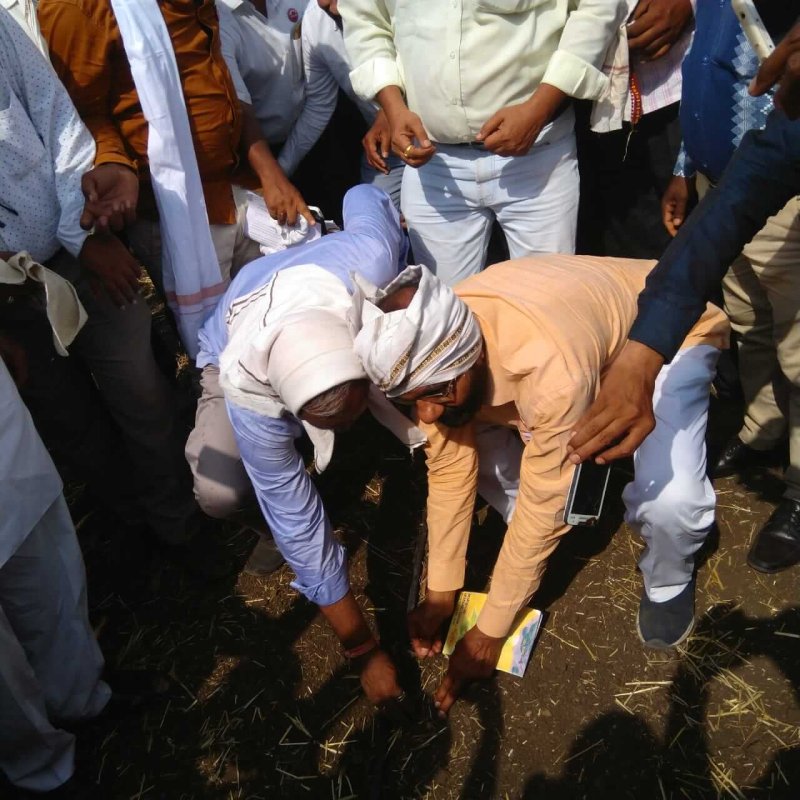
Farmers plant illegal GMO seeds in protest of India's regulations in the summer of 2019. Image: Cornell Alliance for Science

With Prakash Javadekar taking charge of the environment ministry from the inert Harsh Vardhan, and hopes kindling of genetically-engineered brinjal and mustard being approved for cultivation, one wishes the government had a specialized communication agency for advocacy and outreach to create public opinion favorable for agri-biotechnology.

Although India approved Bt cotton, genetically-engineered to be toxic to the American bollworm, in 2002, and permitted another variant in 2006 (both of which farmers have embraced enthusiastically), those opposing these have been so successful in demonizing the technology that no other crop—Bt brinjal, herbicide-tolerant (HT) cotton, or GM mustard—have got the nod for cultivation.

In May, a farmer in Haryana was forced to destroy his illegal Bt brinjal crop, which he found profitable because it required very few sprays against the fruit and shoot borer. On June 10, the Shetkari Sanghatana, founded by the pro-market and pro-technology Sharad Joshi, defied the law and planted illegal HT cotton and Bt brinjal near Akola in Maharashtra, demanding time-bound approvals and certainty in access to agri-biotechnology.

The government could learn from the Philippines, which set up a Biotech Program Office in 2000 to promote the responsible use of agri-biotechnology to sustain food security ….

Read full, original article: Dispelling falsehoods about GM crops

{{ reviewsTotal }}{{ options.labels.singularReviewCountLabel }}
{{ reviewsTotal }}{{ options.labels.pluralReviewCountLabel }}
{{ options.labels.newReviewButton }}
{{ userData.canReview.message }}

Related Articles

Infographic: Global regulatory and health research agencies on whether glyphosate causes cancer

Infographic: Global regulatory and health research agencies on whether glyphosate causes cancer

Does glyphosate—the world's most heavily-used herbicide—pose serious harm to humans? Is it carcinogenic? Those issues are of both legal and ...

Most Popular

vax-misinformation-main
Facts & Fallacies Podcast: Limit free speech to blunt social media misinfo?
Picture1
The FDA couldn’t find a vaccine safety crisis, so it buried its own research
ChatGPT-Image-May-7-2026-01_23_27-PM-2
Viewpoint: Will AI democratize personalized cancer treatment or fuel medical misinformation?
ChatGPT-Image-Apr-16-2026-02_56_53-PM
Financial incentives, over diagnosis, and weak oversight: Autism claims are driving up Medicare costs
ChatGPT-Image-May-12-2026-11_27_01-AM-2
AI likely to improve health care, research shows—but not for blacks and ethnic minorities
Screenshot-2026-04-22-at-12.21.32-PM
Viewpoint: Why the retracted Monsanto glyphosate study doesn’t change the science—the world’s most popular herbicide is safe 
modi visit sikkim
Viewpoint: Indian PM wants farmers to switch to 50% organic. It would take at least 10 years, likely won’t work, and isn’t more sustainable
ChatGPT-Image-May-20-2026-04_53_21-PM-2
Viewpoint: Doctors can fight health misinformation — if hospitals let them
newborn infant baby mother
Sharp rise in number of parents refusing newborn vitamin K shots, putting babies at 81-fold higher risk of severe bleeding
Screenshot-2026-05-19-at-11.23.34-AM
West-originated vaccine disinformation sparks murders of health care workers across Africa
ChatGPT-Image-May-7-2026-12_32_36-PM
Viewpoint: The state of U.S. vaccine policy? Dismal nationally, but some states are stepping up.
Screenshot-2026-04-13-at-1.39.26-PM
Viewpoint: ‘Safer for children?’ Stonyfield yogurt under fire for deceptive organic marketing
Screenshot-2026-05-18-at-3.04.37-PM-2
Social media’s health advice red flags
glp menu logo outlined

Get news on human & agricultural genetics and biotechnology delivered to your inbox.