Plant geneticist Kevin Folta: Scientific American’s rewritten anti-GMO article a ‘lesser abomination’

gmo png
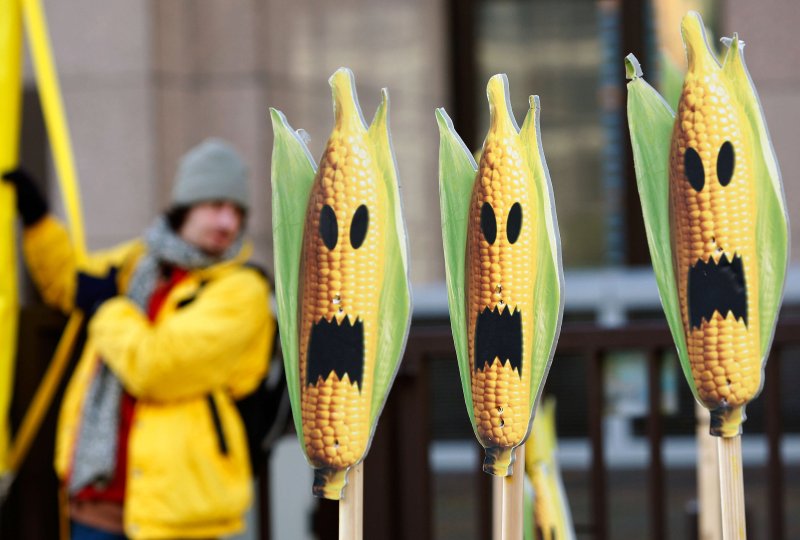
A Greenpeace activist displays signs symbolising genetically modified maize crops during a protest in front of the European Union headquarters in Brussels Image: REUTERS/Thierry Roge

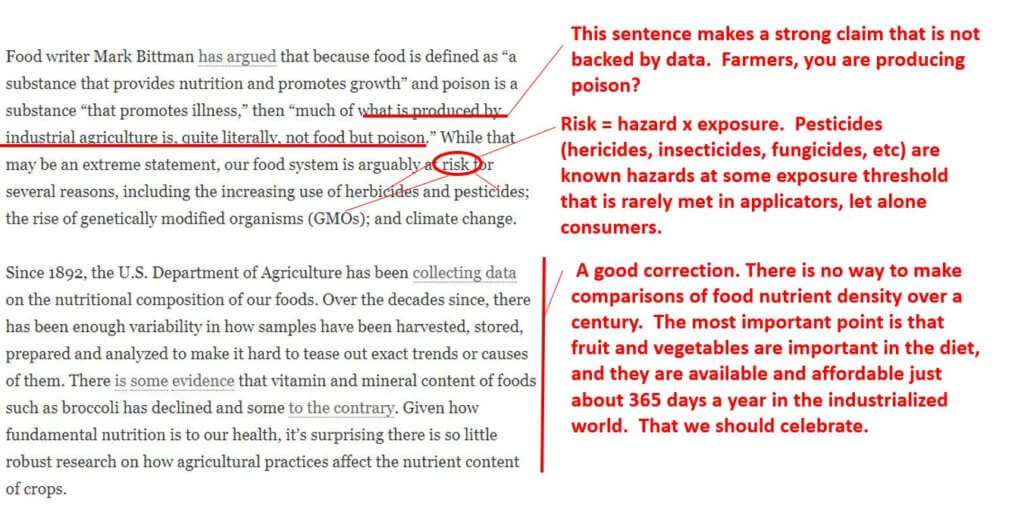
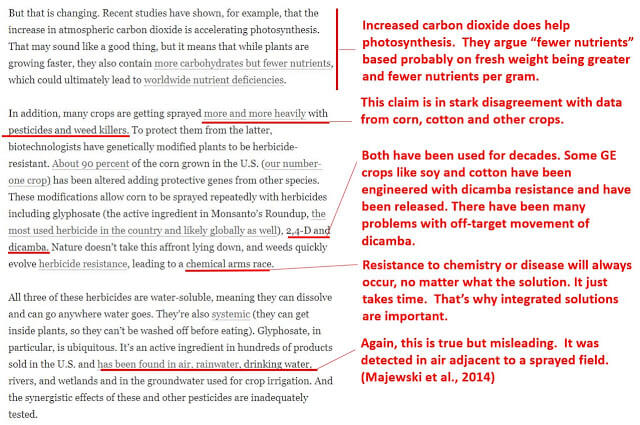
The Scientific American article about “dying broccoli” and “toxic corn” drew wide criticism for its unreferenced and outright false indictment of modern agriculture, and flimsy treatment of concepts in microbiomes.  My dissection can be seen here.

I contacted the editors, and apparently others did too. I was shocked to find out that there was no peer review or expert consultation.  The editors kindly returned a conscientious and conciliatory email that suggested they made a mistake and the authors would revise.

Personally, nothing short of a full retraction was a remedy.  That first article was absolutely horrible, D.O.A. horrible. Not only did it vilify farmers, it scared people about food, and misinformed them about basic biology, and it was done under the banner of Scientific American, a trusted popular scientific brand.

Out of the frying pan…

The editors published a “corrected” version.  I learned of the revision via Twitter from Dr. Elisabeth Bik (@microbiomdigest) someone that knows a thing or two about microbiomes.

 

biktwitt
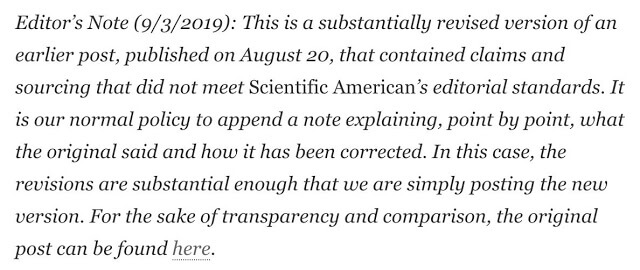
Correction issued by Scientific American after the article was published.
And into a fajita skillet.
“Substantial revision” might be a slight step forward, but still is an absolute mess.  Here again is a painstaking dissection with referenced rebuttals. The revised text was longer, referenced (but with select references that supported the authors’ assertions, ignoring all other contradictory literature) and equally fear-based and misleading.
s
s
There you have it.  The editors at Scientific American clearly don’t realize how scholarly writing should be done, even if it is in a popular science venue.  As it stands, the work uses misrepresentation and cherry picking to disparage agricultural producers, conjure fear of safe and reliable chemistries/genetics, and promote a vision of agriculture that is ultimately unsustainable without removing a lot of people from the planet.

Articles like this get a day in the sun on Twitter. Anti-ag interests will bask in its words and share in their online communities.  The real atrocity is how Scientific American destroys its own credibility, abrades trust in farming, and scares people away from fresh fruits and vegetables, the most important food on the plate for long term health.

Read original article: A Lesser Abomination

Related Articles

Infographic: Global regulatory and health research agencies on whether glyphosate causes cancer

Infographic: Global regulatory and health research agencies on whether glyphosate causes cancer

Does glyphosate—the world's most heavily-used herbicide—pose serious harm to humans? Is it carcinogenic? Those issues are of both legal and ...

Most Popular

Strawberry Clamshell with Warning Sticker
Viewpoint: Activists hype ‘dangerous level’ of pesticide residues in Driscoll berries: Separating health concerns from fear-mongering
ChatGPT-Image-Mar-10-2026-01_39_01-PM
Viewpoint—“Miracle molecule” debunked: Why acemannan supplements don’t work
Diet Soda with Measuring Tape 2
Science challenges anti-soda activists: No, sodas won’t make you fat
Author-Presenting-Good-Energy
'Disillusioned': Controversial RFK Jr. ally and MAHA leader Calley Means quits Trump advisory role
Silhouettes Beneath the Mosquito Nets
Guinea-Bissau halts widely condemned RFK Jr.-backed vaccine trial that would have withheld life-saving vaccines from thousands of newborns
Rustic Skillet of Raw Brains
‘Weird food’? Testicle- and brain-eating, supplement-gulping MAHA health food enthusiasts defend their ‘natural’ diets
Generations United for Immunization
Police raid Guinea-Bissau offices of RFK Jr.-backed vaccine researchers, seize hepatitis B doses
Screenshot 2026-10-16 at 5.38
PFAS in Agriculture: Science, Uncertainty, and Risk Communication
Prescription Capsules Scattered on Twenty-Dollar Bills
Facts & Fallacies podcast: America's health care system is broken. A doctor explains how to fix it, Part 2
png_cheese_Raw_milk
100% raw milk, 100% misguided: As MAHA-fueled demand for unpasteurized milk soars, American Academy of Pediatrics renews call for a ban on its sale and distribution
Vibrant Social Media Confetti Explosion
Health misinformation minefield: Countering online deluge by copying its style
Golden-GM-Emblem-with-EU-Stars
As Europe inches forward in its embrace of gene-edited crops, hopes abound that opposition to GMOs might fade
Magnifying Glass Highlights NIH Logo
Latest Trump administration proposal to change NIH research grant system draws scientists’ ire
Nutrition and Supplements Infinity Collage
Drugs and supplements can extend life and five other longevity myths
glp menu logo outlined

Get news on human & agricultural genetics and biotechnology delivered to your inbox.