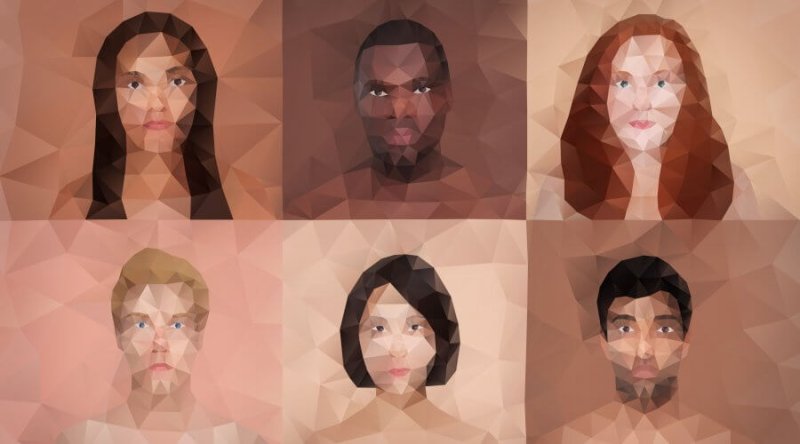

I edited this month’s Critic at Large essay, a piece from Jackson Laboratory Scientific Director Charles Lee on the need to inject large-scale genomic databases with sequences from a wider swath of humanity. Diversifying our cataloging and curation of human genome sequences, Lee argues, will help us better understand the genomic tapestry that makes up our species. For example, researchers now know that human genomes differ from one another by about 0.6 percent—as much as six times greater than [earlier] estimates.
…
So, modern genomic science is increasing our appreciation of the uniqueness of the genetic blueprints that build wonderfully individual human beings. We’re different. At the same time, cutting-edge research is reinforcing the fact that we humans share a remarkable similarity in our DNA. We’re the same.
What we do with this knowledge is extremely important. History is littered with examples of people and governments trying to tip the perceived balance between humans’ biological sameness versus differentness in their favor.



…
[P]ainting a factual picture of our genetic commonalities and differences can ultimately assist humanity in celebrating both the ties that bind us and the uniqueness that makes each of us (at least potentially) wonderful.Read full, original post: Does Our DNA Make Us All Unique or All the Same?