Seeking a better understanding of how space travel changes human heart cells

space
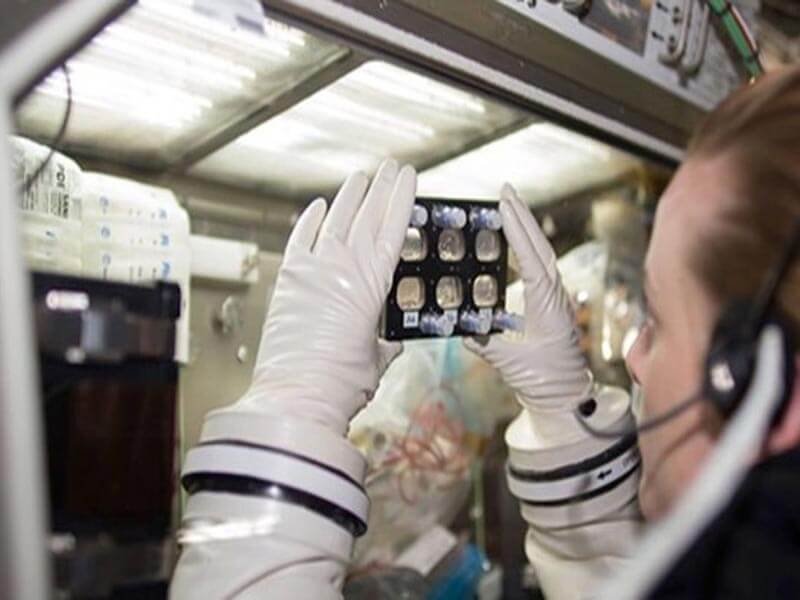
NASA astronaut Kate Rubins studied heart cells on the International Space Station. Image: NASA

A team of researchers led by Joseph Wu, the director of the Stanford Cardiovascular Institute, recently sent cardiomyocytes made from human induced pluripotent stem cells (iPSCs) up to the International Space Station with astronauts in order to study changes in the cells. Through RNA sequencing, they found that many genes in the cells were expressed differently than ones that did not go into space, including genes for mitochondria metabolism. Their results were published in Stem Cell Reports [November 7].

…

The study is a starting point for understanding the genetic basis of the heart alterations astronauts experience. “One of the biggest changes that the cardiovascular system sees in spaceflight is the redistribution of blood, because there isn’t gravity pulling blood down to your feet,” Alexa Wnorowski, a graduate student in Wu’s lab, tells The Scientist.

…
In the future, the lab plans to send 3D stem cell–derived heart tissue structures with multiple cell types into space. The study published [November 7] “is just a baby step in terms of trying to understand the biology, especially in the cardiac system, of microgravity space travel,” Wu tells The Scientist.

Read full, original post: Spaceflight Alters Genes of Human Stem Cell–Derived Heart Cells

Related Articles

Infographic: Global regulatory and health research agencies on whether glyphosate causes cancer

Infographic: Global regulatory and health research agencies on whether glyphosate causes cancer

Does glyphosate—the world's most heavily-used herbicide—pose serious harm to humans? Is it carcinogenic? Those issues are of both legal and ...

Most Popular

ChatGPT-Image-Mar-10-2026-01_39_01-PM
Viewpoint—“Miracle molecule” debunked: Why acemannan supplements don’t work
AI Doctor with a Digital Neural Head
Utah becomes first state to empower AI to bypass doctors and prescribe certain drugs
Screenshot-2026-09-22-at-12.26.15-PM
‘Forever chemical’ concerns: Separating hysteria from reasonable concern in the debate over PFAS danger
Radioactive-Americana-Collage-2
The kooky logic behind the raft of spurious cancer claims from Harvard’s T.H. Chan School of Public Health
Screenshot 2026-07-29 at 10.40
The COVID vaccine turbo cancer scare is back. Science still proves it’s wrong.
Screenshot-2026-09-28-at-11.26.17-AM
Viewpoint: Wellness movement activists reposition nicotine from a killer addictive drug into a cure-all for brain ills
AI-Force-Uniform-Insignia-Close-Up
Trump wants an AI Force like Space Force, but that could make AI’s risks harder to manage
ChatGPT-Image-Jun-25-2026-12_23_17-PM
No, Bill Gates did not secretly engineer ticks to promote veganism
generated-1790707585414
Facts & Fallacies podcast: America's health care system is broken. A doctor explains how to fix it
glp menu logo outlined

Get news on human & agricultural genetics and biotechnology delivered to your inbox.