Viewpoint: Booming stem cell market ‘conflates hype with reality’, damaging legitimate research

stem cell inline
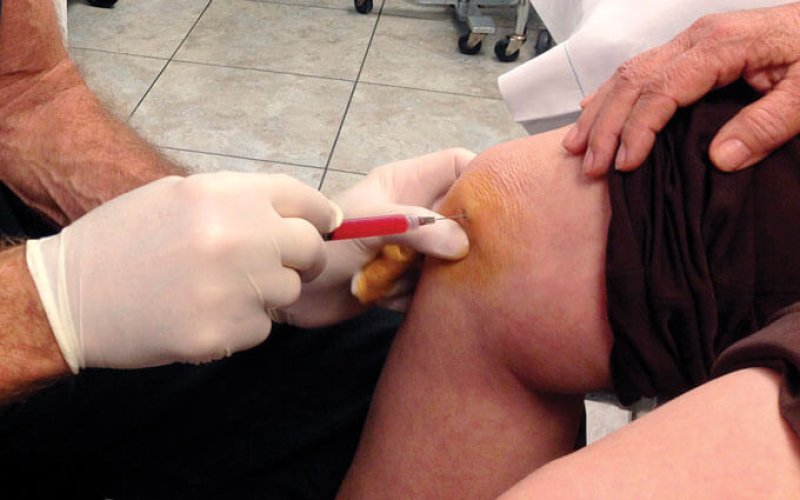
Thousands of patients are paying cash for stem cell injections into their joints to cure their arthritis. But proof of effectiveness is lacking, and there’s no evidence that the injections can regrow cartilage. Image: Raquel Maria Dillon/AP

Stem cells sold at clinics are driving what’s thought to be a $2 billion global industry. Facebook pages announce seminars. Local newspapers are wrapped in ads vowing “relief without surgery.” Stem cells are billed as treatments for everything from autism to multiple sclerosis to baldness. Most commonly, the ads focus on orthopedic issues, especially aching knees.

An important point gets left out of the cheery ads: There’s not enough science to justify using stem cells for any of the advertised conditions, including joint pain. None of the treatments advertised have been approved by the U.S. Food and Drug Administration. (The only approved stem cell treatments are for certain cancers and blood disorders.) Very few of the orthopedic studies in humans have been scientifically rigorous, and none have shown stem cells regrowing cartilage.

It’s not even clear whether treatments being touted as “stem cells” contain viable stem cells or whether the contents should be defined as stem cells at all. As the stem cell industry grows rapidly, many researchers who are studying stem cells for their potential to regenerate tissues worry that the booming marketplace, which conflates hype with reality, might ultimately damage research progress.


Read the original post

{{ reviewsTotal }}{{ options.labels.singularReviewCountLabel }}
{{ reviewsTotal }}{{ options.labels.pluralReviewCountLabel }}
{{ options.labels.newReviewButton }}
{{ userData.canReview.message }}

Related Articles

Infographic: Global regulatory and health research agencies on whether glyphosate causes cancer

Infographic: Global regulatory and health research agencies on whether glyphosate causes cancer

Does glyphosate—the world's most heavily-used herbicide—pose serious harm to humans? Is it carcinogenic? Those issues are of both legal and ...

Most Popular

Screenshot-PM-24
Viewpoint: The herbicide glyphosate isn’t perfect. Banning it would be far worse.
d-b
Blocked arteries, kidney stones, nausea, constipation, fatigue: Long list of health problems caused by too much vitamin D 
Screenshot-2026-04-27-at-12.22.38-PM
Running ‘wild’: Last year, RFK, Jr. was given a green light to ‘reform’ chemical policies. Glyphosate illustrates how Trump now has him on a tight leash, and MAHA is furious
ChatGPT-Image-Apr-22-2026-11_06_18-AM
Wellness influencer nonsense: No, nicotine does not boost cognition and productivity, but it can damage your health 
bayer-supremecourt-lt
EPA concludes glyphosate is not carcinogenic. Missouri courts say Monsanto failed to warn it might be. SCOTUS weighs in.
ChatGPT-Image-Feb-16-2026-01_57_31-PM
Viewpoint: ‘Science-as-Satan’ unites the MAHA—MAGA movements. Is a breakup in the works?
Screenshot-2026-04-27-at-1.40.55-PM
With federal funding for scientific research already reeling, Trump fires the entire apolitical National Science Board
Screenshot-2026-04-13-at-3.54.04-PM
AI disinformation stress test: Challenges and response strategies
ChatGPT-Image-Feb-16-2026-01_04_32-PM
Raw milk myth wake-up call
Screenshot-2026-04-12-135256
Bixonimania: The fake disease scam that AI swallowed whole
glp menu logo outlined

Get news on human & agricultural genetics and biotechnology delivered to your inbox.