
Podcast: Some vaccine skeptics aren’t science deniers; Animal-free ice cream; Plant burgers are ‘meat’?

tuskegee study ac a b bdec fa e
Tuskegee syphilis study. Credit: Wikimedia Commons
If you reject vaccines, you’re a science denier! Not necessarily. Some people may have legitimate reasons to be skeptical. Scientists can make ice cream without animals. How will this innovation impact the environment? Europe says plant-based burgers can be labeled “burgers,” frustrating a meat industry trying to protect its market share. Should animal products have exclusive rights to certain marketing terms?

Join geneticist Kevin Folta and GLP editor Cameron English on this episode of Science Facts and Fallacies as they break down these latest news stories:

Vaccine skeptics are typically dismissed as conspiracy theorists and science deniers. But some Americans are understandably wary, especially marginalized groups who have been “misled, mistreated and misunderstood at the hands of ‘science,'” argue Dope Labs podcast hosts Zakiya Whatley and Titilayo Shodiya. This analysis presents a difficult challenge to educators: How do they promote science-based thinking to groups of people who feel that science has left them behind?

Thanks to genetic engineering, scientists can “train” fungi to produce the whey protein from cows that gives ice cream its distinct qualities. This novel dessert could deepen the public’s trust in biotechnology, but is the nascent lab-based food industry selling its products with misleading claims about animal agriculture?

Mis- and disinformation are distorting science and public policy. Subscribe to our Daily and Weekly Digests for incisive coverage of ‘disruptive’ innovations in AI, agricultural biotechnology, food, chemicals, nuclear energy, vaccines, and other disruptive innovations.

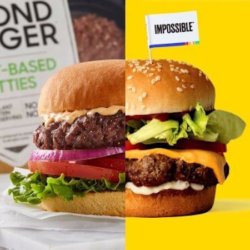
Plant-based burgers have been a global success thus far, attracting millions of consumers who have little interest in veganism or plant-based diets more generally. The meat industry has fearfully responded by lobbying governments to restrict how these beef alternatives can be marketed to the public, claiming that words like “burger” and “meat” should be reserved for products made from animals, lest the public be misled about what they’re eating.

European regulators found these arguments lacking, while simultaneously decreeing that non-dairy yogurt and cheese substitutes couldn’t be marketed as dairy alternatives.  How do we make sense of seemingly arbitrary food-labeling regulations?

[irp]

Subscribe to the Science Facts and Fallacies Podcast on iTunes and Spotify.

Kevin M. Folta is a professor in the Horticultural Sciences Department at the University of Florida. Follow Professor Folta on Twitter @kevinfolta

Cameron J. English is the GLP’s managing editor. BIO. Follow him on Twitter @camjenglish

Related Articles

Infographic: Global regulatory and health research agencies on whether glyphosate causes cancer

Infographic: Global regulatory and health research agencies on whether glyphosate causes cancer

Does glyphosate—the world's most heavily-used herbicide—pose serious harm to humans? Is it carcinogenic? Those issues are of both legal and ...

Most Popular

Screenshot-2026-10-19-at-11.09.17-AM
Vaccines, religious freedom, and protecting children’s health: New York Amish appeal to Supreme Court after $118,000 in vaccine fines for blocking shots
Screenshot 2026-10-16 at 11.17
Viewpoint: Latest attack on renewable energy and farmers, new USDA rules could put solar grants out of reach for small producers
ChatGPT-Image-Mar-10-2026-01_39_01-PM
Viewpoint—“Miracle molecule” debunked: Why acemannan supplements don’t work
png_cheese_Raw_milk
100% raw milk, 100% misguided: As MAHA-fueled demand for unpasteurized milk soars, American Academy of Pediatrics renews call for a ban on its sale and distribution
Serene Mature Woman in Abstract Waves
Testosterone’s growing appeal to women: It anecdotally mildly improves sex life, but are there any other potential benefits—or red flags?
Golden-GM-Emblem-with-EU-Stars
As Europe inches forward in its embrace of gene-edited crops, hopes abound that opposition to GMOs might fade
Mifeprex Boxes and Woman Drinking Water
RFK Jr.’s EPA capitulates to anti-abortionists, authorizes study of safe abortion pills which activists falsely claim are “poisoning” our water supply
ChatGPT-Image-May-28-2026-12_56_54-PM
Viewpoint: Vaccines' non-specific effects? The ‘shoddy’ Danish couple whose 'research’ inspires RFK, Jr.’s health delusion
Screenshot 2026-10-16 at 5.38
PFAS in Agriculture: Science, Uncertainty, and Risk Communication
Nutrition and Supplements Infinity Collage
Drugs and supplements can extend life and five other longevity myths
Screenshot 2026-10-19 at 11.19
How the “wellness” movement has turned into a rigid cultural belief system
sorghum farmers in kenya FARMERS TREND
Here are all the ways CRISPR gene editing is transforming Africa’s staple crops—and there’s a lot more innovation to come
Screenshot-2026-10-20-at-10.53.36-AM
World Health Organization calls Kennedy- and CDC-backed Guinea-Bissau hepatitis B vaccine study designed to ‘prove’ the danger of vaccines “unethical”
glp menu logo outlined

Get news on human & agricultural genetics and biotechnology delivered to your inbox.