Bamboo: Invasive nuisance, or untapped climate change solution for farmers?

Credit: Audrey Gray
Credit: Audrey Gray

Bamboo has a reputation problem in North America, registering in the collective imagination somewhere between tiki torches and a pain-in-the-ass invasive that’s threatening to take over both your yard and the neighbor’s too. Americans seem comfortable as long it’s relegated to a small area with a tightly controlled perimeter, performing its elegant role as a niche ornamental.

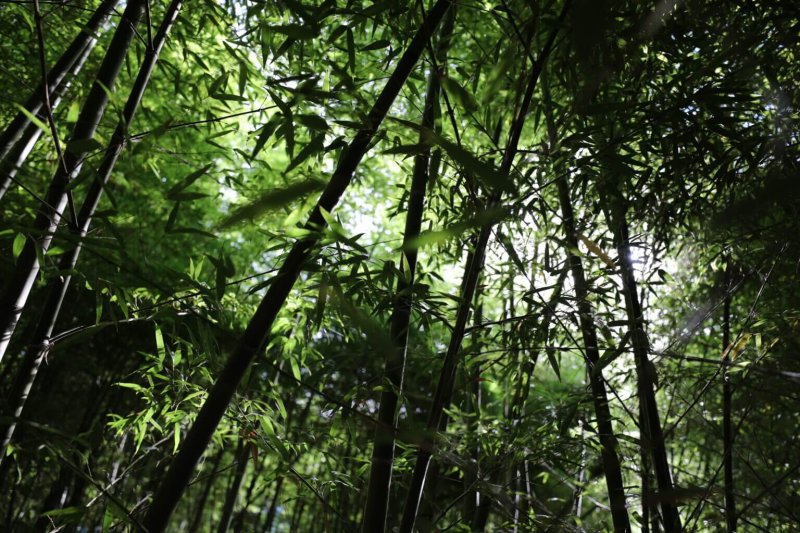
But that’s not the way bamboo grows on other parts of the planet. Given sway, bamboo’s roots will move intelligently toward water, and when many bamboo species (there are over 1,500) find a good place, they will mature into a true phenomenon: a fast-growing forest.

Emphasis on fast. In Japan, researchers clocked a Phyllostachys edulis growing 47.6 inches in one day. Over the last year, as the world has watched its timber forests eaten alive by wildfires, the idea of a replacement, carbon-thirsty forest that could grow to full maturity in a decade rather than a century is incredibly compelling to scientists desperately seeking ways to reduce greenhouse gases in the atmosphere before we trip more global warming feedback loops. As Virginia Tech bamboo materials researcher Jonas Hauptman put it, “It grows so damn fast, you can sort of stop the clock.”

Mis- and disinformation are distorting science and public policy. Subscribe to our Daily and Weekly Digests for incisive coverage of ‘disruptive’ innovations in AI, agricultural biotechnology, food, chemicals, nuclear energy, vaccines, and other disruptive innovations.

If bamboo could bring in significant revenue as a crop, help revive abandoned farmland, and provide an immediate carbon sink, why wouldn’t Americans at least give it a substantial shot?


Read the original post

Related Articles

Infographic: Global regulatory and health research agencies on whether glyphosate causes cancer

Infographic: Global regulatory and health research agencies on whether glyphosate causes cancer

Does glyphosate—the world's most heavily-used herbicide—pose serious harm to humans? Is it carcinogenic? Those issues are of both legal and ...

Most Popular

ChatGPT-Image-Mar-10-2026-01_39_01-PM
Viewpoint—“Miracle molecule” debunked: Why acemannan supplements don’t work
Screenshot-2026-09-17-at-1.07.08-PM
'We are dangerously addicted to antidepressants': Should we heed RFK Jr.’s sobering warning?
ChatGPT-Image-Sep-25-2026-11_36_56-AM
Now AI almost started a war with China
ChatGPT-Image-Sep-2-2026-02_03_32-PM
How much of a problem is AI’s water use?
Screenshot-2026-09-24-at-3.25.18-PM
No, organic eggs are not more nutritious or necessarily healthier than regular eggs. They are just far more expensive.
Screenshot-2026-09-28-at-2.41.21-PM
Viewpoint: 7-OH controversy: An opioid is available over-the-counter–even at gas stations. Should we be concerned?
ChatGPT-Image-Sep-25-2026-10_36_43-AM
New federal autism committee head has financial ties to leucovorin
ChatGPT-Image-Sep-22-2026-11_17_31-AM
The exploding controversy over AI’s built-in survival drive
ChatGPT-Image-Sep-25-2026-11_57_15-AM
RFK, Jr. likely violated federal ethics guidelines in accepting more than $4,275,000 in gifts and book advances from MAHA allies
ChatGPT-Image-Sep-27-2026-10_00_17-AM
Current and future RFK Jr. aides criticize his science-rejectionist vaccine views
Woman_Vaping_Electronic_Cigarette_50687233623
Trump administration clears the way for speedy approvals of once-restricted tobacco vapes and pouches
Screenshot-2026-09-16-at-10.27.33-AM
Viewpoint: SCOTUS poised to address First Amendment tension between mandatory vaccines, children’s health and religious freedom 
glp menu logo outlined

Get news on human & agricultural genetics and biotechnology delivered to your inbox.