The American chestnut—once a dominant species in the eastern US, now almost completely wiped out by a poisonous fungus—could have another chance at flourishing. Scientists have come up with a simple genetic modification to create a fungus-resistant chestnut, but the question remains—should it be planted in natural forests?
Bernd Heinrich, emeritus professor of biology at the University of Vermont, writes in a New York Times op-ed that he is concerned about the impact of the GM chestnuts on natural forests. Heinrich grows his own American chestnuts in a forest of over 600 acres—and his have a natural resistance to the blight, which could mean they were selected for those traits. But the GM “freaks,” Heinrich writes, could be dangerous, as “genetic engineering can be unpredictable–genes behave and are expressed in complex ways.”
Dr. Barry Starr, geneticist-in-residence at the Tech Museum of Innovation in San Jose, CA, writes that it is “very hard to find a plausible way” that the GM chestnut could have a hazardous effect on the environment. They were not modified to be resistant to a pest or an herbicide, they are simply engineered to fight off a fungus by neutralizing an acid.
The fungus, Cryphonectria parasitica, kills the chestnut tree by poisoning it with oxalic acid. When investigating a way to combat the fungus, scientists at SUNY’s College of Environmental Science and Forestry realized that all they needed to do was find a way to make the tree neutralize the acid. They found a gene in wheat that gives rise to the oxalate oxidase enzyme—which breaks down oxalic acid—and inserted it into the genome of the chestnut.
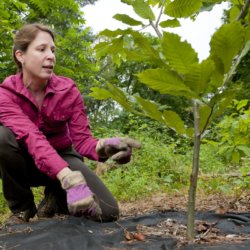
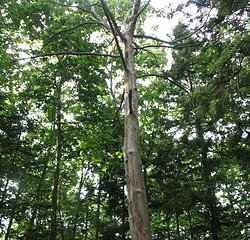


Strains of the GM tree that make more oxalate oxidase are more resistant to the fungus. When the gene is in the right place in the chestnut’s DNA, it makes a lot of the enzyme to fight off the blight. Scientists have created a GM chestnut that could restore the forests back to what they were a century ago, Starr writes, and field studies look promising. Researchers are hoping to get approval soon for widespread planting of the GM chestnut.
Read the full, original story: Revitalizing Our Forests
Additional Resources:
- Anti-GMO salvo: Activists target transgenic trees that could protect endangered forests, Genetic Literacy Project
- Unless blocked by GMO opponents, biotechnology could save the American Chestnut, Genetic Literacy Project
- Can GMO trees save our forests? Salon