Florida Atlantic salmon? Recirculating aquaculture systems without antibodies or vaccinations poised to spur boom in in-land fish farming

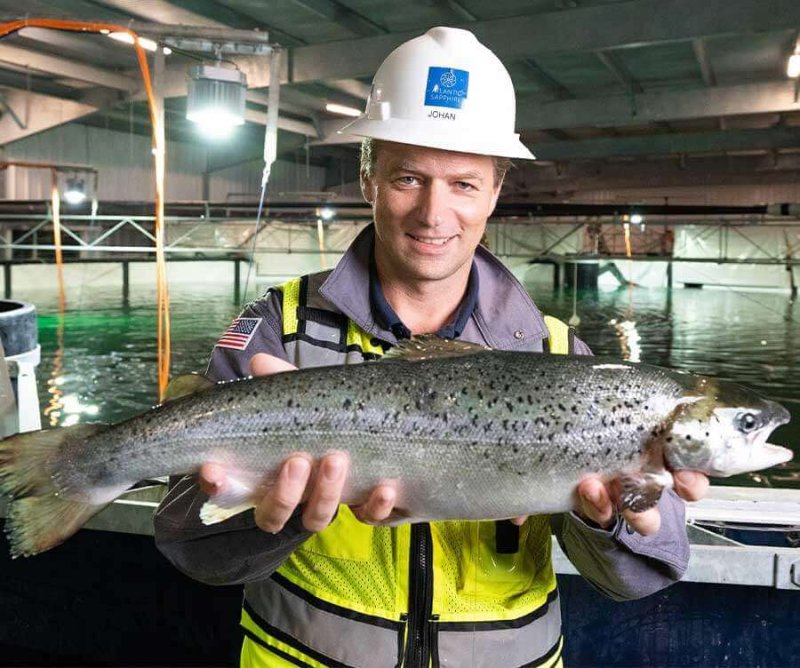
Johan Andreassen, Chairman and Co-founder of Atlantic Sapphire. Credit: Atlantic Sapphire

In a series of indoor tanks 40 miles south west of Miami, Florida, five million fish are swimming in circles a very long way from home.

The fish in question are Atlantic salmon, which are far more typically found in the cold waters of Norway’s fjords or Scotland’s lochs.

The facility, called the Bluehouse, opened its first phase last year, and intends to be the world’s largest land-based fish farm.

Targeting an initial production of 9,500 metric tonnes of fish per year, its owner – Atlantic Sapphire – plans to increase that to 222,000 tonnes by 2031.

Called “recirculating aquaculture systems”, or RAS for short, they control everything from the temperature, salinity and pH of the water, to its oxygen levels, artificial currents, lighting cycles, and removal of carbon dioxide and waste. The latter are filtered out, and treated water is reused.

As it is a closed-loop system, the salmon are not exposed to seaborne diseases and parasites, so unlike sea-based farms, Atlantic Sapphire says its fish do not need to be treated with antibiotics or pesticides.

Follow the latest news and policy debates on sustainable agriculture, biomedicine, and other ‘disruptive’ innovations. Subscribe to our newsletter.

“In general, compared to the [sea-based] industry, we have the lowest disease incidents and the lowest mortality rates,” says Neder Snir, chief technology officer of Israeli firm AquaMaof. His company has now designed technology for 10 such RAS fish farms around the world.


Read the original post

{{ reviewsTotal }}{{ options.labels.singularReviewCountLabel }}
{{ reviewsTotal }}{{ options.labels.pluralReviewCountLabel }}
{{ options.labels.noReviewsLabel }}
{{ options.labels.newReviewButton }}
{{ userData.canReview.message }}

Related Articles

Infographic: Global regulatory and health research agencies on whether glyphosate causes cancer

Infographic: Global regulatory and health research agencies on whether glyphosate causes cancer

Does glyphosate—the world's most heavily-used herbicide—pose serious harm to humans? Is it carcinogenic? Those issues are of both legal and ...

Most Popular

ChatGPT-Image-Mar-10-2026-01_39_01-PM
Viewpoint—“Miracle molecule” debunked: Why acemannan supplements don’t work
ChatGPT-Image-Jun-25-2026-12_23_17-PM
No, Bill Gates did not secretly engineer ticks to promote veganism
ChatGPT-Image-Jul-22-2026-09_13_07-AM
Viewpoint—The Strategic Litigation boom: Understanding the tightening coalition among NGOs, foundations, journalists, and tort lawyers
How to Include More Strawberries in Your Diet
Strawberries are berries—and 35 other surprising food and drink myths
ChatGPT-Image-May-22-2026-10_26_09-AM
Trump-RFK, Jr. National Science Board firings: Accountability vs. partisan meddling
Screenshot 2026-07-11 094410
Growing animal muscle and fat cells inside rice grains and calling it beef: One of numerous genetically engineered products shaking up our ecosystem
diversity
We are entering a new era of personalized medicine—if you’re white

Sorry. No data so far.

glp menu logo outlined

Get news on human & agricultural genetics and biotechnology delivered to your inbox.