Hardier rice crops without genetic modification? Tweaking its microbiome is one option

Credit: Research Matters

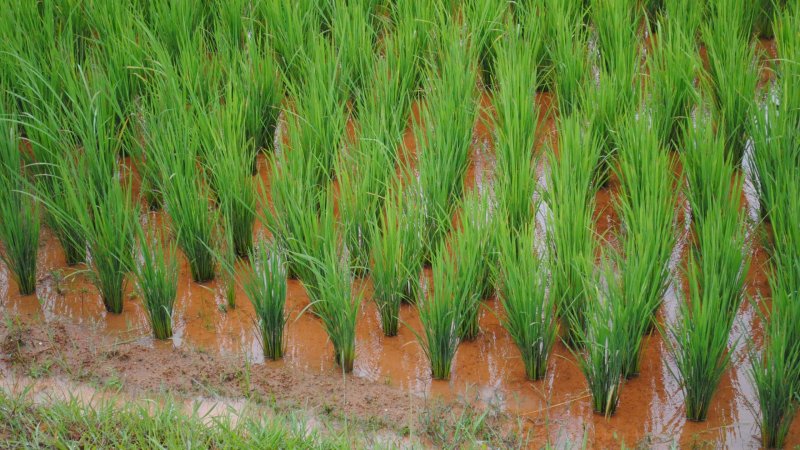
Yes, plants have microbiomes, too, and those billions of tiny hitchhikers can help them grow and fight off invading pathogens. Researchers are trying to understand these microbial communities and adjust them to help plants become more resistant to drought, heat and infection. 

[Microbiologist Tomislav] Cernava and his team described the microbiome of rice seeds in a new paper published in January in Nature Plants. His team wasn’t just looking for a microbiome anywhere it could find one, though—it was trying to solve a puzzle. 

Chinese scientists had found that some rice plants in the coastal Zhejiang province were failing because of an infection by a bacteria called Burkholderia plantarii, while others were immune… On closer examination, Cernava found that the plants that were susceptible to infection had a different seed microbiome. 

Immunity from the infection could be transferred to susceptible plants by adding more Sphingomonas to their microbiome or by adding the protective acid directly to the susceptible plant.

Follow the latest news and policy debates on sustainable agriculture, biomedicine, and other ‘disruptive’ innovations. Subscribe to our newsletter.

“Forget genetic engineering,” says [plant biologist Sheng-Yang] He. “If we can transplant that kind of [microbial] community to plants that normally don’t have that community, wouldn’t that be wonderful?”  

Read the original post

{{ reviewsTotal }}{{ options.labels.singularReviewCountLabel }}
{{ reviewsTotal }}{{ options.labels.pluralReviewCountLabel }}
{{ options.labels.newReviewButton }}
{{ userData.canReview.message }}

Related Articles

Infographic: Global regulatory and health research agencies on whether glyphosate causes cancer

Infographic: Global regulatory and health research agencies on whether glyphosate causes cancer

Does glyphosate—the world's most heavily-used herbicide—pose serious harm to humans? Is it carcinogenic? Those issues are of both legal and ...

Most Popular

ChatGPT Image Jun 3, 2026, 03_54_37 PM
Viewpoint: “Turn on, tune in, drop out”—Kennedy embraces the Timothy Leary psychedelic revolution
ChatGPT-Image-Jun-11-2026-01_15_03-PM
Selective Pressure, Selective Silence
Screenshot-2026-06-05-at-2.12.30-PM
Some plants can poison you. So how did humans figure out what is safe to eat?
Screenshot-2026-06-11-at-3.40.06-PM
'Toxin' detox: A gastroenterologist weighs in on $71 billion health trend
Screenshot-2026-06-05-at-1.44.09-PM
Viewpoint: Scientists have scrapped the worst-case climate scenario. Is that proof that climate change is a hoax, as Trump claims?
ChatGPT Image Jun 3, 2026, 03_14_43 PM
Viewpoint: How Earthjustice became the poster child for the abuse of special interest activist funding
Screenshot 2026-05-26 at 10.15
Viewpoint: Double standard—Why does the wellness industry get a free pass while Big Healthcare is treated as morally suspect?
Screenshot-2026-06-03-at-1.24.46-PM
Challenging anti-GMO disinformation: Why genetically-tweaked crops offer bushels of benefits
ChatGPT Image May 28, 2026, 08_16_38 PM
Viewpoint: Why the EPA mismeasures cancer risk of chemicals and what should be done to fix it
artificial intelligence brain think illustration md
Viewpoint — Digital gods and human extinction: Will we be the first species ever to design our own descendants?

Sorry. No data so far.

glp menu logo outlined

Get news on human & agricultural genetics and biotechnology delivered to your inbox.