International guidance limiting human embryo research to 14 days has been relaxed, opening door to advanced human development and disease breakthroughs. Here are the scientific and ethical implications

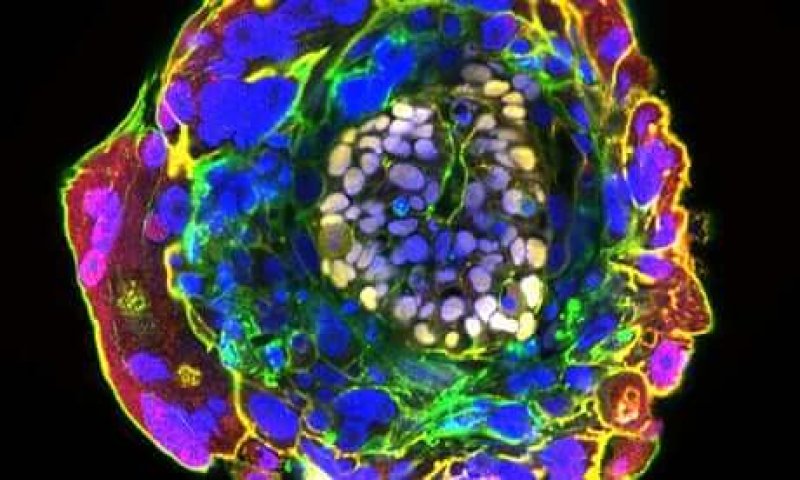
A human embryo 12 days after fertilisation in vitro, with different cell types marked by separate colours. Credit: Gist Croft/Alessia Deglincerti/AP

Previously, the International Society for Stem Cell Research (ISSCR) recommended that scientists culture human embryos for no more than two weeks after fertilization. But on 26 May, the society said it was relaxing this famous limit, known as the 14-day rule. Rather than replace or extend the limit, the ISSCR now suggests that studies proposing to grow human embryos beyond the two-week mark be considered on a case-by-case basis, and be subjected to several phases of review to determine at what point the experiments must be stopped.

The ISSCR made this change and others to its guidelines for biomedical research in response to rapid advances in the field.

Follow the latest news and policy debates on sustainable agriculture, biomedicine, and other ‘disruptive’ innovations. Subscribe to our newsletter.

In the past decade, scientists have made increasingly sophisticated models of embryos from human stem cells, demonstrating one way to study human development while avoiding the controversial use of embryos from fertility clinics. Such embryo-like structures are too rudimentary to grow into a person, scientists say. But relaxing the 14-day limit would allow researchers to compare them fully with real embryos, and test them as feasible stand-ins for research, says [stem-cell biologist Robin] Lovell-Badge. 

The relaxation of the 14-day rule “is really significant, but it’s done with a soft touch”, says [bioethicist Josephine] Johnston.


Read the original post

{{ reviewsTotal }}{{ options.labels.singularReviewCountLabel }}
{{ reviewsTotal }}{{ options.labels.pluralReviewCountLabel }}
{{ options.labels.newReviewButton }}
{{ userData.canReview.message }}

Related Articles

Infographic: Global regulatory and health research agencies on whether glyphosate causes cancer

Infographic: Global regulatory and health research agencies on whether glyphosate causes cancer

Does glyphosate—the world's most heavily-used herbicide—pose serious harm to humans? Is it carcinogenic? Those issues are of both legal and ...

Most Popular

Screenshot 2026-05-26 at 10.15
Viewpoint: Double standard—Why does the wellness industry get a free pass while Big Healthcare is treated as morally suspect?
Screenshot-2026-06-03-at-3.33.44-PM
Viewpoint: Vaccine deniers are attacking a life-saving Vitamin K shot for newborns that isn’t even a vaccine
Screenshot-2026-06-05-at-1.44.09-PM
Viewpoint: Scientists have scrapped the worst-case climate scenario. Is that proof that climate change is a hoax, as Trump claims?
px extra strength tylenol and tylenol pm
Why ‘null-findings’ on Tylenol’s safety for pregnant women barely move the needle on countering misinformation
Screenshot-2026-06-08-at-10.19.30-AM
‘Natural’ wellness supplements linked to liver injury
Screenshot-2026-06-08-at-1.35.30-PM
Viewpoint: Social media and fake natural health propaganda fuel surge in use of mostly useless supplements
ChatGPT-Image-Jun-10-2026-12_57_24-PM
Viewpoint: Why gene-editing babies is moral and certain to happen
ChatGPT-Image-May-28-2026-12_56_54-PM
Viewpoint: Vaccines' non-specific effects? The ‘shoddy’ Danish couple whose 'research’ inspires RFK, Jr.’s health delusion
Credit: ACSH
Viewpoint: Who and what’s to blame for the surge in vaccine-preventable diseases?
Screenshot 2025-08-25 203032
Mazzenga’s 20-year old muscles: How a still-going-strong 92-year old sprinter wins every race she enters
Screenshot-2026-06-05-at-2.12.30-PM
Some plants can poison you. So how did humans figure out what is safe to eat?
Screen Shot at AM
Facts & Fallacies Podcast: Right-wing politics bad for your health? Separating speculation from science
ChatGPT Image May 26, 2026, 08_42_17 AM (1)
Viewpoint: Greenpeace and poison: How environmental advocacy groups rely on compliant (and often ignorant) journalists to spread disinformation and spark litigation
glp menu logo outlined

Get news on human & agricultural genetics and biotechnology delivered to your inbox.