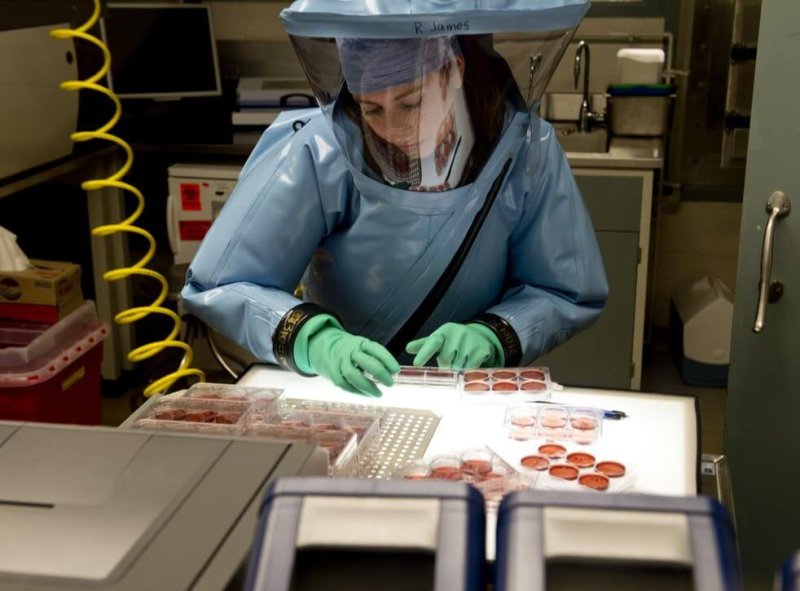
If COVID-19 resulted from a Chinese lab leak, it wouldn’t be the country’s first biohazard accident. Here’s a history

Credit: Independent
Credit: Independent

In the aftermath of a small outbreak of the original SARS virus, well after the main outbreak that ended in summer 2003, a WHO investigation concluded that the Beijing Centers for Disease Control made critical errors in handling samples of the virus, [resulting in two cases and one death].

“Clearly there was a link to the [Beijing, not Wuhan] Institute of Virology, and our investigations are still ongoing, but we haven’t found a single incident that links the two cases of laboratory workers at the institute, so it appears to be two separate breaches of bio-safety, and we can’t find any single incident or accident that explains either case,” said Dr. Julie Hall, WHO’s coordinator in China of communicable disease surveillance and response. “It has raised real concerns about bio-safety in general, how bio-safety guidelines are implemented, and how that is supervised and monitored.”

Follow the latest news and policy debates on sustainable agriculture, biomedicine, and other ‘disruptive’ innovations. Subscribe to our newsletter.

Subsequent investigations concluded a “batch of supposedly inactivated SARS virus that was brought from a high-containment facility into a low-safety diarrhea research lab where the two were working . . . In a breach of standard safety procedures, the researcher who carried out the inactivation — identified only by a family name, ‘Ren’ — had not tested whether the virus was truly inactive, according to the panel.”


Read the original post

{{ reviewsTotal }}{{ options.labels.singularReviewCountLabel }}
{{ reviewsTotal }}{{ options.labels.pluralReviewCountLabel }}
{{ options.labels.newReviewButton }}
{{ userData.canReview.message }}

Related Articles

Infographic: Global regulatory and health research agencies on whether glyphosate causes cancer

Infographic: Global regulatory and health research agencies on whether glyphosate causes cancer

Does glyphosate—the world's most heavily-used herbicide—pose serious harm to humans? Is it carcinogenic? Those issues are of both legal and ...

Most Popular

ChatGPT-Image-Jun-16-2026-10_29_11-AM
What’s behind Anthropic’s warning about the accelerating development of AI
ChatGPT-Image-Jun-16-2026-10_01_45-AM-2
Viewpoint—Recursive self-improvement: AI leader Anthropic calls for AI slowdown
Screenshot-2026-06-16-at-10.02.22-PM
Viewpoint: ‘Industrial food’ primer—Challenging the dangerous delusions of the alternative food movement
Screenshot-2026-06-17-at-11.57.12-AM
Viewpoint: Raw milk and the myth of safety—ProPublica exposes the growing anti-homogenization movement
ChatGPT-Image-Jun-9-2026-01_11_37-PM
Turmeric supplements: More risks than benefits
ChatGPT-Image-Jun-15-2026-02_31_28-PM-2
Trump-appointed cancer panel head backed by supplement and anti-vaccine companies promotes discredited support for ivermectin as a potential cure
ChatGPT-Image-Jun-4-2026-03_07_27-PM
AAP v. Kennedy: While a court challenge grinds on, RFK Jr. quietly advances his anti-vaccine conspiracy agenda
ChatGPT-Image-Mar-10-2026-01_39_01-PM
Viewpoint—“Miracle molecule” debunked: Why acemannan supplements don’t work
newborn infant baby mother
Facts & Fallacies Podcast: The truth about vitamin K shots
Screenshot-2026-06-16-at-11.23.32-AM
In a rebuke to RFK, Jr.’s anti-vax crusade, journal retracts study claiming hepatitis B vaccine–autism link
ChatGPT Image Jun 16, 2026, 12_03_37 PM
Kennedy accused of trying to ‘bully’ science journal that retracted study linking vaccines to infant deaths
Screenshot 2025-07-30 at 10.48
Can gene editing eliminate Down syndrome? Scientists have done it in lab-grown cells
glp menu logo outlined

Get news on human & agricultural genetics and biotechnology delivered to your inbox.