When it comes to evolution, could humans be more impactful than nature?

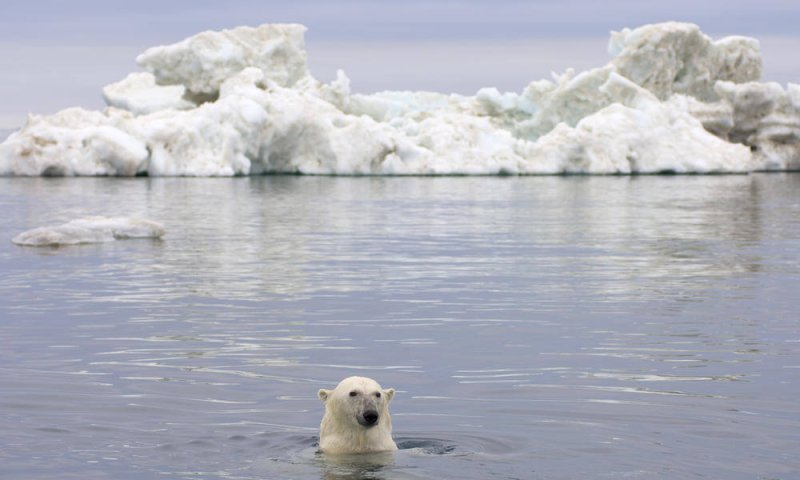
Credit: World Wildlife Fund

The composition of our air and water is different from what it was even a few decades ago. There is over 20 percent more CO2 in the atmosphere today than in 1980. Our oceans are about 25 percent more acidic than they were pre- industrial revolution. We’ve fundamentally altered somewhere between three-quarters and 95 percent of the land on earth through infrastructure, agriculture, and resource extraction.

And, although exact numbers vary, scientists generally agree we’re losing biodiversity at a dramatic rate. One 2014 study estimates the current extinction rate is 1,000 times higher than it would be without human interference (and that it could accelerate to 10,000 times in the not-so-distant future). Species are disappearing fast.

“Some of them are lost, even before we know what we’re losing,” says Sally Otto, an evolutionary biologist at the University of British Columbia. But we’re not just altering the present state of biodiversity—we’re also strongly influencing its future

Follow the latest news and policy debates on sustainable agriculture, biomedicine, and other ‘disruptive’ innovations. Subscribe to our newsletter.

Climate change, introductions of invasive species, and habitat fragmentation are just a few of the ways Otto says humans are “changing the course of evolution for every species on the planet.” Adding, “sometime in the last 200 years, we have become the species that most shapes the selective pressures of other species.”


Read the original post

{{ reviewsTotal }}{{ options.labels.singularReviewCountLabel }}
{{ reviewsTotal }}{{ options.labels.pluralReviewCountLabel }}
{{ options.labels.newReviewButton }}
{{ userData.canReview.message }}

Related Articles

Infographic: Global regulatory and health research agencies on whether glyphosate causes cancer

Infographic: Global regulatory and health research agencies on whether glyphosate causes cancer

Does glyphosate—the world's most heavily-used herbicide—pose serious harm to humans? Is it carcinogenic? Those issues are of both legal and ...

Most Popular

wuhan institute of virology main entrance
​​COVID lab leak? Making a case that the Wuhan market origins theory is wrong
ChatGPT-Image-Mar-10-2026-01_39_01-PM
Viewpoint—“Miracle molecule” debunked: Why acemannan supplements don’t work
Screenshot-2026-06-18-at-11.41.51-AM
Viewpoint—Protecting baloney science: Far right senators move to protect the phony homeopathy industry
Screenshot-2026-06-17-at-9.44.03-AM
Viewpoint: Embryos are becoming the newest battleground of love, loss, and legal uncertainty
ChatGPT-Image-Jun-9-2026-01_11_37-PM
Turmeric supplements: More risks than benefits
artificial intelligence brain think illustration md
Viewpoint — Digital gods and human extinction: Will we be the first species ever to design our own descendants?
Screenshot-2026-06-05-at-2.12.30-PM
Some plants can poison you. So how did humans figure out what is safe to eat?

Sorry. No data so far.

glp menu logo outlined

Get news on human & agricultural genetics and biotechnology delivered to your inbox.