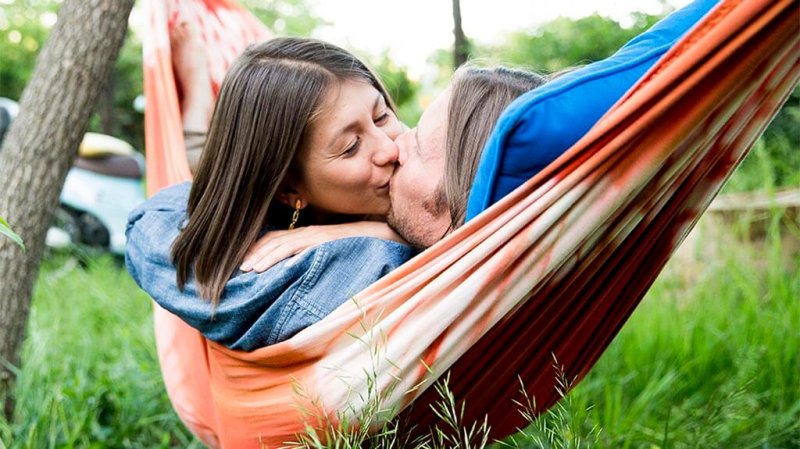
Less than half of cultures around the world indulge in romantic lip kissing — a uniquely human endeavor

Credit: CNN
Credit: CNN

Less than half of all societies kiss with their lips, according to a study of 168 cultures from around the world. William Jankowiak, a professor of anthropology at the University of Nevada Las Vegas, found that only 46% use lip-to-lip kissing in a romantic sense, excluding things like parent-child kissing or greetings.

Two theories for why humans have a need to kiss stem from the idea that as babies we have an innate liking for lip touching. In one case, it might be that we associate lip touching with breastfeeding, and that reflex is innate in everyone. There is also a suggestion that mothers and their children bond over lip-on-lip kissing because of something called “premastication food transfer“.

Follow the latest news and policy debates on sustainable agriculture, biomedicine, and other ‘disruptive’ innovations. Subscribe to our newsletter.

If kissing has an evolutionary purpose, why don’t we see more animals kissing?

Melissa Hogenboom answered that question for BBC Earth in 2015. One of the reasons we might have been compelled to get up close to the face of a partner is to give them a good sniff. Scent can reveal all sorts of useful information: diet, presence of disease, mood and relatedness, to name some. Many animals have far more sophisticated senses of smell than we do, so they don’t have to be nearly as close.


This is an excerpt. Read the original post here.

{{ reviewsTotal }}{{ options.labels.singularReviewCountLabel }}
{{ reviewsTotal }}{{ options.labels.pluralReviewCountLabel }}
{{ options.labels.newReviewButton }}
{{ userData.canReview.message }}

Related Articles

Infographic: Global regulatory and health research agencies on whether glyphosate causes cancer

Infographic: Global regulatory and health research agencies on whether glyphosate causes cancer

Does glyphosate—the world's most heavily-used herbicide—pose serious harm to humans? Is it carcinogenic? Those issues are of both legal and ...

Most Popular

Screenshot-2026-05-01-at-1.29.41-PM
Viewpoint: What happens when whole grains meet modern food manufacturing? Labels don’t tell the whole story.
S
As vaccine rejectionism spreads, measles may be taking a more dangerous turn
Screenshot 2026-05-06 at 2.56
Singularity crisis ahead? Can super babies save us from rogue AI geniuses?
Screenshot-2026-05-06-at-2.07.43-PM
Manufacturing a conspiracy: The timeline of how  the White House embraced the fringe claim that scientists are being mysteriously murdered
Screenshot-2026-04-20-at-2.26.27-PM
Viewpoint — Food-fear world: The latest activist scientists campaign: Cancer-causing additives
Screenshot-2026-03-13-at-12.14.04-PM
The FDA wants to make many popular prescription drugs OTC—a great idea. Here’s why it’s unlikely to happen
Screenshot-2026-04-30-at-2.19.37-PM
5 myths about summer dehydration that could damage your health — or even kill you
ChatGPT-Image-May-6-2026-03_41_05-PM
‘Protecting the integrity of science’: Kennedy’s FDA blocks release of taxpayer-funded studies finding COVID and shingles vaccines safe
Screenshot-2026-05-01-at-11.56.24-AM
‘Science moves forward when people are willing to think differently’: Memories of DNA maverick Craig Venter
79d03212-2508-45d0-b427-8e9743ff6432
Viewpoint: The Casey Means hustle—Wellness woo opportunism dressed up as medical wisdom
Screenshot 2026-05-06 at 12.49
Immortal dragons: The quest to ‘make death optional’
glp menu logo outlined

Get news on human & agricultural genetics and biotechnology delivered to your inbox.