Viewpoint: EU edges closer to embracing sustainable gene editing agricultural techniques but organic farming commercial interests remain key roadblocks

Credit: Cornell Alliance for Science

The current EU GMO-legislation, based on late 1990s understanding of biotechnology, would leave Europe without access to current and future gene-edited crops, including existing ones like fortified tomatoes, soybeans with healthier fatty acid profiles, and nitrogen-fixing bacteria for fertilising agricultural soil…. But things could soon change.

Follow the latest news and policy debates on sustainable agriculture, biomedicine, and other ‘disruptive’ innovations. Subscribe to our newsletter.

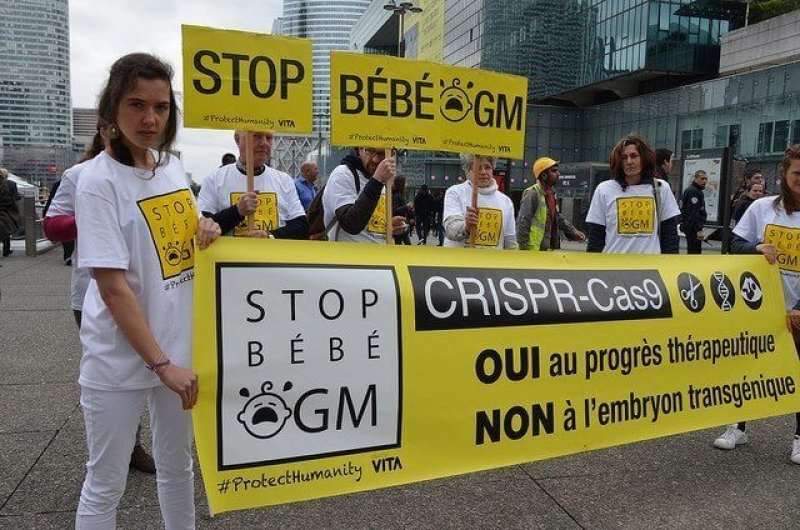
Unfortunately, suggested new legislation of Novel Genomic Techniques (NGTs) is opposed by organic operators on the grounds that it would threaten “their freedom to conduct business.”

It seems backwards that organic actors should oppose more environmentally friendly farming methods on business grounds, or that the prospect of resource-saving and nutritional benefits would be considered a threat in the first place.

If we are to ensure the future of the most vulnerable biodiversity on our own continent and the world at large, we need to shrink our land footprint and provide more food with less resources. Young researchers in European universities today are eager to develop plant varieties that can help, but they are concerned that their work may never see the light of day if the EU does not change its prohibitive legislation. It’s high time to #GiveGenesAChance.


This is an excerpt. Read the original post here.

{{ reviewsTotal }}{{ options.labels.singularReviewCountLabel }}
{{ reviewsTotal }}{{ options.labels.pluralReviewCountLabel }}
{{ options.labels.newReviewButton }}
{{ userData.canReview.message }}

Related Articles

Infographic: Global regulatory and health research agencies on whether glyphosate causes cancer

Infographic: Global regulatory and health research agencies on whether glyphosate causes cancer

Does glyphosate—the world's most heavily-used herbicide—pose serious harm to humans? Is it carcinogenic? Those issues are of both legal and ...

Most Popular

Screenshot 2025-08-25 203032
Mazzenga’s 20-year old muscles: How a still-going-strong 92-year old sprinter wins every race she enters
Screenshot-2026-06-08-at-10.19.30-AM
‘Natural’ wellness supplements linked to liver injury
ChatGPT-Image-May-28-2026-12_56_54-PM
Viewpoint: Vaccines' non-specific effects? The ‘shoddy’ Danish couple whose 'research’ inspires RFK, Jr.’s health delusion
Screenshot-2026-06-05-at-2.12.30-PM
Some plants can poison you. So how did humans figure out what is safe to eat?
Credit: ACSH
Viewpoint: Who and what’s to blame for the surge in vaccine-preventable diseases?
Screen Shot at AM
Facts & Fallacies Podcast: Right-wing politics bad for your health? Separating speculation from science
Screenshot-2026-06-05-at-1.44.09-PM
Viewpoint: Scientists have scrapped the worst-case climate scenario. Is that proof that climate change is a hoax, as Trump claims?
ChatGPT-Image-Jun-9-2026-03_24_05-PM
Misinformed parents overdosing children with Vitamin A to fight measles
Screenshot 2025-07-30 at 10.48
Can gene editing eliminate Down syndrome? Scientists have done it in lab-grown cells
ChatGPT-Image-Mar-10-2026-01_39_01-PM
Viewpoint—“Miracle molecule” debunked: Why acemannan supplements don’t work
ChatGPT-Image-Jun-9-2026-11_54_59-AM
Why weight-loss drugs might be reducing cancer rates and making treatment more effective
Screenshot-2026-06-08-at-11.05.51-AM
Can vaping lead to cancer? New ‘association study’ raises questions of “links"
glp menu logo outlined

Get news on human & agricultural genetics and biotechnology delivered to your inbox.