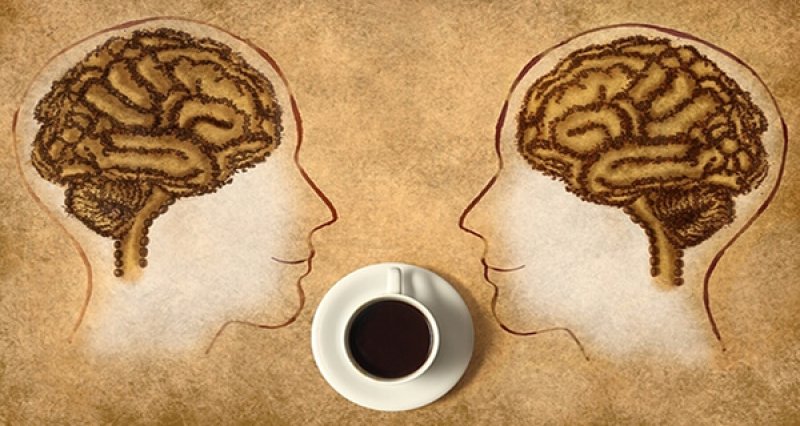
A daily cup of coffee could be an easy and effective way to ward off Alzheimer’s disease

Credit: Flipboard
Credit: Flipboard

Coffee lovers know a steaming cup of java can quickly deliver energy and mental clarity every morning, but new research suggests it may also guard against Alzheimer’s disease in the long run.

“Worldwide, a high proportion of adults drink coffee every day, making it one of the most popular beverages consumed,” said lead researcher Samantha Gardener.

Follow the latest news and policy debates on sustainable agriculture, biomedicine, and other ‘disruptive’ innovations. Subscribe to our newsletter.

For the study, Gardener and her team investigated whether coffee intake affected the rate of cognitive decline over 10 years in more than 200 people who were part of the Australian Imaging, Biomarkers and Lifestyle Study.

The investigators found that people who had no memory impairments and who consumed higher amounts of coffee had a lower risk of transitioning to mild cognitive impairment. This stage often precedes Alzheimer’s disease. Those participants also had lower risk of developing Alzheimer’s disease during the study period.

In the study, higher coffee intake appeared to be slowing the accumulation of amyloid protein in the brain, as well as being linked to positive results in the areas of executive function and attention.

Drinking coffee could be an easy way to delay the onset of Alzheimer’s disease, Gardener suggested, but more research is needed.


This is an excerpt. Read the original post here.

{{ reviewsTotal }}{{ options.labels.singularReviewCountLabel }}
{{ reviewsTotal }}{{ options.labels.pluralReviewCountLabel }}
{{ options.labels.newReviewButton }}
{{ userData.canReview.message }}

Related Articles

Infographic: Global regulatory and health research agencies on whether glyphosate causes cancer

Infographic: Global regulatory and health research agencies on whether glyphosate causes cancer

Does glyphosate—the world's most heavily-used herbicide—pose serious harm to humans? Is it carcinogenic? Those issues are of both legal and ...

Most Popular

ChatGPT Image Jun 3, 2026, 03_54_37 PM
Viewpoint: “Turn on, tune in, drop out”—Kennedy embraces the Timothy Leary psychedelic revolution
ChatGPT-Image-Jun-11-2026-01_15_03-PM
Selective Pressure, Selective Silence
Screenshot-2026-06-05-at-2.12.30-PM
Some plants can poison you. So how did humans figure out what is safe to eat?
Screenshot-2026-06-11-at-3.40.06-PM
'Toxin' detox: A gastroenterologist weighs in on $71 billion health trend
Screenshot-2026-06-05-at-1.44.09-PM
Viewpoint: Scientists have scrapped the worst-case climate scenario. Is that proof that climate change is a hoax, as Trump claims?
Screenshot-2026-06-11-at-4.00.17-PM
Gen Z burned by sunscreen misinformation and tanning myths
ChatGPT-Image-Jun-11-2026-10_34_44-AM-2
Will hi-tech genetic fortune-telling really help parents make healthier children?
Screenshot 2026-05-26 at 10.15
Viewpoint: Double standard—Why does the wellness industry get a free pass while Big Healthcare is treated as morally suspect?
Screenshot-2026-06-03-at-3.33.44-PM
Viewpoint: Vaccine deniers are attacking a life-saving Vitamin K shot for newborns that isn’t even a vaccine
Screenshot-2026-06-08-at-1.35.30-PM
Viewpoint: Social media and fake natural health propaganda fuel surge in use of mostly useless supplements
ChatGPT Image May 26, 2026, 08_42_17 AM (1)
Viewpoint: Greenpeace and poison: How environmental advocacy groups rely on compliant (and often ignorant) journalists to spread disinformation and spark litigation

Sorry. No data so far.

glp menu logo outlined

Get news on human & agricultural genetics and biotechnology delivered to your inbox.