Genetic innovations top Nature’s list of most anticipated science advances of 2022

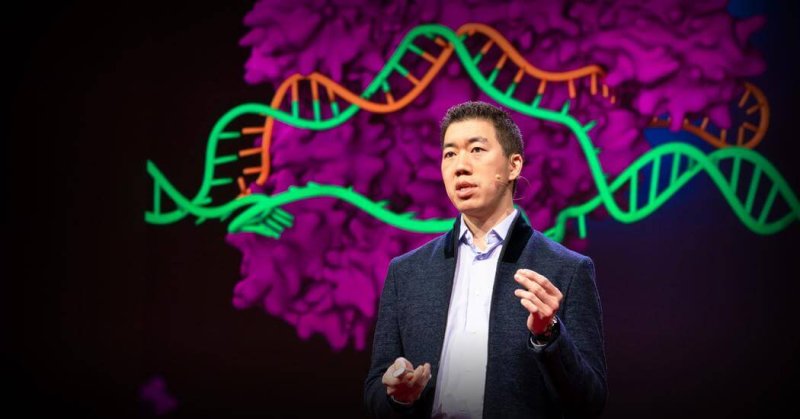
Chemical biologist David Liu speaks about advancements in CRISPR-Cas9 technology developed in his lab. Credit: TED

From gene editing to protein-structure determination to quantum computing, here are seven technologies that are likely to have an impact on science in the year ahead.

1. Fully finished genomes

Roughly one-tenth of the human genome remained uncharted when genomics researchers Karen Miga at the University of California, Santa Cruz, and Adam Phillippy at the National Human Genome Research Institute in Bethesda, Maryland, launched the Telomere-to-Telomere (T2T) consortium in 2019. Now, that number has dropped to zero. 

Follow the latest news and policy debates on sustainable agriculture, biomedicine, and other ‘disruptive’ innovations. Subscribe to our newsletter.

2. Protein structure solutions

Structure dictates function. But it can be hard to measure. Major experimental and computational advances in the past two years have given researchers complementary tools for determining protein structures with unprecedented speed and resolution.

The AlphaFold2 structure-prediction algorithm, developed by Alphabet subsidiary DeepMind in London, relies on ‘deep learning’ strategies to extrapolate the shape of a folded protein from its amino acid sequence.

4. Precise genome manipulation

Mediated by a process called non-homologous end-joining, CRISPR–Cas9 repairs are often muddied by small insertions or deletions.

Most genetic diseases require gene correction rather than disruption, notes David Liu, a chemical biologist at Harvard University in Cambridge. Liu and his team have developed two promising approaches to do just that.


This is an excerpt. Read the original post here. 

{{ reviewsTotal }}{{ options.labels.singularReviewCountLabel }}
{{ reviewsTotal }}{{ options.labels.pluralReviewCountLabel }}
{{ options.labels.newReviewButton }}
{{ userData.canReview.message }}

Related Articles

Infographic: Global regulatory and health research agencies on whether glyphosate causes cancer

Infographic: Global regulatory and health research agencies on whether glyphosate causes cancer

Does glyphosate—the world's most heavily-used herbicide—pose serious harm to humans? Is it carcinogenic? Those issues are of both legal and ...

Most Popular

ChatGPT-Image-Jun-25-2026-12_23_17-PM
No, Bill Gates did not secretly engineer ticks to promote veganism
ChatGPT-Image-Mar-10-2026-01_39_01-PM
Viewpoint—“Miracle molecule” debunked: Why acemannan supplements don’t work
Screenshot-2026-06-05-at-2.12.30-PM
Some plants can poison you. So how did humans figure out what is safe to eat?
ChatGPT-Image-Jun-23-2026-03_12_23-PM
Is cellular reprogramming junk science? Nearly 20 patients are getting eye injections in the first FDA-cleared cellular trial
ChatGPT-Image-May-18-2026-12_06_18-PM-2
Defying death: The immortality movement goes mainstream
ChatGPT-Image-Jun-17-2026-10_52_43-AM
Anguished parents, doctors in tears: Utah’s long measles outbreak takes a toll
artificial intelligence brain think illustration md
Viewpoint — Digital gods and human extinction: Will we be the first species ever to design our own descendants?

Sorry. No data so far.

glp menu logo outlined

Get news on human & agricultural genetics and biotechnology delivered to your inbox.