Can plant-based meat spur a just environmental transition for animals and food-factory workers alike?

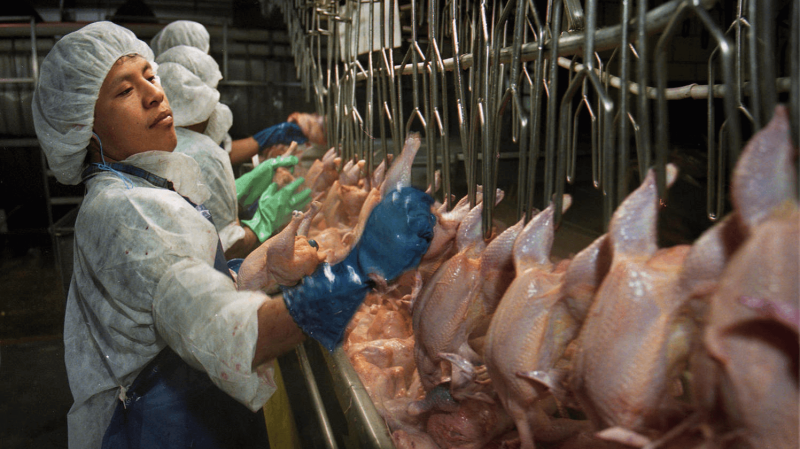
Credit: Earl Dotter/Oxfam

There are plenty of ways in which fake meat is better than animal meat. Getting institutions like schools and hospitals to swap their poultry for soy saves countless animal lives—scaled up, these swaps would save millions if not billions of chickens each year—which packs a bigger welfare punch for poultry than for other forms of meat, since due to their cramped living conditions, chickens suffer much crueler deaths and lives compared to cows. It’s also a pretty clear environmental win depending on the swaps you make—alternatives are lower in emissions than beef and without the pollution from pork, dairy or poultry manure.

Follow the latest news and policy debates on sustainable agriculture, biomedicine, and other ‘disruptive’ innovations. Subscribe to our newsletter.

Yet this transition could (and should) still happen in the future—the latest IPCC report includes shifting to plant-based diets in its climate mitigation recommendations. One just transition report found plant-based agriculture could create more jobs than it eliminates. A 2020 Inter-American Development Bank paper found that a future plant-based agriculture system in Latin America and the Caribbean could add “19 million more full-time equivalent employees in 2030 in the decarbonization scenario than in the high-emissions scenario.” In other words, the plant-based agriculture sector would create a 54% increase in jobs over the high-emissions scenario. For comparison, the renewable energy sector has potential to produce just 22% growth in the same scenario.


This is an excerpt. Read the original post here

{{ reviewsTotal }}{{ options.labels.singularReviewCountLabel }}
{{ reviewsTotal }}{{ options.labels.pluralReviewCountLabel }}
{{ options.labels.noReviewsLabel }}
{{ options.labels.newReviewButton }}
{{ userData.canReview.message }}

Related Articles

Infographic: Global regulatory and health research agencies on whether glyphosate causes cancer

Infographic: Global regulatory and health research agencies on whether glyphosate causes cancer

Does glyphosate—the world's most heavily-used herbicide—pose serious harm to humans? Is it carcinogenic? Those issues are of both legal and ...

Most Popular

ChatGPT-Image-Mar-10-2026-01_39_01-PM
Viewpoint—“Miracle molecule” debunked: Why acemannan supplements don’t work
Screenshot-2026-07-09-at-1.09.25-PM
Anti-vaccine myths rattle health care
ChatGPT-Image-Jun-25-2026-12_23_17-PM
No, Bill Gates did not secretly engineer ticks to promote veganism
ChatGPT-Image-Jul-10-2026-12_21_03-PM
Viewpoint: Is there new evidence that the animal deworming drug ivermectin decreases the risk of Covid and cancer? Don’t waste your money.
Picture1
Hiroshima at 81: America’s new nuclear bomb, a buried Iranian target, and a question no one wants to ask
leeteam
How Kennedy and his family could pocket millions from Merck’s $50 million vaccine injury settlement that he oversaw
ChatGPT Image Jul 29, 2026, 05_50_04 PM
Fear, science, and the law: If talc powder is unlikely to cause cancer and J&J was winning in court, why did it pay more than $5.5 billion to settle?

Sorry. No data so far.

glp menu logo outlined

Get news on human & agricultural genetics and biotechnology delivered to your inbox.