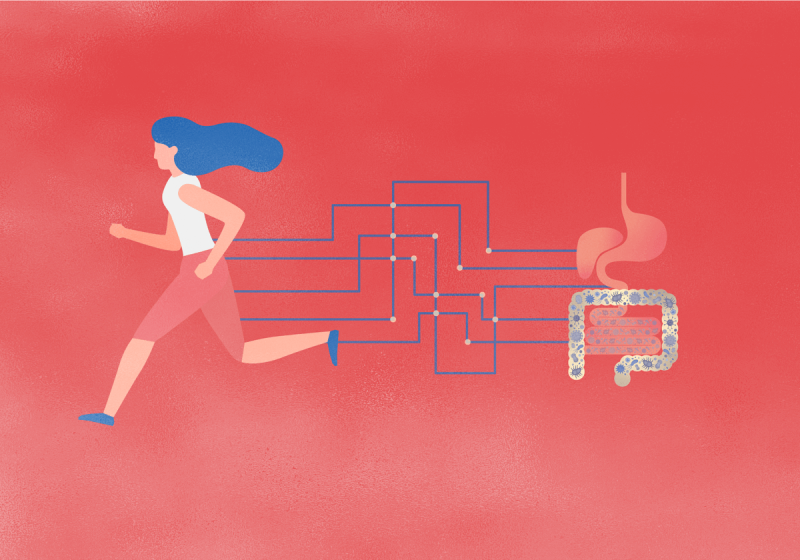
Our microbiomes respond positively to exercise, giving us a digestive boost

Credit: The Scientist

There is certainly no shortage of studies in humans that show doing moderate to vigorous exercise such as running, cycling and resistance training may potentially increase the diversity of bacteria in the guts. This has been linked to better physical and mental health. Doing aerobic exercises for as little as 18-32 minutes, coupled with resistance training three times a week, for a total of eight weeks could make a difference.

Athletes also tend to have increased gut microbial diversity compared to sedentary people, although some of this could be due to the specialised diets that competitors often have too. But a number of studies have shown that the combination of exercise and diet can boost Faecalibacterium prausnitzii numbers and the production of butyrate in active women, often with improved gut function.

Follow the latest news and policy debates on sustainable agriculture, biomedicine, and other ‘disruptive’ innovations. Subscribe to our newsletter.

But it is still not clear exactly how exercise leads to changes in the community of microorganisms living in our guts, although there are several theories, says [researcher Jeffrey] Woods.

“Lactate is produced when we exercise, and this could be serving as fuel for certain bacterial species,” he says. Another potential mechanism, he explains, could be through exercise-induced alterations in the immune system, especially the gut immune system, as our gut microbes are in direct contact with the gut’s immune cells.


This is an excerpt. Read the original post here

{{ reviewsTotal }}{{ options.labels.singularReviewCountLabel }}
{{ reviewsTotal }}{{ options.labels.pluralReviewCountLabel }}
{{ options.labels.newReviewButton }}
{{ userData.canReview.message }}

Related Articles

Infographic: Global regulatory and health research agencies on whether glyphosate causes cancer

Infographic: Global regulatory and health research agencies on whether glyphosate causes cancer

Does glyphosate—the world's most heavily-used herbicide—pose serious harm to humans? Is it carcinogenic? Those issues are of both legal and ...

Most Popular

ChatGPT-Image-Mar-10-2026-01_39_01-PM
Viewpoint—“Miracle molecule” debunked: Why acemannan supplements don’t work
ChatGPT-Image-Jun-25-2026-12_23_17-PM
No, Bill Gates did not secretly engineer ticks to promote veganism
ChatGPT-Image-Jul-7-2026-12_01_35-PM
Viewpoint: 21 worthless wellness trends inspired by RFK, Jr.’s ill-informed MAHA followers that can harm or even kill you.
Screenshot 2026-07-08 at 10.13
What happens when a pro-life congresswoman needs an abortion?
Screenshot-2026-07-06-at-12.30.23-PM
2,300 endangered species: Controversial de-extinction company Colossal Biosciences joins U.S. effort to preserve their DNA
ChatGPT-Image-Jul-1-2026-03_33_49-PM
‘Alternative’ cancer treatments that could kill you
Screenshot 2025-10-15 at 1.00
What you probably don’t know: For most fast-food fans, bioengineering isn’t a choice — it’s the norm

Sorry. No data so far.

glp menu logo outlined

Get news on human & agricultural genetics and biotechnology delivered to your inbox.