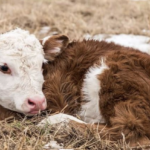
Will US consumers ever get to taste gene-edited sirloin? It may depend on whether the FDA or USDA wins broiling regulatory turf war

The USDA said it provides leadership based on the best available science. The FDA said it balances innovation and safety. Credit: Illustratedjc via CC-BY-SA-4.0

The future of genetically modified bacon, steak and fish is at the center of a Washington food fight.

The White House is refereeing whether the Food and Drug Administration or the Agriculture Department should regulate disease-resistant pigs, hornless cattle and faster-growing salmon—gene edits that could also result in unintended consequences if not done carefully.

Food companies have sought gene-edited cattle and fish because they promise to grow bigger, faster and more resistant to climate change and viruses than current animals. Pork producers and other industry players have been pushing for USDA oversight, saying the agency would be faster and less expensive to deal with than the FDA.

But consumer and environmental groups, worried about safety, counter that the USDA is too close to industry and say the FDA brings the scientific expertise demanded by such a technical area.


Mis- and disinformation are distorting science and public policy. Subscribe to our Daily and Weekly Digests for incisive coverage of ‘disruptive’ innovations in AI, agricultural biotechnology, food, chemicals, nuclear energy, vaccines, and other disruptive innovations.

The FDA and USDA have been at odds before. The two agencies in 2019 split duties regulating cell-cultured meat. Domestic catfish farmers got their oversight moved to USDA in 2016, though that hasn’t worked out as the industry intended, as imports have remained strong while domestic production has dropped.


This is an excerpt. Read the original post here

Related Articles

Infographic: Global regulatory and health research agencies on whether glyphosate causes cancer

Infographic: Global regulatory and health research agencies on whether glyphosate causes cancer

Does glyphosate—the world's most heavily-used herbicide—pose serious harm to humans? Is it carcinogenic? Those issues are of both legal and ...

Most Popular

eden green vertical farm facility
Why vertical farming is not the panacea for our food production crisis that its proponents claim
Professional Portrait Earth Backdrop
Viewpoint: November 13 is the long-predicted global doomsday. How a respected scientist got population growth catastrophe predictions so spectacularly wrong—fueling decades of junk science
Energetic Speaker on Stage
Viewpoint: Why are the stars of the MAHA revolution standing by convicted rapist — and conservative firebrand — Russell Brand?
ChatGPT-Image-Mar-10-2026-01_39_01-PM
Viewpoint—“Miracle molecule” debunked: Why acemannan supplements don’t work
Watercolor U.S
Cataloging the science-denying road to America losing its global measles-free status
Fluorescent and Natural Leaf Comparison
Here’s how biotechnology can reduce threats from disease and pests without resorting to sometimes-problematic chemicals
Screenshot-2026-11-12-at-12.18.49-PM
Viewpoint: AI and ‘superspecies’: Bernie Sanders on the American oligarchy’s dangerous plans
Tropical Yacht Conversation
Kennedy faces Congressional ethics investigation for accepting massive gifts from anti-vaccine and ketamine wellness grifter
Screenshot-2026-11-09-at-3.01.19-PM
Are Texas data centers killing calves? Debunking viral AI claims
glp menu logo outlined

Get news on human & agricultural genetics and biotechnology delivered to your inbox.