Viewpoint: ‘USDA successfully brought Big Ag aboard in the fight against climate change. Now they have to prove it will work’

The US Department of Agriculture has pledged billions to incentivize emissions reducing practices including cover crops.

The strategy of paying large incentives to farmers so they adopt climate-friendly farming methods won over large swaths of big ag, capturing a policy priority that has eluded past administrations. But they still need to prove it actually has an environmental impact and isn’t just a giveaway to Big Ag, as some climate activists fear.

Mis- and disinformation are distorting science and public policy. Subscribe to our Daily and Weekly Digests for incisive coverage of ‘disruptive’ innovations in AI, agricultural biotechnology, food, chemicals, nuclear energy, vaccines, and other disruptive innovations.

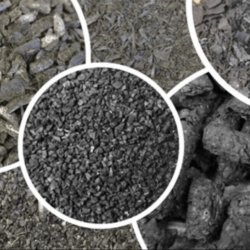
Researchers also have cast doubt on the climate impact of one of the types of projects drawing the most funding — carbon sequestration, which can involve planting cover crops during the offseason to absorb more of the warming gases in the air.

But a recent study from the Stanford University’s Center on Food Security and the Environment found that cover crops — especially when implemented poorly — can reduce overall crop productivity. That reduction in crop growth could cause “spillover” emissions in other areas of the world, where farmers would have to ramp up their own agricultural production to fill the void.

David Lobell, the director of the Stanford center, said findings from early studies on soil carbon, which suggested that massive amounts of carbon could be sequestered by climate-smart agriculture, were overly optimistic.


This is an excerpt. Read the original post here

Related Articles

Infographic: Global regulatory and health research agencies on whether glyphosate causes cancer

Infographic: Global regulatory and health research agencies on whether glyphosate causes cancer

Does glyphosate—the world's most heavily-used herbicide—pose serious harm to humans? Is it carcinogenic? Those issues are of both legal and ...

Most Popular

ChatGPT-Image-Mar-10-2026-01_39_01-PM
Viewpoint—“Miracle molecule” debunked: Why acemannan supplements don’t work
AI Doctor with a Digital Neural Head
Utah becomes first state to empower AI to bypass doctors and prescribe certain drugs
Screenshot-2026-10-07-at-2.00.02-PM
9 wellness myths busted
Screenshot-2026-09-22-at-12.26.15-PM
‘Forever chemical’ concerns: Separating hysteria from reasonable concern in the debate over PFAS danger
Screenshot-2026-10-06-at-11.13.59-AM
RFK Jr.’s plan to curb America’s appetite for ultra-processed foods and artificial dyes blocked by the White House
Screenshot-2026-10-08-at-2.32.00-PM
Abortion rights opponents outraged after FDA says its “safety review” of the already-found-safe mifepristone abortion pill will continue into 2027
AI-Force-Uniform-Insignia-Close-Up
Trump wants an AI Force like Space Force, but that could make AI’s risks harder to manage
glp menu logo outlined

Get news on human & agricultural genetics and biotechnology delivered to your inbox.