As federal agencies prepare to deregulate transgenic chestnuts, Indigenous nations assert right to access and care for them

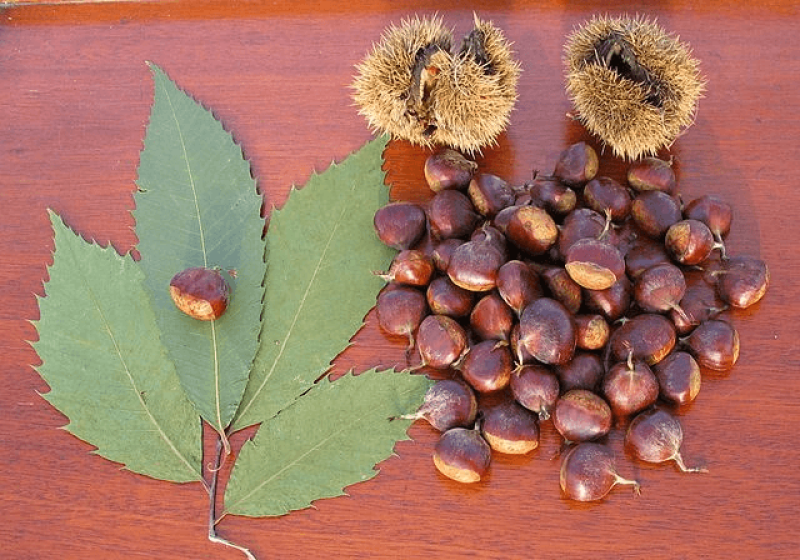
Credit: Timothy Van Vliet and Peatcher via CC-BY-SA-3.0

The American chestnut tree, or číhtkęr in Tuscarora, once grew across what is currently the eastern United States, from Mississippi to Georgia, and into southeastern Canada. The beloved and ecologically important species was harvested by Indigenous peoples for millennia and once numbered in the billions, providing food and habitat to countless birds, insects, and mammals of eastern forests, before being wiped out by rampant logging and a deadly fungal blight brought on by European colonization.

Follow the latest news and policy debates on sustainable agriculture, biomedicine, and other ‘disruptive’ innovations. Subscribe to our newsletter.

Now, a transgenic version of the American chestnut that can withstand the blight is on the cusp of being deregulated by the U.S. government. (Transgenic organisms contain DNA from other species.) When that happens, people will be able to grow the blight-resistant trees without restriction. For years, controversy has swirled around the ethics of using novel biotechnology for species conservation. But [Neil] Patterson, who previously directed the Tuscarora Environment Program and today is the assistant director of the Center for Native Peoples and the Environment at the State University of New York’s College of Environmental Science and Forestry in Syracuse, has a different question: What good is bringing back a species without also restoring its traditional relationships with the Indigenous peoples who helped it flourish?


This is an excerpt. Read the original post here

{{ reviewsTotal }}{{ options.labels.singularReviewCountLabel }}
{{ reviewsTotal }}{{ options.labels.pluralReviewCountLabel }}
{{ options.labels.newReviewButton }}
{{ userData.canReview.message }}

Related Articles

Infographic: Global regulatory and health research agencies on whether glyphosate causes cancer

Infographic: Global regulatory and health research agencies on whether glyphosate causes cancer

Does glyphosate—the world's most heavily-used herbicide—pose serious harm to humans? Is it carcinogenic? Those issues are of both legal and ...

Most Popular

wuhan institute of virology main entrance
​​COVID lab leak? Making a case that the Wuhan market origins theory is wrong
ChatGPT-Image-Mar-10-2026-01_39_01-PM
Viewpoint—“Miracle molecule” debunked: Why acemannan supplements don’t work
Screenshot-2026-06-18-at-11.41.51-AM
Viewpoint—Protecting baloney science: Far right senators move to protect the phony homeopathy industry
ChatGPT-Image-Jun-9-2026-01_11_37-PM
Turmeric supplements: More risks than benefits
Screenshot-2026-06-17-at-9.44.03-AM
Viewpoint: Embryos are becoming the newest battleground of love, loss, and legal uncertainty
artificial intelligence brain think illustration md
Viewpoint — Digital gods and human extinction: Will we be the first species ever to design our own descendants?
ChatGPT Image May 26, 2026, 08_42_17 AM (1)
Viewpoint: Greenpeace and poison: How environmental advocacy groups rely on compliant (and often ignorant) journalists to spread disinformation and spark litigation

Sorry. No data so far.

glp menu logo outlined

Get news on human & agricultural genetics and biotechnology delivered to your inbox.