
It is imperative that those of us who support and defend biotechnology confront the strong possibility that a foolish and risky virology experiment was undertaken in Wuhan in 2019 with disastrous consequences for the world.
Six years after a devastating global pandemic that killed 300 times as many people as Chernobyl and Bhopal combined, we still do not know for sure how Covid began. In an age of forensic genomics, that is a shocking failure.
Editor’s Note: This article by Matt Ridley is in response to an article reproduced on the Science Literacy Project — Viewpoint: COVID lab leak? Misguided backers of the lab leak theory refuse to give up — by Dr. Angela Rasmussen, a virologist and researcher who argued that the lab leak theory is not supported by the evidence.
Yet there is very little funding or effort going into finding out. Why? If a plane crashes, we try very hard to find out why and share the lessons learned so that it does not happen again. Not only is there minimal pressure on the Chinese government to allow a proper investigation or to lift its strict control of access to key information, but many western scientists explicitly say they would rather we do NOT find out lest it upset international relations or reduce trust in science.
Why would it reduce trust in science? Because, as the WHO, many intelligence bodies and several governments agree, there is a strong possibility that Covid began with a laboratory accident. Yet Nature and Science magazines, the science academies and others have been trying to frame any investigation as an “attack on science”. The widespread bullying and denunciation of those who have tried to investigate the possibility of a lab leak is an outrage and a betrayal of science and humanity.
Refusing to investigate honestly has done far more damage to science’s reputation than finding out what happened and acting to ensure it cannot happen again.
I teamed up with Dr Alina Chan, then of the Broad Institute, to investigate how the pandemic started and write a book (“Viral: the search for the origin of Covid-19”). We were open-minded. We did not initially think a lab leak was likely but we both thought it was possible.
Who am I to investigate this? I am somebody who has written for the media about science for nearly half a century. I have a PhD in biology; I have written bestsellers on genomics and served twice on the science and technology select committee of Britain’s House of Lords. But even if I had no expertise at all, I would still have every right to investigate this question. All our lives were disrupted and damaged by this virus.
I had no bias towards the lab leak theory or vested interest in concluding that it was probable. In writing a book on this topic, Alina Chan and I only harmed our career prospects. We received modest advance royalties, far less in my case than I received for previous and subsequent books, and gave half of these to charity. So, it is false to say that we profiteered from concluding that a lab leak was probably the cause.

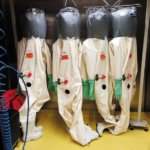
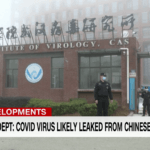
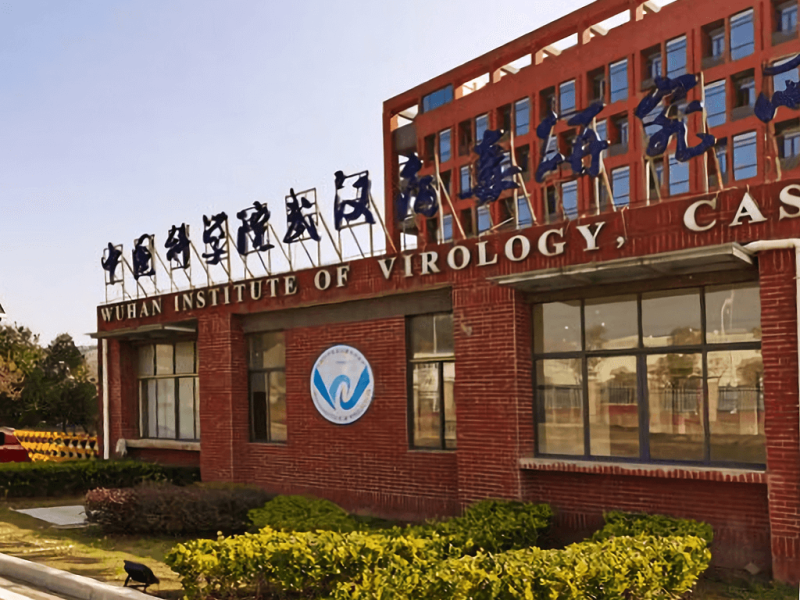
Why do I think a lab leak is by far the most likely explanation? The bare facts, briefly summarized, are as follows. In 2018, the Wuhan Institute of Virology and the EcoHealth Alliance drew up a plan to switch from studying viruses very similar to SARS to ones whose spike genes were 20% divergent genetically. That year they sequenced at least one of these so-called lineage-4 sarbecoviruses, brought to Wuhan a few years before from more than a thousand miles away. They also drew up a project to insert a furin cleavage site into such a sarbecovirus for the first time and to infect human cells and humanized mice. They proposed to do this in Wuhan at a low biosafety level (BSL2) to save money. None of this is in dispute.
The following year in the very same city and a short distance from the lab, a lineage-4 sarbecovirus with a newly inserted furin cleavage site began to infect human beings. We know it was new because of a subsequent mutation that stabilized it. We know it was an insertion because all its closest relatives have near-identical sequences either side of a 12-nucleotide addition. Again, none of this is in dispute.
To this day it is the only sarbecovirus ever seen with a furin cleavage site out of many hundreds. It appeared many hundreds of miles away from the natural range of sarbecoviruses. It was first noticed in a market, but no infected animals were found in the market or anywhere else and the people infected in the market were not infected with the earliest form of the virus. In publishing information about the virus and its closest relative the Wuhan Institute of Virology changed the name of the lineage-4 sarbecovirus they had sequenced the year before, misled the world about the date of sequencing and took their virus database offline. Again, none of this is in dispute.
Thus, in only one place in the world—Wuhan—and at only one time—in Wuhan— was there a proposal to make a virus precisely like the one that caused a pandemic in Wuhan in 2019. If that’s accurate, it would be one of the most astonishing coincidences in the history of the world if this was a result of chance.
For those who wish to check the above facts and investigate the matter in greater detail, I have published a paper and given a fully illustrated lecture:
https://videocast.nih.gov/watch/244438a5-0e6b-11f1-9f14-124f0a52e769
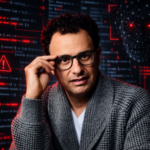
Matt Ridley is a science writer and co-author of Viral: The Search for the Origin of Covid-19, with Alina Chan. He has been a journalist and a businessman and served for nine years in the House of Lords. Find Matt on X @mattwridley