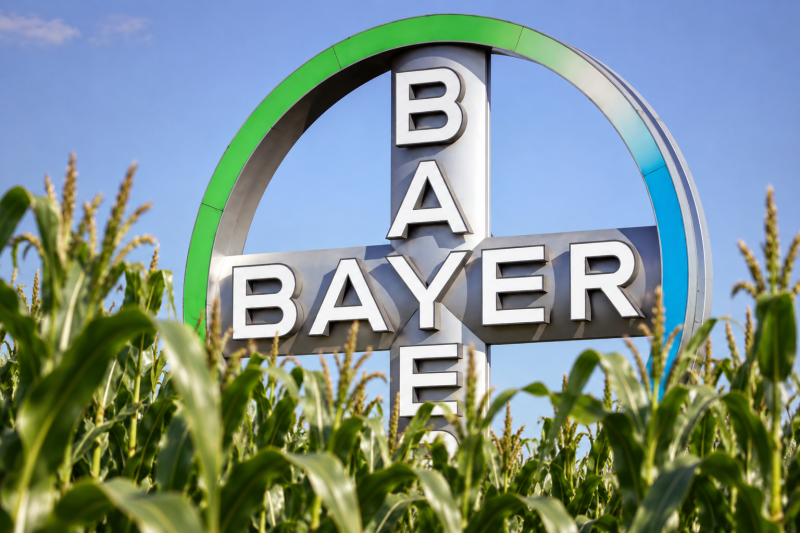
Bayer urges court to approve $7.25 billion Monsanto Roundup settlement that could limit its future liabilities

Bayer is asking a Missouri court to grant final approval to a $7.25 billion settlement covering roughly 65,000 lawsuits claiming Roundup weedkiller causes non-Hodgkin lymphoma, as Reuters’ Dietrich Knauth reports. Judge Timothy Boyer heard arguments in St. Louis on September 14, 2026 but isn’t expected to rule immediately.

The deal pays $10,000 to $165,000 per claimant, scaled to cancer severity, age at diagnosis and exposure history. It’s Bayer’s second attempt at closing the books on Roundup litigation, after a roughly $10 billion 2020 settlement resolved existing claims but left the company exposed to fresh suits.

Mis- and disinformation are distorting science and public policy. Subscribe to our Daily and Weekly Digests for incisive coverage of ‘disruptive’ innovations in AI, agricultural biotechnology, food, chemicals, nuclear energy, vaccines, and other disruptive innovations.

Supporters, including attorneys for tens of thousands of class members, argue the deal locks in compensation now that the Supreme Court has upheld EPA’s finding that glyphosate’s label needs no cancer warning. A Monsanto spokesman said the settlement “is fair to all parties and warrants final approval.”

Objectors counter the payouts are too low and would trap plaintiffs who’d rather sue individually. The World Health Organization’s cancer research arm called glyphosate a probable carcinogen in 2015; the EPA has repeatedly found no such risk at real-world exposures — a conclusion that a vast majority of other global health agencies agree with.

U.S. Supreme Court building, which ruled on Roundup cancer-warning claims
Related on the SLP
Glyphosate affirmed as safe: Supreme Court rejects lawsuit claiming Roundup herbicide causes cancer, upholding EPA determination

Read the original article here

Related Articles

Infographic: Global regulatory and health research agencies on whether glyphosate causes cancer

Infographic: Global regulatory and health research agencies on whether glyphosate causes cancer

Does glyphosate—the world's most heavily-used herbicide—pose serious harm to humans? Is it carcinogenic? Those issues are of both legal and ...

Most Popular

ChatGPT-Image-Mar-10-2026-01_39_01-PM
Viewpoint—“Miracle molecule” debunked: Why acemannan supplements don’t work
Screenshot-2026-09-28-at-11.26.17-AM
Viewpoint: Wellness movement activists reposition nicotine from a killer addictive drug into a cure-all for brain ills
strand of dna genetics
No, GMO foods do not “damage genes, natural disposition and hormones, or decrease physical health and intelligence”
Screenshot-2026-10-01-at-10.52.08-AM
Non-browning CRISPR gene-edited bananas move one step closer to British markets
Radioactive-Americana-Collage-2
The kooky logic behind the raft of spurious cancer claims from Harvard’s T.H. Chan School of Public Health
Screenshot-2026-10-02-at-9.11.36-AM
The genetics of personality
Screenshot-2026-10-02-at-8.56.38-AM
Trump finalizes Medicare drug price cuts, drawing Big Pharma’s fury and a legal challenge
Screenshot-2026-09-22-at-10.54.12-AM
‘They misunderstand science’: Research attempting to tie autism to changes in the gut microbiome comes under fire
AI-Force-Leadership-Portrait
Jay Clayton controversy: The divisive history of Trump’s newly-appointed AI czar
Screenshot-2026-10-02-at-11.12.24-AM
‘Why do we keep falling for this stuff?’ America’s love affair with snake oil salesmen and scams
ChatGPT-Image-Sep-21-2026-11_21_39-AM
Viewpoint: Food cults: Online ‘nutrition communities’ can pose unique dangers
glp menu logo outlined

Get news on human & agricultural genetics and biotechnology delivered to your inbox.