Viewpoint: Why Cuba’s turn toward organic farming succeeded while Sri Lanka’s collapsed

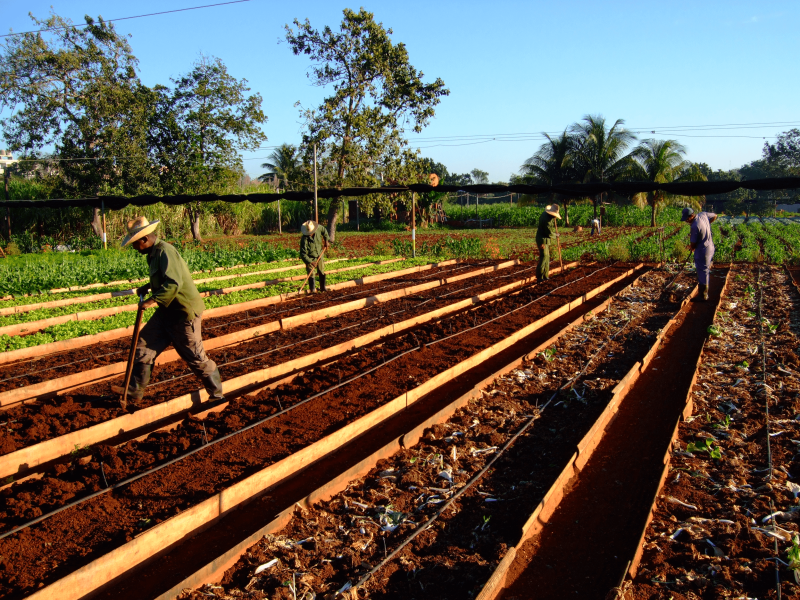
ajm vivero alamar
Credit: Wikimedia Commons (CC BY-SA 4.0)

Cuba is now a laboratory and research field for US experiments in organic food production.

The United States hopes to learn from the Cubans’ experience with organic production. The USDA and Cuban agriculture ministry signed an agreement during Obama’s visit last week that included calls for sharing information and research on organic farming practices.

It doesn’t take much reading between the lines to understand that Cuba’s “organic revolution” has not been one of choice, but rather out of necessity. And the more years that pass since the collapse of the Soviet Union, the harder it gets to justify the embargo on Cuba. The truth is that Cuba is being bullied via soft power coercion, championed by a gullible left-wing audience that has bought into the propaganda of climate change – that is, we must roll back human progress gained in both the Green and Industrial Revolutions in order to please Mother Gaia.

Follow the latest news and policy debates on sustainable agriculture, biomedicine, and other ‘disruptive’ innovations. Subscribe to our newsletter.

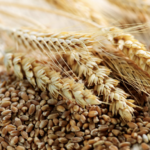
In 2019 President Gotabaya Rajapaksa announced his intention to transition Sri Lanka to fully organic agriculture over the course of 10 years. Then suddenly in April of 2021 Rajapaksa declared the country had to quit chemical fertilizers cold turkey. The results were devastating and threw the country into chaos. Sri Lanka’s backbone commodity, tea, suffered $425 million in losses. Millions were subjected to rolling blackouts and food lines. In March of 2022, less than a year after the 100% organic agriculture rule was imposed, riots broke out in Sri Lanka, resulting in President Rajapaksa fleeing the country after protesters broke through police barricades and into his house, demanding resignation. Just as Kissinger predicted, serious food scarcity was the fuel that created a fire of political instability. 

Sri Lanka has since rolled back their policy on organic agriculture. Advocates of organic and “agroecology” place all blame on the fact that it was rolled out too quickly, and that they didn’t have time to adapt. If we look at the case study of Cuban agriculture, there is a kernel of truth to their position, especially if the ultimate goal is to “reduce human impact on the environment” even if that means human beings must live in poverty. Sri Lanka’s transition to organic was not “sustainable” – its political implications were much more overt and vulgar. Cuba’s transition has been much slower, over the course of decades, to the point where publications can claim that they are doing so out of choice, or that they have achieved “the world’s largest experience of socialist degrowth.” For eco-socialists, Cuba is a success story, Sri Lanka, not so much.


This is an excerpt. Read the original post here

{{ reviewsTotal }}{{ options.labels.singularReviewCountLabel }}
{{ reviewsTotal }}{{ options.labels.pluralReviewCountLabel }}
{{ options.labels.newReviewButton }}
{{ userData.canReview.message }}

Related Articles

Infographic: Global regulatory and health research agencies on whether glyphosate causes cancer

Infographic: Global regulatory and health research agencies on whether glyphosate causes cancer

Does glyphosate—the world's most heavily-used herbicide—pose serious harm to humans? Is it carcinogenic? Those issues are of both legal and ...

Most Popular

ChatGPT-Image-Mar-27-2026-11_47_30-AM-2
FDA’s expedited drug reviews are hailed in some quarters but other approval practices are problematic
Screenshot-2026-05-01-at-1.29.41-PM
Viewpoint: What happens when whole grains meet modern food manufacturing? Labels don’t tell the whole story.
Farmers can talk to plants
Farmers are a major source of misinformation—about farming
ChatGPT-Image-Apr-13-2026-02_20_22-PM
Viewpoint: Misinformation infodemic? Why assessing evidence is so challenging 
S
As vaccine rejectionism spreads, measles may be taking a more dangerous turn
Screenshot 2026-05-06 at 2.19
Vaccine shootout at the CDC 
Screenshot-2026-04-20-at-2.26.27-PM
Viewpoint — Food-fear world: The latest activist scientists campaign: Cancer-causing additives
What explains Homo sapiens’ huge brains? Ancient climate change played a role
Viewpoint: Internal White House documents detail administration’s strategy to undermine climate science
ChatGPT-Image-May-7-2026-11_28_04-AM-2
‘Conflict entrepreneurs’ are driving disinformation and shaping public opinion
ChatGPT-Image-May-6-2026-03_41_05-PM
‘Protecting the integrity of science’: Kennedy’s FDA blocks release of taxpayer-funded studies finding COVID and shingles vaccines safe
Screenshot-2026-05-06-at-2.07.43-PM
Manufacturing a conspiracy: The timeline of how  the White House embraced the fringe claim that scientists are being mysteriously murdered
Screenshot 2026-05-06 at 2.56
Singularity crisis ahead? Can super babies save us from rogue AI geniuses?
bigstock opioids on chalkboard with rol
GLP podcast: 'Safe injection sites': enabling drug addiction or saving lives?
Screenshot 2026-05-06 at 12.49
Immortal dragons: The quest to ‘make death optional’
glp menu logo outlined

Get news on human & agricultural genetics and biotechnology delivered to your inbox.