Mismatch happens when an evolved adaptation, either physical or psychological, becomes misaligned with the environment. Take moths and some species of nocturnal flies, for example. Because they have to navigate in the dark, they evolved to use the moon for direction. But due to the invention of artificial lighting, many moths and flies are drawn to street lamps and indoor lights instead.
The same happens for humans. A classic example is our “sweet tooth”, which motivated ancestral humans to search for calorie-rich foods in nutritionally scarce environments. This sweet tooth becomes mismatched to the modern world when food companies mass produce foods laden with refined sugars and fat, hijacking an otherwise useful trait. The result is tooth decay, obesity and diabetes.
The modern world is replete with things that make our once-adaptive instincts go awry. For instance, humans evolved to live in kin-based, nomadic tribes of approximately 50 to 150 close-knit people. Our adaptive need to belong functions well in such settings. In large cities populated by hundreds of thousands of strangers, however, people can end up feeling lonely and like they have not many close friends.
Studies have also shown that when social animals are kept in crowded spaces, they experience competitive stress which has consequences for physical health such as poorer immune functioning and reduced fertility. Like the animals in the crowding studies, humans living in crowded cities too can experience unprecedented levels of stress and tend to have fewer children.
The social inequality in modern societies also differs from the more egalitarian hunter-gatherer environment. Humans evolved to care about social status, which motivates us to redress status gaps between ourselves and others. But when social disparity is too intense and people like Elon Musk, whose net worth would take the average American several million years of work at the mean annual wage to catch up with, are regularly made salient by the media, our concerns with social status can lead to social status anxiety.
Social media exacerbates the problems associated with social comparisons. As people typically share the best sides of themselves online, social media presents a skewed impression of reality, which can make viewers feel worse about their own. The quantification of worth through likes and followers also allows people to obsess with greater precision over where they stand in relation to others.
Several problematic trends can be understood from this evolutionary mismatch. For instance, competition and status anxiety have been linked to obsessions with educational attainment, vying for prestigious jobs and materialism. There is a growing trend of “going broke to look rich”, as people incur debt to afford things that create the impression of having status.
People are also more likely to take risks when they feel that they need to gain a competitive edge. Coupled with the rising cost of living, people can find their jobs are inadequate not only to keep up with societal expectations but also to build wealth. A 2023 report by global investment professionals association, the CFA Institute, indicated that many Gen Z people are turning to risky investments like cryptocurrencies in a bid to cope. The intensely competitive modern world can also drive people to undergo dangerous cosmetic surgeries and weight loss regimes.




As people struggle to live up to society’s expectations of successful adults, they seem to be redefining their goals in life. Surveys of Gen Z and Millennial respondents have found that increasing costs of living are forcing these age groups to lower their career ambitions and give up the idea of owning a home, starting a family or even finding a romantic partner. A 2023 survey of 55,000 people born between 1981 and 2012 found that respondents are focusing on caring more for their mental and physical health instead.
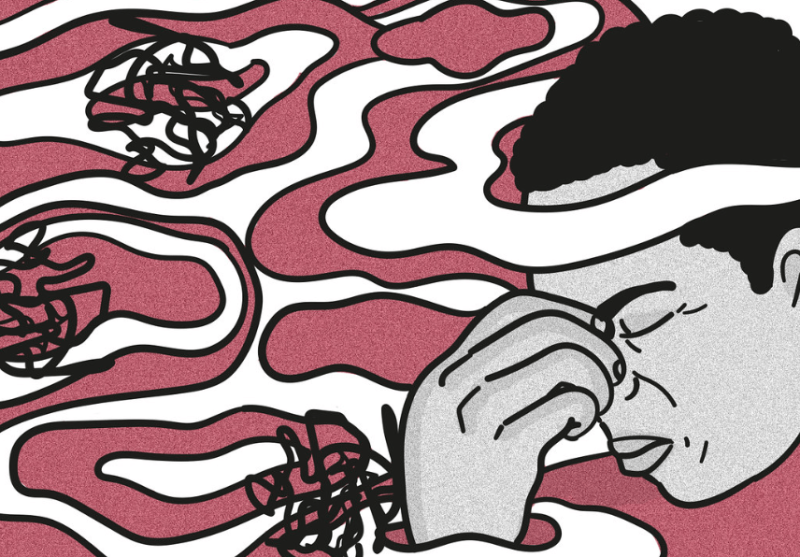
When competition becomes too intense, people may internalise the pressure and experience anxiety or depression. Researchers have linked self-harm and depression to people feeling they can no longer deal with the demands of modern society. These trends are especially prevalent in countries with a strong shame culture, such as Japan and South Korea.
Studies have shown that some externalising responses may include anger at the perceived unfairness of a contest that seems impossible to win, resulting in cynicism, aggression and hostility. A manifestation of this anger can be noted in, for example, “incel” circles, in which men often feel they are unable to find a romantic or sexual partner because the odds are unjustly stacked against them.
What can we do
The evolutionary mismatch perspective doesn’t suggest that we return completely to an ancestral way of life, but to find ways to adjust our environment such that it aligns better with our evolved nature. For example, we can think of ways to engineer the built environment to reduce crowdedness or increase access to nature. Indeed, nature immersion, such as forest-bathing (focusing on sensory engagement to connect with nature) and community gardening, can reduce stress and improve wellbeing.
Lifestyle changes to reduce consumerism and exposure to mass and social media, alongside focusing on meaningful work rather than job prestige, are also likely to help. Some counter-trends like minimalism and mindfulness indicate a growing awareness that finding contentment in the little things can allow us to avoid the pitfalls of modernity.
These are just some ideas. But appreciating the evolutionary basis of our problems and raising awareness of the mismatch perspective may give us a better chance of tackling them at the root.
Jose Yong is an Assistant Professor of Psychology at Northumbria University, Newcastle.
A version of this article was originally posted at the Conversation and is reposted here with permission. Any reposting should credit both the GLP and original article. Find the Conversation on X @ConversationUS