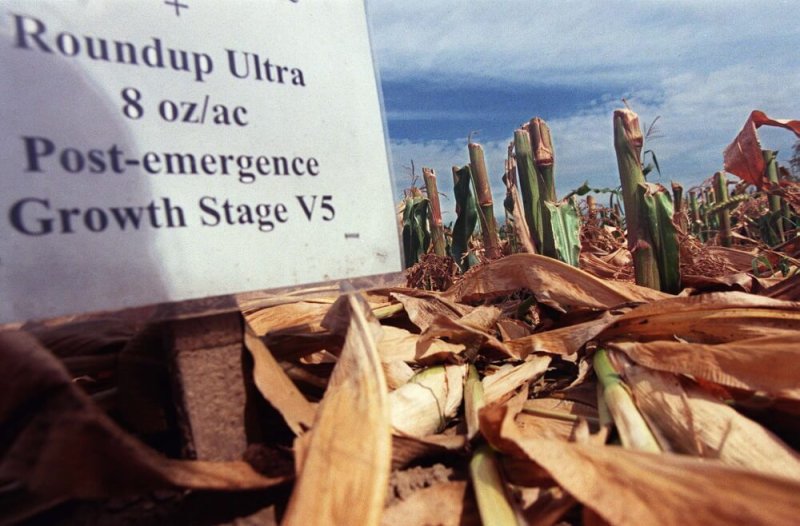
David Gustafson, a scientist with agricultural biotech giant Monsanto, was sweating a little. There he was on the stage at the 2014 Camden Conference, talking food policy for the future, but all the Mainers in the audience wanted to do was ask him questions about Monsanto’s past and present.
Later, on the street when the session was over, he said he supposed it made sense for there to be so many tough questions “here in this part of the country in particular.”
Many states, and nations, have big issues with Monsanto. Last May, protests dubbed “March Against Monsanto” were held in 52 countries. The Food and Drug Adminstration, however, considers most genetically engineered crops “substantially equivalent” to non-GE crops. There’s no widely accepted scientific evidence to suggest that there are ill affects on human health from consuming genetically engineered foods, at least not in the 20 years they have been studied.
Yet Maine’s history with Monsanto is particularly fraught. It has evolved over time from warning bells in the organic community and a welcome embrace from many farmers looking to improve their yields to something much more antagonistic: lawsuits, a labeling law and a public now deeply suspicious of or deeply confused about what this giant corporation does.
In Aroostook County in the 1990s Maine farmers jumped on a bandwagon to grow Monsanto’s genetically engineered potato, the NewLeaf. The promises were great, as is often the case with genetically engineered crops – fewer pesticides or herbicides or fertilizers needed, all pluses for the environment.When consumer confidence eroded, causing potato processor McCain Foods to say it wouldn’t buy any more genetically engineered potatoes, the market dried up and Monsanto made a quick exit, leaving behind a research facility (now a part of the University of Maine Cooperative Extension) and causing setbacks or outright ruin for some Maine growers.
Last year, Maine was the first state to pass a law requiring that products containing genetically engineered crops, the vast majority of which are Monsanto-made, to be labeled as such. Had Gustafson been nervous, paying Maine a visit so soon after passage of the GMO law? “You’ll think this is disingenuous, but I had actually forgot about that,” he said.
When the Maine Food Strategy, a coalition of policy groups and individuals, polled Mainers last fall about how concerned they were about transgenic or genetically engineered crops, 24 percent ranked it a 10, of highest concern.
“That is huge,” said John Jemison, who serves on the group’s steering committee. “The reality in my opinion is that the promise of higher yields, more sustainable production and less pesticides has, for the most part, really not been born out. People are still saying, ‘We don’t trust this.’ And what I’ve found is that industry just wants to say, ‘There is nothing wrong with this. Just accept it, dammit.’ I don’t think that is going to work.”
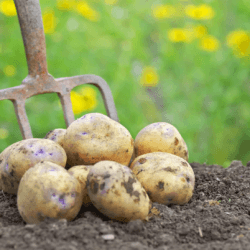
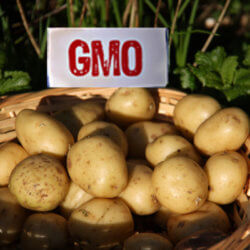


The NewLeaf potatoes, engineered to ward off the potato beetle, were trumpeted by Monsanto in Maine newspapers as the salvation of the potato industry as early as 1995. It worked, but genetically engineered french fries made consumers nervous. Which in turn made companies like McDonald’s nervous. The market for the potatoes shriveled and, by 1999, Monsanto pulled the plug. But there were still potatoes in the field.
“There were 25 or 30 growers who had GMO potatoes and they couldn’t market them to McCain’s,” said Rommy Haines, the director of the Aroostook County Farm Bureau. “And there were a couple who were invested in developing the seeds with Monsanto, and they really took a thrashing. Two or three went out of business.”
But consumer preferences played the predominate role in the potato fiasco, he noted, not Monsanto’s business practices. And even a grower in Aroostook County who not only grows no genetically engineered crops but is celebrated for that, isn’t ready to damn biotech.
“I’m not 100 percent for GMOs,” said Van Buren potato farmer Dominic LaJoie, whose blue potatoes are sold to Terra Chips, which markets them, very clearly, as non-GMO. “But I can’t be against it because there is too many starving people in the world. And there is going to be a lot more in the future if they don’t figure out the food system. And unfortunately, GMO probably has to be a part of it.”
It’s a popular argument, and it stops many people in their tracks; who doesn’t want to help hungry people eat?
Read the full, original article: Monsanto and Maine: A look at Maine’s sometimes fractious relationship with the GMO giant
Additional Resources:
- “How did Monsanto become the ‘evil face’ of GMOs?” Modern Farmer
- “You say potato, I say GMO: Are spuds the next battleground in the GMO debate?” Genetic Literacy Project
- “An interview with anti-GMO crusader Jim Gerritsen,” Down East