


This article is adapted from the chapter “On What It’s Like Not To Know Squat about GMOs” from the ebook “The Lowdown on GMOs: According to Science,” compiled by Fourat Janabi for smashwords.com:
Recently, a “ground-breaking” study by Gilles-Éric Séralini used by anti-GMO activists as “convincing evidence” of harm caused by genetically-engineered corn, was deep-sixed by the very journal that published it, Food and Chemical Toxicology.
I raised a glass of home-brewed hard cider and said “Salut!” to self-correcting science.
Changing my mind about GMOs has been easy. All it took was learning that the Humulin my Type-1 diabetic spouse takes every day to keep himself alive is a GMO.
When most people think of GMOs, they think of food. A freshman seminar I once taught at University of Southern Maine concerns how we laypeople should view claims about food we see in the media. I introduce the subject of genetically modified organisms by typing “GMO images” into a search engine. The results are hilarious.
I ask the students which images they see most represented on the screen. Immediately they say, “Hypodermic needles.”
There they are, sticking out of tomatoes like porcupine quills. I ask them how the hypodermic needle is employed in the creation of genetically modified organisms. Silence.




“It isn’t,” I tell them.
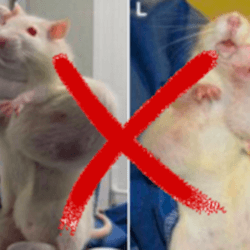
The Séralini fiasco tells us that when someone performs a bad “study,” smart people will sometimes be bamboozled by it – including the good folks at the journal Food and Chemical Toxicology.
And if they could be fooled, what about the rest of us?
I hope my students go out into the world with the awareness that we humans are built to believe, not to disbelieve; that it’s our life’s work to decide which beliefs to accept, which to discard; and that it won’t be easy.
Bad beliefs are like fishhooks: easy to swallow, difficult to cough up. It can be done, though.
Read the full, original article: Mike Bendzela is skeptical about the GMO skeptics























