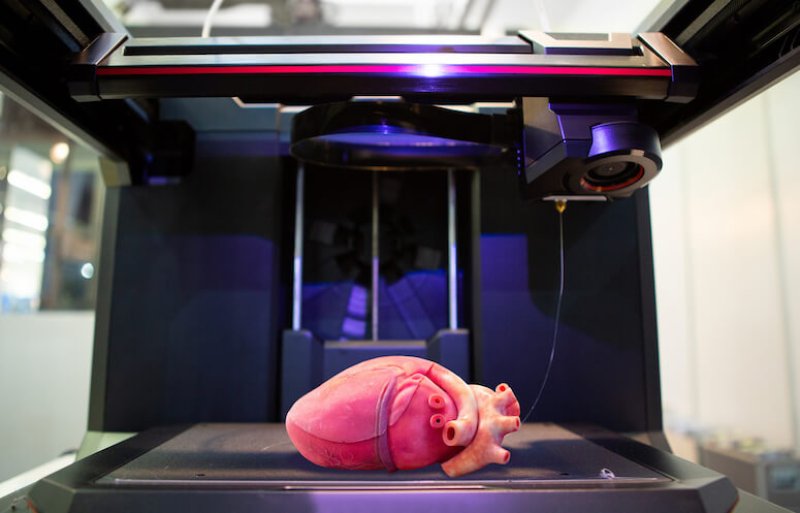

Scientists have been fantasizing about the potential of precise 3D bioprinting for years. Just imagine, for example, if doctors could trial therapies on an exact replica of a kidney disease patient’s kidney until they found the perfect solution for that individual—it would have huge implications for the medical field, especially in drug testing. But modern technology has yet to achieve this.
Now, however, biomedical engineers in Australia have invented an innovative high-speed bioprinter that brings us one step closer to that ability, and it uses surprising elements: sound, light, and bubbles. Their work was presented in a study published in the journal Nature….
Currently, scientists have only limited ways to create tissue for testing pharmaceutical therapies, such as using lab-grown samples or by relying on traditional 3D bioprinting, per Popular Science’s Andrew Paul. However, cultivating organs in a lab is complex and expensive—and printing them is currently slow and prone to errors….