Lucy, our plodding ancestor

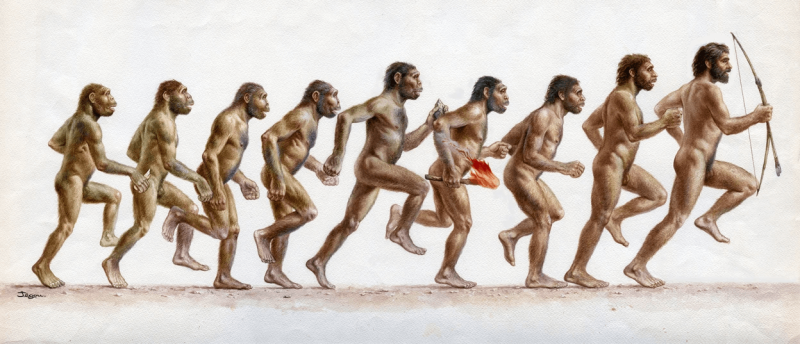
Australopithecus afarensis did not have the lengthened Achilles tendon and shortened muscle fibres that benefit modern runners. Credit: Christian Jegou/Science Photo Library

Ancient human relatives ran on two legs, like modern humans, but at a much slower pace, [suggesting] 3D computer simulations of Australopithecus afarensis – a small hominin that lived more than three million years ago.

The analysis offers a detailed snapshot of the hominin’s running speed and the muscular adaptations that enabled modern humans to run long distances, says Herman Pontzer, an evolutionary anthropologist at Duke University in Durham, North Carolina. “It’s a very thorough approach,” he says. The findings were published [in] Current Biology.

Mis- and disinformation are distorting science and public policy. Subscribe to our Daily and Weekly Digests for incisive coverage of ‘disruptive’ innovations in AI, agricultural biotechnology, food, chemicals, nuclear energy, vaccines, and other disruptive innovations.

A. afarensis walked upright on two legs, making its fossils a favourite for researchers looking to unpick how bipedalism evolved in the human lineage. But few studies have explored the hominin’s running ability because it requires more than studying fossilized footprints and bones, says study co-author Karl Bates, an evolutionary biomechanics researcher at the University of Liverpool, UK.

This is an excerpt. Read the original post here

Related Articles

Infographic: Global regulatory and health research agencies on whether glyphosate causes cancer

Infographic: Global regulatory and health research agencies on whether glyphosate causes cancer

Does glyphosate—the world's most heavily-used herbicide—pose serious harm to humans? Is it carcinogenic? Those issues are of both legal and ...

Most Popular

ChatGPT-Image-Sep-23-2026-02_36_39-PM
Viewpoint: After firing the entire National Science Board, Trump reshapes funding initiatives. Here’s the good and the bad.
ChatGPT-Image-Mar-10-2026-01_39_01-PM
Viewpoint—“Miracle molecule” debunked: Why acemannan supplements don’t work
ChatGPT-Image-Sep-10-2026-10_36_07-AM
Viewpoint: Even lousy scientific articles can shield authors when they hype dubious health claims and products
sorghum farmers in kenya FARMERS TREND
Here are all the ways CRISPR gene editing is transforming Africa’s staple crops—and there’s a lot more innovation to come
Screenshot-2026-10-01-at-11.21.27-AM
Vaccine hesitancy, like malaria, surges globally, topping 35% in some countries
ChatGPT-Image-Sep-30-2026-01_25_34-PM
Blood tests for Alzheimer’s? The latest grifter, social media scam.
ChatGPT-Image-Sep-30-2026-01_38_36-PM
Viewpoint: Died “with measles” vs. died “from measles”: RFK, Jr.’s dangerously subversive word games
ChatGPT-Image-Sep-21-2026-03_15_09-PM
Viewpoint: Chipotle-inspired lesson: 10,000 sick customers suggest that processed foods can be safer than fresh ones
ChatGPT-Image-Sep-30-2026-01_11_07-PM
How U.S. teamed with Russia to block global human AI weapons oversight
Screenshot-2026-09-28-at-1.16.38-PM
Defying public perceptions, U.S. cancer deaths plunged 35% since 1991
glp menu logo outlined

Get news on human & agricultural genetics and biotechnology delivered to your inbox.