Viewpoint: Trump is pushing ‘America FIrst’ across policy sectors including food and farming. Why that’s not a great idea

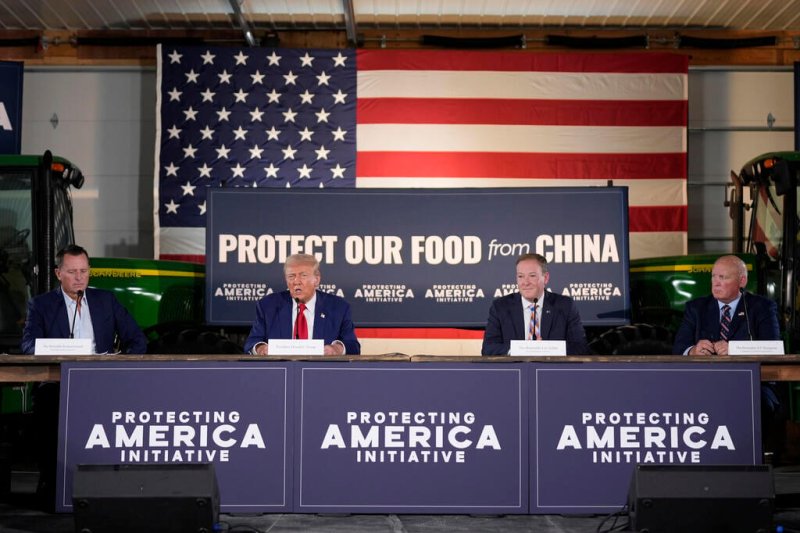
Republican presidential nominee former President Donald Trump speaks at a campaign event at a farm, Monday, Sept. 23, 2024, in Smithton, Pa, as from left, Richard Grenell, Lee Zeldin and Rep. Glenn Thompson, R-Pa., listen. (AP Photo/Alex Brandon)

An America First food system would promote eating seasonally and locally, supporting more small farmers in the process. But that is not how most people eat now. Eating America First would restrict the variety that shoppers have come to expect; eating fresh blueberries year-round would be impossible. Barring the overhaul of all U.S. agriculture, it would mean a less healthy diet, too. The guac-ocalypse near miss was a reminder of the precarious state of our food system: Much of the food we want is not produced at home.

Follow the latest news and policy debates on sustainable agriculture, biomedicine, and other ‘disruptive’ innovations. Subscribe to our newsletter.
[T] he U.S. does already produce enough food to feed itself, and then some. About 4,000 calories’ worth of food a day were available for each person in 2010, according to the USDA’s most recent estimate; that year, the average person consumed 2,500 calories a day. But food is more than just calories. The U.S. produces plenty of grains, oils, sweeteners, and meat, but far less fresh produce and legumes; in recent years, the country has become a net importer of food. “The food group that we produce the least of to meet our dietary needs is fruits and vegetables,” Conrad said. In 2022, 69 percent of the fresh vegetables and 51 percent of the fresh fruits imported by the U.S. came from Mexico. Meat, canola oil, and, uh, biscuits and wafers account for most of the U.S. imports from Canada, but 20 percent of this country’s fresh-vegetable imports come from there, too.

The problems with an America First food system wouldn’t just be about cost. It would lack diversity….


This is an excerpt. Read the original post here

{{ reviewsTotal }}{{ options.labels.singularReviewCountLabel }}
{{ reviewsTotal }}{{ options.labels.pluralReviewCountLabel }}
{{ options.labels.newReviewButton }}
{{ userData.canReview.message }}

Related Articles

Infographic: Global regulatory and health research agencies on whether glyphosate causes cancer

Infographic: Global regulatory and health research agencies on whether glyphosate causes cancer

Does glyphosate—the world's most heavily-used herbicide—pose serious harm to humans? Is it carcinogenic? Those issues are of both legal and ...

Most Popular

Screenshot-2026-04-22-at-12.21.32-PM
Viewpoint: Why the retracted Monsanto glyphosate study doesn’t change the science—the world’s most popular herbicide is safe 
ChatGPT-Image-Apr-16-2026-02_56_53-PM
Financial incentives, over diagnosis, and weak oversight: Autism claims are driving up Medicare costs
Picture1
The FDA couldn’t find a vaccine safety crisis, so it buried its own research
ChatGPT-Image-May-1-2026-11_42_59-AM-2
Viewpoint: NAD is the wellness grifters latest evidence-lite longevity fad. At least the mice are impressed.
Screenshot-2026-05-21-at-12.15.17-PM
UK gene-editing milestone: Livestock barley that increases ruminant value and reduces methane emissions is first-approved CRISPR crop
global warming
‘Implausible’: Top climate scientists reject worst-case scenario—soaring temperatures and fast-rising sea levels
Screenshot-2026-05-21-at-3.15.53-PM
Chiropractors may no longer be modern-day snake oil salesmen, but the benefits of their therapy are limited–at best

Sorry. No data so far.

glp menu logo outlined

Get news on human & agricultural genetics and biotechnology delivered to your inbox.