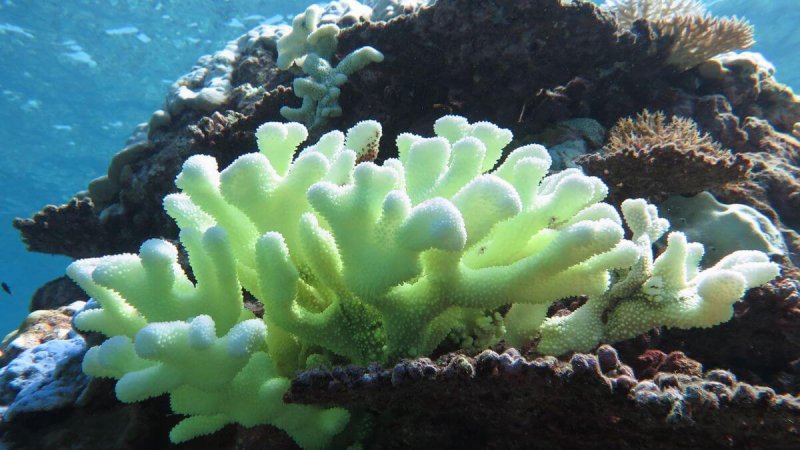
Key to ocean life, coral reefs are disappearing on the way to extinction. Should we mobilize gene editing to save a threatened species?

Genetically altering coral could help them survive in steadily warming environments. Credit: CNET

Coral reefs are fundamental to the health of our oceans. They cover less than 1% of the Earthโ€™s ocean, but are home to aย quarterย of the oceanโ€™s fish. … Without them, we would lose a major carbon sink. And they are on the brink of extinction, threatened by ocean acidification and rising temperatures that are outpacing their ability to adapt.ย 

If scientists could use CRISPR to engineer a more heat-tolerant coral, it would give coral a better chance of surviving a marine environment made warmer by climate change. It would also keep the human industries that rely on reefs afloat. But should we edit nature to fix our failures? And if we do, is it still natural?

Follow the latest news and policy debates on sustainable agriculture, biomedicine, and other ‘disruptive’ innovations. Subscribe to our newsletter.

Using the new field of biotech to save the natural world from the fallout of a previous technological romance has gained traction among scientists and conservationists who worry we have no time to waste. However, it remains a hotly debated topic, pitting those who say, โ€œwe canโ€ against those who say, โ€œwe shouldnโ€™t.โ€ย 

This is an excerpt. Read the original post here

{{ reviewsTotal }}{{ options.labels.singularReviewCountLabel }}
{{ reviewsTotal }}{{ options.labels.pluralReviewCountLabel }}
{{ options.labels.newReviewButton }}
{{ userData.canReview.message }}

Related Articles

Infographic: Global regulatory and health research agencies on whether glyphosate causes cancer

Infographic: Global regulatory and health research agencies on whether glyphosate causes cancer

Does glyphosateโ€”the world's most heavily-used herbicideโ€”pose serious harm to humans? Is it carcinogenic? Those issues are of both legal and ...

Most Popular

Picture1
The FDA couldnโ€™t find a vaccine safety crisis, so it buried its own research
Screenshot-2026-04-22-at-12.21.32-PM
Viewpoint: Why the retracted Monsanto glyphosate study doesnโ€™t change the scienceโ€”the worldโ€™s most popular herbicide is safeย 
ChatGPT-Image-May-7-2026-01_23_27-PM-2
Viewpoint: Will AI democratize personalized cancer treatment or fuel medical misinformation?
ChatGPT-Image-May-1-2026-11_42_59-AM-2
Viewpoint: NAD is the wellness grifters latest evidence-lite longevity fad. At least the mice are impressed.
global warming
โ€˜Implausibleโ€™: Top climate scientists reject worst-case scenarioโ€”soaring temperatures and fast-rising sea levels
ChatGPT-Image-Apr-16-2026-02_56_53-PM
Financial incentives, over diagnosis, and weak oversight: Autism claims are driving up Medicare costs
vax-misinformation-main
Facts & Fallacies Podcast: Limit free speech to blunt social media misinfo?
ChatGPT-Image-May-12-2026-11_27_01-AM-2
AI likely to improve health care, research showsโ€”but not for blacks and ethnic minorities
Screenshot-2026-05-21-at-3.15.53-PM
Chiropractors may no longer be modern-day snake oil salesmen, but the benefits of their therapy are limitedโ€“at best
Screenshot-2026-05-21-at-12.15.17-PM
UK gene-editing milestone: Livestock barley that increases ruminant value and reduces methane emissions is first-approved CRISPR crop
glp menu logo outlined

Get news on human & agricultural genetics and biotechnology delivered to your inbox.