

Anthropic disrupted five attempts to misuse its Claude models for possible bioweapons development between December and August, including two cases seeking help with gain-of-function research on dangerous viruses, as Axios’s Adriel Bettelheim and Caitlin Owens report.
The disclosure lands amid mounting worry that generative AI is outpacing efforts to contain it. A Stanford team recently used AI to design a synthetic virus never seen in nature, and a survey of 100-plus national security experts found 70% believe AI meaningfully raises bioweapon risk within a few years, mainly by lowering the bar for less-skilled actors.
Anthropic said the cases reflect significant dual-use research associated with state actors of concern who routinely evade its access controls, not proof Claude is currently enabling attacks.
Johns Hopkins Center for Health Security director Tom Inglesby says the moment calls for accountability: “The public needs to know most powerful models being developed in this country are being reviewed for high-end national security risks.”
 “Hit the brakes”: Anthropic warns the race to superintelligence could spawn internet-seizing AI swarms—and empower authoritarians. Here’s how to stop it.
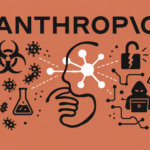 Anthropic claims to thwart AI-based cyberattacks, surveillance, and biological weapons research
 AI with human feelings? Anthropic’s Claude edges closer



Some researchers argue the safer path is narrowly scoped tools, not autonomous agents. As Hamza Chaudhry of the Future of Life Institute put it, “Once you add autonomy … you create uncertainty that could be quite dangerous.”