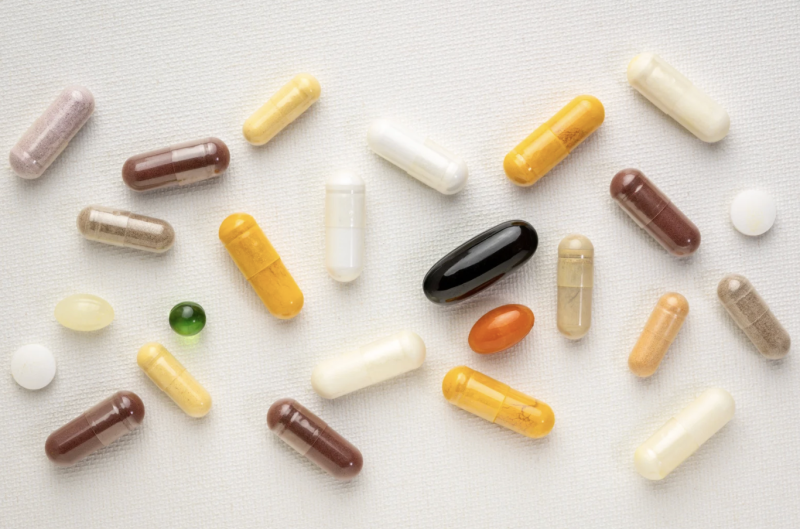

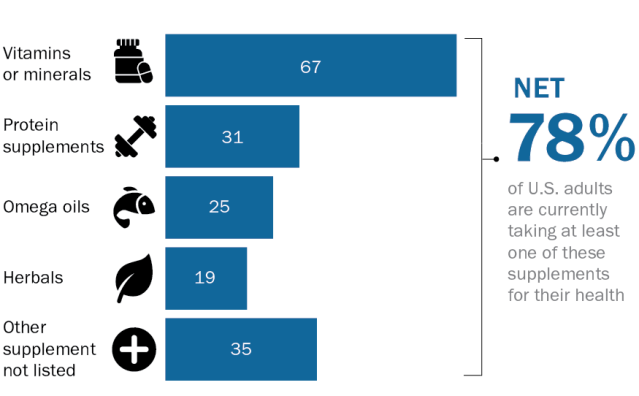
Nearly eight in ten Americans take at least one pill, powder or gummy in the name of good health, as Pew Research Center’s Emma Kikuchi and Brian Kennedy report. In a survey of 3,554 U.S. adults conducted July 6-12, 78% said they currently take a supplement — and most think it matters.
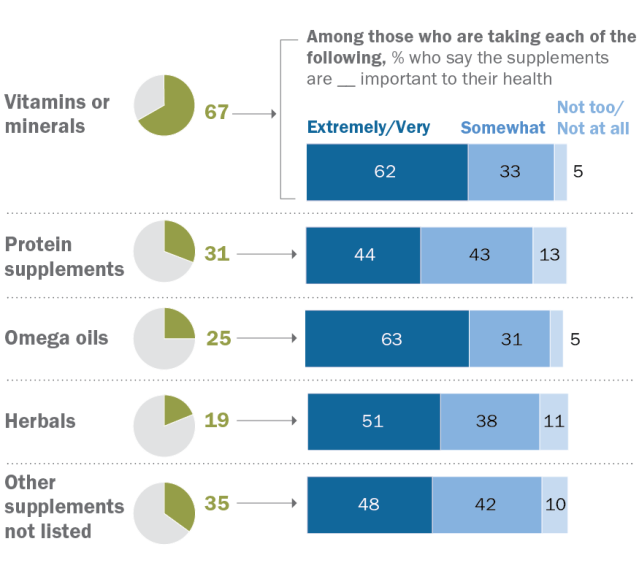
Vitamins and minerals lead the pack at 67%, followed by protein supplements (31%), omega oils (25%) and herbals (19%). Another 35% take something else, and Pew’s definition leaves plenty of room: “products like vitamins, minerals, herbals, protein powders, melatonin or probiotics.”
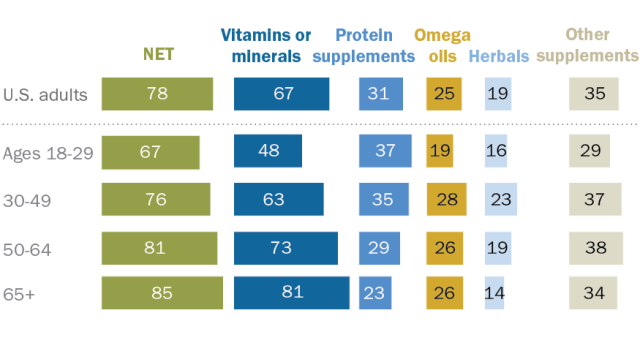
Age shapes the medicine cabinet. Some 85% of adults 65 and older take supplements, compared with 67% of those 18 to 29. But younger adults are the protein-shake crowd: 37% take protein supplements, while 81% of seniors stick with vitamins and minerals.
The faith runs deep. Among people taking vitamins or minerals, 62% say they are extremely or very important to their health, and another 33% say they are somewhat important. Omega oil users are similarly devoted (63%), while herbal (51%) and protein users (44%) are a bit less sold.




Use also tracks with demographics. “Women are slightly more likely than men to say they are currently taking supplements (82% vs. 74%),” the researchers write, and upper-income adults (85%) outpace lower-income adults (74%). Meanwhile, “Four-in-ten Asian adults say they are taking these kinds of supplements [omega oils], compared with about a quarter of Hispanic, Black and White adults.”
All that enthusiasm sits uneasily with the evidence. The U.S. Preventive Services Task Force concluded, in a 2022 recommendation statement published in JAMA, that there’s insufficient evidence multivitamins help healthy adults prevent cardiovascular disease or cancer — and it recommended against taking beta-carotene or vitamin E supplements for that purpose.