Kenyans face danger from aflatoxin contamination in crops, biotechnology can mitigate problem

Most Kenyans are at high risk of aflatoxin contamination due to lack of monitoring and evaluation on the harvested and produced crops, says Dr. Charity Mutegi of Kenya Agricultural Research Institute (KARI). Mutegi disclosed that the Kenya Bureau of Standards (KEBS)-a State agency for quality maintenance, tests a negligible percentage of national crops.

She further adds that aflatoxin gets introduced in the country from imported foods across Kenya’s neighbours. “This is a problem that lies squarely with the KEBS and the Kenya Plant Health Inspectorate Service that have failed to act on individuals who take advantage of the porosity of Kenya’s borders,” she said.

According to the Food and Agriculture Organization (FAO) of the United Nations, 25 percent of the world food crop and a higher percentage of the world animal feedstuffs are contaminated by mycotoxins. Dr. Julius Maina – food microbiologist and biotechnologist, aflatoxin is one cause of the contamination that is world over. He noted that aflatoxin has far reaching health effects which include cancer complications, mutagenicity, teratogenic (birth defects), and kidney and nervous disorders among others human health risks.
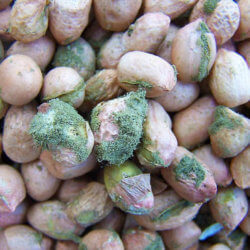
In Kenya for instance, control of aflatoxin contamination in maize is dependent upon the development and introduction of germplasm resistance to growth of aflatoxin species and biosynthesis of toxics by these species. Scientifically, availability of A.oryzae whole genome sequence, a close relative of A. flavus, used in industrial fermentation for enzyme production without aflatoxin, could help in mitigating aflatoxin dangers.

Read the full, original article: Kenyans still at risk of aflatoxin contamination

Related Articles

Infographic: Global regulatory and health research agencies on whether glyphosate causes cancer

Infographic: Global regulatory and health research agencies on whether glyphosate causes cancer

Does glyphosate—the world's most heavily-used herbicide—pose serious harm to humans? Is it carcinogenic? Those issues are of both legal and ...

Most Popular

Screenshot-2026-11-17-at-12.18.09-PM
Challenging glyphosate fear-mongering: Statewide Nebraska study finds no link between weedkiller use and non-Hodgkin lymphoma
Soybean Harvest in Cupped Hands
30 years of GMO farming: Defying cynics, we’ve had larger harvests, lower costs, and $385 billion in added global farmer income
Screenshot-2026-11-16-at-2.37.32-PM
30 years of GMO farming: Is the boom in glyphosate and glufosinate use harming the environment? Data show they’re the most sustainable choice
Wholewheat Bread and Yogurt Ingredients
Viewpoint: RFK Jr.’s reckless good intentions: Do we really want to ban whole-wheat bread and yogurt?
ChatGPT-Image-Mar-10-2026-01_39_01-PM
Viewpoint—“Miracle molecule” debunked: Why acemannan supplements don’t work
Stormlit Portrait Over Golden Mountains
Searching for life where no one thought to look: A renowned astrophysicist’s seemingly quixotic quest to explore Venus’s clouds
Screenshot-2026-11-17-at-10.41.13-AM
Viewpoint: The cost of resurgence: Let’s not forget how difficult it was to wipe out measles in the U.S.
Grayscale Collage of Protest and Choice
Viewpoint: Medical Freedom movement? A sobering look at RFK Jr.’s disastrous two years as our health and food czar 
Screenshot-2026-11-18-at-12.42.18-PM
Viewpoint: MAHA/MAGA/RFK Jr. kook health disinformation crackup is coming. Beware as Bhattacharya, Makary, Prasad, and Oz seek lucrative second acts
Screenshot 2026-07-29 at 10.40
The COVID vaccine turbo cancer scare is back. Science still proves it’s wrong.
Screenshot-2026-11-13-at-10.02.02-AM
Viewpoint: Why it’s such a big deal that under Trump-RFK Jr., the U.S. has lost its ‘measles-free’ status  
BEMT Lotion for Freckled Skin
Burned by FDA bureaucracy: Why Americans waited decades for cancer-preventing sunscreen
glp menu logo outlined

Get news on human & agricultural genetics and biotechnology delivered to your inbox.