Is the long-run future of civilization to select for those who are introverts? Is intro/extroversion genetically mediated?
We don’t have enough evidence at the moment to draw any reliable conclusions here, so I won’t hedge. However, I will explain some recent findings that extroverts release more dopamine than introverts in response to their physical environment.
Research published last year in the journal Frontiers in Human Neuroscience demonstrated (within the confines of the study) different processing styles between those classified as ‘extroverts’ and those classified as ‘introverts.’ There are a few caveats about the study: The classification of the participants was subjective; and brain scans (e.g., fMRI) have not yet proved their relevance and usefulness at establishing clear differences in behavior or motivations.
Now, a study commissioned by NASA and led by Suzanne Bell, organizational psychologist at DePaul University in Chicago, has found that extroverts may pose a unique challenge to longterm space travel. From Bell’s research highlights, the study is “characterized by extended periods of isolation and confinement with a small team living and working in a constrained environment… You’re talking about a very tiny vehicle, where people are in very isolated, very confined spaces. Extroverts have a little bit of a tough time in that situation.”
The researchers reviewed previous studies of teams which had to function in relative isolation (simulating long-term space missions); some ran several months in duration and have taken place all around the world, including Antarctica (part of this is to impress on the subjects a real stress trigger of being physically isolated to an uncomfortable degree, where it can’t just be immediately ‘switched-off’).

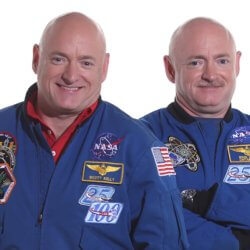



Where does this leave us? Certainly, there will be demographic sensitivities as part of any official program launch. We will also need to amass more evidence in the interim to support or refute this idea of social disposition and space travel. Also far from clear is a true association of genetics and extro/introversion, which could leave future long-term space mission planning dependent upon using psychosocial questionnaires, candidate self-disclosures and psychological assessments in the absence of a rigorous method to biologically screen the astronauts for optimal behaviorial characteristics.
And, if it turns out that there is a true genetic basis for extroversion, and future long-run space missions use that knowledge to reduce its impact as a potential risk factor, they could unintendedly select-out a portion of the genetic diversity of Earth’s population for future colonizations. In other words, the space travelers best suited to get us to where we want to go may not be the best choice to populate our new colonies. What seemed like science fiction only two decades ago, I now find myself writing about with a very real probability.
Ben Locwin, PhD, MBA is a Contributor to the Genetic Literacy Project and is an author of a wide variety of scientific articles for books and magazines. He is also a researcher and consultant for a variety of industries including behavioral and psychological, food and nutrition, pharmaceutical, and academic. Follow him at @BenLocwin.