Epigenetics may explain Neanderthals’ extinction

Late last year, scientistsย unveiled the complete genomeย of a femaleย Neanderthalย whose 130,000-year-old toe bone had been found in a cave in Siberia. As it turned out, her sequence of some 3 billion DNA letters was not all that much different from mine or yours. The researchers identified only about 35,000 places in the genome where all modern humans differ from our ancient hominid cousins. And only 3,000 of those were changes that could impact how genes are turned on and off.

But if our DNA is so similar to Neanderthals, why were they soโ€ฆdifferent? They were brawnier than our ancestors, with short but muscular limbs, and big noses and eyebrows. Theyย didnโ€™t carry certain genetic variantsย that put modern humans at risk of autoimmune disease and celiac disease. And although they lived alongside our ancestors as the latter migrated into Europe, for some reason the Neanderthals didnโ€™t survive.

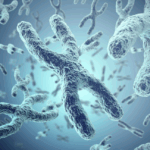
Part of the answer undoubtedly lies in the way the Neanderthal genome actually worked โ€” a complex process that depends not only on the underlying DNA code, but on the way genes get turned on and off. DNA molecules are constantly interacting with chemicals that control which genes can be activated. For example, a methyl group (one carbon and three hydrogen atoms) can latch on to the genome and help switch on or off the expression of nearby genes.

Read the full, original story: From ancient genomes to ancient epigenomes


{{ reviewsTotal }}{{ options.labels.singularReviewCountLabel }}
{{ reviewsTotal }}{{ options.labels.pluralReviewCountLabel }}
{{ options.labels.newReviewButton }}
{{ userData.canReview.message }}

Related Articles

Infographic: Global regulatory and health research agencies on whether glyphosate causes cancer

Infographic: Global regulatory and health research agencies on whether glyphosate causes cancer

Does glyphosateโ€”the world's most heavily-used herbicideโ€”pose serious harm to humans? Is it carcinogenic? Those issues are of both legal and ...

Most Popular

Screenshot 2025-08-25 203032
Mazzengaโ€™s 20-year old muscles: How a still-going-strong 92-year old sprinter wins every race she enters
Screenshot-2026-06-08-at-10.19.30-AM
โ€˜Naturalโ€™ wellness supplements linked to liver injury
Credit: ACSH
Viewpoint: Who and whatโ€™s to blame for the surge in vaccine-preventable diseases?
ChatGPT-Image-May-28-2026-12_56_54-PM
Viewpoint: Vaccines' non-specific effects? The โ€˜shoddyโ€™ Danish couple whose 'researchโ€™ inspires RFK, Jr.โ€™s health delusion
Screenshot-2026-06-05-at-2.12.30-PM
Some plants can poison you. So how did humans figure out what is safe to eat?
Screen Shot at AM
Facts & Fallacies Podcast: Right-wing politics bad for your health? Separating speculation from science
ChatGPT-Image-Jun-9-2026-03_24_05-PM
Misinformed parents overdosing children with Vitamin A to fight measles
Screenshot 2025-07-30 at 10.48
Can gene editing eliminate Down syndrome? Scientists have done it in lab-grown cells
ChatGPT Image Jun 3, 2026, 03_14_43 PM
Viewpoint: How Earthjustice became the poster child for the abuse of special interest activist funding
Screenshot-2026-06-05-at-1.44.09-PM
Viewpoint: Scientists have scrapped the worst-case climate scenario. Is that proof that climate change is a hoax, as Trump claims?
ChatGPT-Image-Mar-10-2026-01_39_01-PM
Viewpointโ€”โ€œMiracle moleculeโ€ debunked: Why acemannan supplements donโ€™t work
ChatGPT-Image-Jun-9-2026-11_54_59-AM
Why weight-loss drugs might be reducing cancer rates and making treatment more effective
Screenshot-2026-06-08-at-11.05.51-AM
Can vaping lead to cancer? New โ€˜association studyโ€™ raises questions of โ€œlinks"
glp menu logo outlined

Get news on human & agricultural genetics and biotechnology delivered to your inbox.