Re-enacting history of evolution in the laboratory

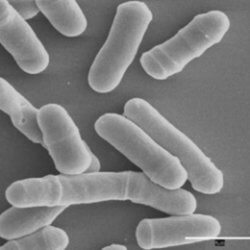
In his fourth-floor lab at Harvard University, Michael Desai has created hundreds of identical worlds in order to watch evolution at work. Each of his meticulously controlled environments is home to a separate strain of baker’s yeast. Every 12 hours, Desai’s robot assistants pluck out the fastest-growing yeast in each world — selecting the fittest to live on — and discard the rest. Desai then monitors the strains as they evolve over the course of 500 generations. His experiment, which other scientists say is unprecedented in scale, seeks to gain insight into a question that has long bedeviled biologists: If we could start the world over again, would life evolve the same way?

Many biologists argue that it would not, that chance mutations early in the evolutionary journey of a species will profoundly influence its fate. “If you replay the tape of life, you might have one initial mutation that takes you in a totally different direction,” Desai said, paraphrasing an idea first put forth by the biologist Stephen Jay Gould in the 1980s.

Desai’s yeast cells call this belief into question. According to results published
in Science in June, all of Desai’s yeast varieties arrived at roughly the same evolutionary endpoint (as measured by their ability to grow under specific lab conditions) regardless of which precise genetic path each strain took. It’s as if 100 New York City taxis agreed to take separate highways in a race to the Pacific Ocean, and 50 hours later they all converged at the Santa Monica pier.

Read full, original article: If the World Started Over, Would Life Evolve the Same Way?

Related Articles

Infographic: Global regulatory and health research agencies on whether glyphosate causes cancer

Infographic: Global regulatory and health research agencies on whether glyphosate causes cancer

Does glyphosate—the world's most heavily-used herbicide—pose serious harm to humans? Is it carcinogenic? Those issues are of both legal and ...

Most Popular

Screenshot-2026-11-17-at-12.18.09-PM
Challenging glyphosate fear-mongering: Statewide Nebraska study finds no link between weedkiller use and non-Hodgkin lymphoma
Wholewheat Bread and Yogurt Ingredients
Viewpoint: RFK Jr.’s reckless good intentions: Do we really want to ban whole-wheat bread and yogurt?
Screenshot-2026-11-18-at-12.42.18-PM
Viewpoint: MAHA/MAGA/RFK Jr. health disinformation crackup is coming. Beware as Bhattacharya, Makary, Prasad, and Oz seek lucrative second acts
Soybean Harvest in Cupped Hands
30 years of GMO farming: Defying cynics, we’ve had larger harvests, lower costs, and $385 billion in added global farmer income
Grayscale Collage of Protest and Choice
Viewpoint: Medical Freedom movement? A sobering look at RFK Jr.’s disastrous two years as our health and food czar 
Screenshot-2026-11-16-at-2.37.32-PM
30 years of GMO farming: Is the boom in glyphosate and glufosinate use harming the environment? Data show they’re the most sustainable choice
ChatGPT-Image-Mar-10-2026-01_39_01-PM
Viewpoint—“Miracle molecule” debunked: Why acemannan supplements don’t work
Neon-AI-Globe-Network
Viewpoint: The three biggest threats posed by AI hyper-intelligence
Screenshot-2026-11-19-at-7.54.57-PM
European General Court sides with scientists, dismisses activist claims that glyphosate is toxically dangerous
Screenshot-2026-11-17-at-10.41.13-AM
Viewpoint: The cost of resurgence: Let’s not forget how difficult it was to wipe out measles in the U.S.
Screenshot-2026-11-19-at-11.15.27-AM
'It's easier to open a surrogacy agency than a nail salon in most states'
Facebook Icons with No Syringe and Thumbs-Up
RFK Jr.’s science-twisting anti-vaccine group Children’s Health Defense is back on Facebook and Instagram after Meta inexplicably lifts its ban
glp menu logo outlined

Get news on human & agricultural genetics and biotechnology delivered to your inbox.