Artic Apple’s gene-silencing tech presents new regulation challenges

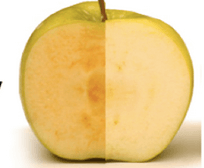
Biotechnology is heading into the Garden of Eden. A Canadian corporation, Okanagan Specialty Fruits, is offering a genetically engineered apple that doesn’t brown after it’s bruised or sliced. The U.S. Department of Agriculture appears to be on the brink of deregulating the so-called “Arctic” apple, allowing it to be planted and sold without any further oversight.

Whatever challenges it poses to the apple industry, the Arctic apple raises a much larger issue for the public: how to evaluate the risks of the next big wave of genetically engineered crops and foods.

Does the Arctic apple pose risks to health and the environment? As of right now, the government doesn’t know. That’s because the Arctic apple is the product of complex new genetic engineering techniques that the USDA is just learning how to evaluate.

Genetic engineers can now use gene silencing to dial back the expression of genes. The Arctic apple has been engineered to silence the polyphenol oxidase (PPO) enzymes responsible for browning in apple flesh after the fruit is cut.

Is there any reason to worry about turning genes off? Yes. RNA manipulations may end up turning down, or off, genes other than those that were targeted.
The FDA and the USDA need new protocols for evaluating these complex new technologies. Modern genomics research has provided scientists with powerful tools to identify nontarget genes that might be turned off by gene silencing.

Last January, a U.S. Environmental Protection Agency committee concluded that the EPA’s tried-and-true methods for evaluating chemical pesticides would not work to assess the risks of gene silencing used in pesticides and that new approaches, including genomics, were needed.

Read full, original article: Gene-Silencing and the ‘Arctic’ Apple (Op-Ed)

Related Articles

Infographic: Global regulatory and health research agencies on whether glyphosate causes cancer

Infographic: Global regulatory and health research agencies on whether glyphosate causes cancer

Does glyphosate—the world's most heavily-used herbicide—pose serious harm to humans? Is it carcinogenic? Those issues are of both legal and ...

Most Popular

Screenshot-2026-11-17-at-12.18.09-PM
Challenging glyphosate fear-mongering: Statewide Nebraska study finds no link between weedkiller use and non-Hodgkin lymphoma
Wholewheat Bread and Yogurt Ingredients
Viewpoint: RFK Jr.’s reckless good intentions: Do we really want to ban whole-wheat bread and yogurt?
Screenshot-2026-11-18-at-12.42.18-PM
Viewpoint: MAHA/MAGA/RFK Jr. health disinformation crackup is coming. Beware as Bhattacharya, Makary, Prasad, and Oz seek lucrative second acts
Grayscale Collage of Protest and Choice
Viewpoint: Medical Freedom movement? A sobering look at RFK Jr.’s disastrous two years as our health and food czar 
Soybean Harvest in Cupped Hands
30 years of GMO farming: Defying cynics, we’ve had larger harvests, lower costs, and $385 billion in added global farmer income
Screenshot-2026-11-16-at-2.37.32-PM
30 years of GMO farming: Is the boom in glyphosate and glufosinate use harming the environment? Data show they’re the most sustainable choice
Neon-AI-Globe-Network
Viewpoint: The three biggest threats posed by AI hyper-intelligence
ChatGPT-Image-Mar-10-2026-01_39_01-PM
Viewpoint—“Miracle molecule” debunked: Why acemannan supplements don’t work
Screenshot-2026-11-17-at-10.41.13-AM
Viewpoint: The cost of resurgence: Let’s not forget how difficult it was to wipe out measles in the U.S.
Screenshot-2026-11-19-at-7.54.57-PM
European General Court sides with scientists, dismisses activist claims that glyphosate is toxically dangerous
Screenshot-2026-11-19-at-11.15.27-AM
'It's easier to open a surrogacy agency than a nail salon in most states'
glp menu logo outlined

Get news on human & agricultural genetics and biotechnology delivered to your inbox.