Uganda’s GMO products ready for release in 2016 with no law yet in place

In this quest for improved varieties with the capacity to give high yields and other desired attributes such as drought tolerance and disease resistance, one of the technologies which has come into use is modern biotechnology, and Ugandan scientists have not been left out.

Currently, the scientists are developing genetically modified (GM) products at confined field trials. They are testing bananas for resistance to banana bacterial wilt (BBW), black sigatoka, nematodes as well as biofortifying banana with micro-nutrients with iron and Vitamin A.

Other crops under tests include cassava against cassava mosaic virus and cassava brown streak, maize for tolerance in drought conditions, rice varieties that grow in nitorgen-deprived soils, sweet potato against the potato feathery mottle virus, and cotton against bollworm.

However, it is a requirement that for GM products to be rolled out to farmers, there must be an existing biotechnology and biosafety law.

Still at the Bill stage, the law to enforce biotechnology and biosafety is before parliament for debate and is proving to be very controversial with many legislators, mostly arguing against it with hardly any evidence to support their views.

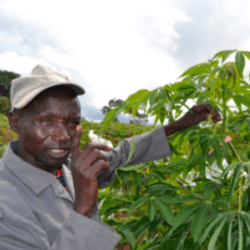
However, scientists who have been conducting research say with or without the law in place, in next two to three years, their products will be ready for release to farmers.

Dr Yona Baguma, deputy director general, Naro, said that by 2016, crops like the transgenic insect-resistant maize and BBW-resistant banana will be ready for release. In 2017, the list will be Bt-maize, stacked with resistance to stem borer and drought tolerance, Vitamin A- and iron-enrichened banana, virus-resistant cassava and nitrogen-efficient rice.

{{ reviewsTotal }}{{ options.labels.singularReviewCountLabel }}
{{ reviewsTotal }}{{ options.labels.pluralReviewCountLabel }}
{{ options.labels.noReviewsLabel }}
{{ options.labels.newReviewButton }}
{{ userData.canReview.message }}

Related Articles

Infographic: Global regulatory and health research agencies on whether glyphosate causes cancer

Infographic: Global regulatory and health research agencies on whether glyphosate causes cancer

Does glyphosate—the world's most heavily-used herbicide—pose serious harm to humans? Is it carcinogenic? Those issues are of both legal and ...

Most Popular

ChatGPT-Image-Jul-17-2026-12_42_10-PM
Viewpoint: RFK, Jr. is setting up a panel to compensate people who claim they were injured by a COVID vaccine–no proof needed 
Screenshot-2026-07-17-at-12.55.22-PM
Viewpoint: Is bagged salad a dangerous science experiment? Challenging an online misinformation campaign
Screenshot-2026-07-01-at-2.49.48-PM
Dr. TikTok and male fertility: Viral claims tout GLP-1 drugs as fertility boosters. What does the science say?
ChatGPT-Image-Mar-10-2026-01_39_01-PM
Viewpoint—“Miracle molecule” debunked: Why acemannan supplements don’t work
ChatGPT-Image-Jul-6-2026-02_25_26-PM
40 million Americans take glucosamine. If you have memory loss, it could accelerate cognitive decline.
reverse-aging
Rapamycin: Here’s the skinny on the anti-aging pill that increases the lifespan—of mice by 10%
UK scientists support loosening restrictions limiting embryo research
Are we edging closer to precisely, and safely, editing human embryos?
vitamin k refuse genai
More and more babies are developing uncontrollable bleeding—linked directly to vaccine deniers' rejection of vitamin K shots
Screenshot 2026-07-11 094410
Growing animal muscle and fat cells inside rice grains and calling it beef: One of numerous genetically engineered products shaking up our ecosystem
px-Minced-beef-meat-cow-cattle
Can we trust Trump’s USDA to accurately report farm data? Beef export numbers suggest ‘no’.
ChatGPT-Image-Jul-9-2026-02_39_22-PM
Viewpoint: Polyphenols or NAD+ supplements to combat aging: No, Gwenyth Paltrow and followers, don’t waste your money.
ma art page image
‘It’s time to have a conversation’: Once adamantly opposed to human gene editing, UK’s The Guardian acknowledges likely benefits
ChatGPT-Image-Jun-17-2026-03_29_08-PM
Viewpoint: What’s the impact of the U.S. abandoning support for global health?
afb-a-b
As the EU loosens restrictions on agricultural gene editing, it remains years behind the rest of the world on equally-safe GMO foods
glp menu logo outlined

Get news on human & agricultural genetics and biotechnology delivered to your inbox.