


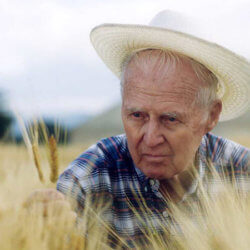
The green revolution transformed global agriculture. Through selective breeding, Norman Borlaug, an American biologist, created a dwarf variety of wheat that resulted in more grain per acre. Similar work at the International Rice Research Institute (IRRI) in the Philippines dramatically improved the productivity of the grain that feeds nearly half the world.
From the 1960s through the 1990s, yields of rice and wheat in Asia doubled. Even as the continent’s population increased by 60 percent, grain prices fell, the average Asian consumed nearly a third more calories, and the poverty rate was cut in half.
To keep doing that between now and 2050, we’ll need another green revolution. One vision is high-tech, with a heavy emphasis on continuing Borlaug’s work of breeding better crops, but with modern genetic techniques. The signature technology of this approach—and the one that has brought both success and controversy to Monsanto—is genetically modified, or GM, crops.
But Monsanto is not the only organization that believes modern plant genetics can help feed the world. At the International Rice Research Institute only a few varieties are GM crops, in the sense that they contain a gene transferred from a different species.
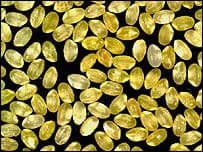



The institute’s entire breeding operation has been accelerated by modern genetics. For decades IRRI breeders patiently followed the ancient recipe: Select plants with the desired trait, cross-pollinate, wait for the offspring to reach maturity, select the best performers, repeat. Now there’s an alternative to that painstaking process. In 2004 an international consortium of researchers mapped the entire rice genome, which comprises some 40,000 individual genes. Since then, researchers around the world have been pinpointing genes that control valuable traits and can be selected directly.
Read full, original article: The Next Green Revolution





















