Only a few genes separate human and animal intelligence

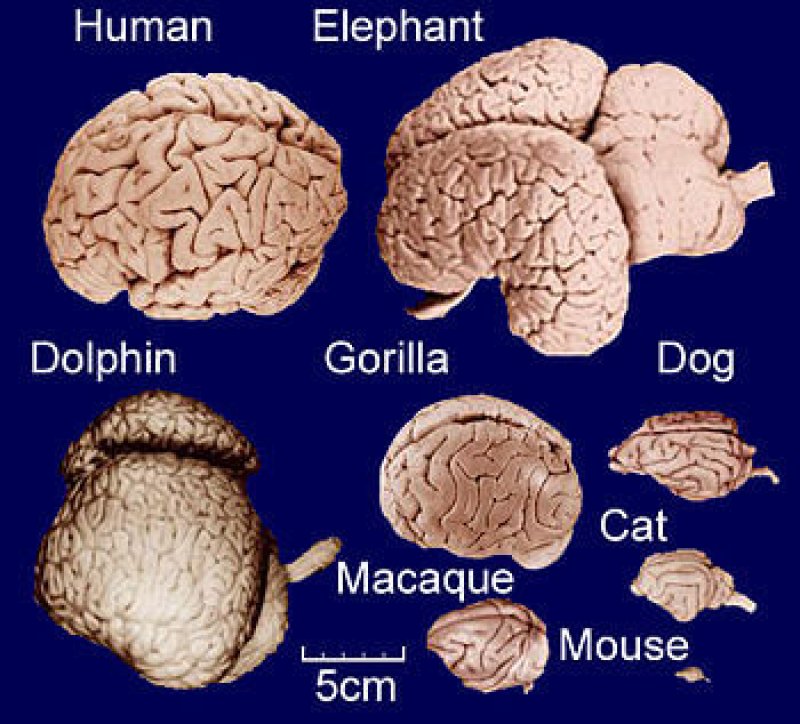
i e be d b efbf a d e c d ComparitiveBrainSize

Some parts of our genome have evolved at particularly high speed, quickly accumulating mutations that distinguish them from their counterparts in chimps. You can find these regions by comparing different mammals and searching for stretches of DNA that are always the same, except in humans. Scientists started identifying these “human-accelerated regions” or HARs about a decade ago.

It’s tempting to think these fast-evolving enhancers, by deploying our genes in new formations, drove the evolution of our most distinguishing traits, like our opposable thumbs or our exceptionally large brains. There’s some evidence for this. One HAR controls the activity of genes in the part of the hand that gives rise to the thumb. Many others are found near genes involved in brain development, and at least two are active in the growing brain. So far, so compelling—but what are these sequences actually doing?

To find out, J. Lomax Boyd from Duke University searched a list of HARs for those that are probably enhancers. One jumped out—HARE5. It had been identified but never properly studied, and it seemed to control the activity of genes involved in brain development. The human version differs from the chimp version by just 16 DNA ‘letters’. But those 16 changes, it turned out, make a lot of difference.

Embryonic mice start building their brains on their ninth day of life, and HARE5 becomes active shortly after. The team saw that the human version is more strongly active than the chimp one, over a larger swath of the brain, and from a slightly earlier start.

Read full, original article: Fast-Evolving Human DNA Leads to Bigger-Brained Mice

{{ reviewsTotal }}{{ options.labels.singularReviewCountLabel }}
{{ reviewsTotal }}{{ options.labels.pluralReviewCountLabel }}
{{ options.labels.newReviewButton }}
{{ userData.canReview.message }}

Related Articles

Infographic: Global regulatory and health research agencies on whether glyphosate causes cancer

Infographic: Global regulatory and health research agencies on whether glyphosate causes cancer

Does glyphosate—the world's most heavily-used herbicide—pose serious harm to humans? Is it carcinogenic? Those issues are of both legal and ...

Most Popular

Screenshot-2026-05-01-at-1.29.41-PM
Viewpoint: What happens when whole grains meet modern food manufacturing? Labels don’t tell the whole story.
ChatGPT-Image-Mar-27-2026-11_47_30-AM-2
FDA’s expedited drug reviews are hailed in some quarters but other approval practices are problematic
ChatGPT-Image-Apr-13-2026-02_20_22-PM
Viewpoint: Misinformation infodemic? Why assessing evidence is so challenging 
Farmers can talk to plants
Farmers are a major source of misinformation—about farming
S
As vaccine rejectionism spreads, measles may be taking a more dangerous turn
What explains Homo sapiens’ huge brains? Ancient climate change played a role
Viewpoint: Internal White House documents detail administration’s strategy to undermine climate science
Screenshot-2026-04-20-at-2.26.27-PM
Viewpoint — Food-fear world: The latest activist scientists campaign: Cancer-causing additives
bigstock opioids on chalkboard with rol
GLP podcast: 'Safe injection sites': enabling drug addiction or saving lives?
ChatGPT-Image-May-6-2026-03_41_05-PM
‘Protecting the integrity of science’: Kennedy’s FDA blocks release of taxpayer-funded studies finding COVID and shingles vaccines safe
Screenshot 2026-05-06 at 2.19
Vaccine shootout at the CDC 
circular-bioeconomy-should-focus-on-sustainable-wellbeing
GLP podcast: What's wrong with 'doomsday' environmentalism? It's false.
ChatGPT-Image-May-7-2026-11_28_04-AM-2
‘Conflict entrepreneurs’ are driving disinformation and shaping public opinion
Screenshot-2026-05-06-at-2.07.43-PM
Manufacturing a conspiracy: The timeline of how  the White House embraced the fringe claim that scientists are being mysteriously murdered
Screenshot-2026-04-12-135256
Bixonimania: The fake disease scam that AI swallowed whole

Sorry. No data so far.

glp menu logo outlined

Get news on human & agricultural genetics and biotechnology delivered to your inbox.