What do ants and your brain have in common?

Each of the brain’s 86 billion neurons can be connected to many thousands of others. When a neuron fires, it sends a signal to nearby neurons that changes the probability that they will also fire. Some neurons are excitatory, and increase the chances that other neurons will fire. Others are inhibitory, and reduce this chance.

“The only way the upstream neuron knows that the second neuron fired is that it produces a feedback spike. This helps the synapse make the decision to get stronger,” says Dmitri Chklovskii, a neuroscientist at the Howard Hughes Medical Institute. Feedback is where the similarity with ants begins. “Feedback loops are everywhere on every level. They allow the system to realize that what it used to be doing isn’t working any more, and to try something new.”

Both ants and brains actually rely on two types of feedback, held in a delicate balance: negative (or inhibitory) feedback, and positive (or excitatory) feedback. “Negative feedback tends to cause stability. Positive feedback tends to cause runaway behavior,” said Tomer Czaczkes, an ant biologist at the University of Regensburg in Germany. “These two simple rules make something very powerful.”
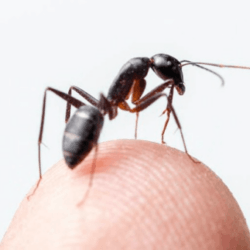
The foraging response to food is an example of a positive feedback loop, and familiar to anyone who has had a picnic ruined by a line of ants marching in single file toward their meal. But knowing when not to leave the nest and risk predation and dehydration may be just as important as knowing when to take advantage of a windfall of seeds.

The GLP aggregated and excerpted this blog/article to reflect the diversity of news, opinion and analysis. Read full, original post: Ants Swarm Like Brains Think

Related Articles

Infographic: Global regulatory and health research agencies on whether glyphosate causes cancer

Infographic: Global regulatory and health research agencies on whether glyphosate causes cancer

Does glyphosate—the world's most heavily-used herbicide—pose serious harm to humans? Is it carcinogenic? Those issues are of both legal and ...

Most Popular

Screenshot-2026-11-17-at-12.18.09-PM
Challenging glyphosate fear-mongering: Statewide Nebraska study finds no link between weedkiller use and non-Hodgkin lymphoma
Wholewheat Bread and Yogurt Ingredients
Viewpoint: RFK Jr.’s reckless good intentions: Do we really want to ban whole-wheat bread and yogurt?
Screenshot-2026-11-18-at-12.42.18-PM
Viewpoint: MAHA/MAGA/RFK Jr. health disinformation crackup is coming. Beware as Bhattacharya, Makary, Prasad, and Oz seek lucrative second acts
Soybean Harvest in Cupped Hands
30 years of GMO farming: Defying cynics, we’ve had larger harvests, lower costs, and $385 billion in added global farmer income
Screenshot-2026-11-16-at-2.37.32-PM
30 years of GMO farming: Is the boom in glyphosate and glufosinate use harming the environment? Data show they’re the most sustainable choice
Grayscale Collage of Protest and Choice
Viewpoint: Medical Freedom movement? A sobering look at RFK Jr.’s disastrous two years as our health and food czar 
Neon-AI-Globe-Network
Viewpoint: The three biggest threats posed by AI hyper-intelligence
ChatGPT-Image-Mar-10-2026-01_39_01-PM
Viewpoint—“Miracle molecule” debunked: Why acemannan supplements don’t work
Screenshot-2026-11-17-at-10.41.13-AM
Viewpoint: The cost of resurgence: Let’s not forget how difficult it was to wipe out measles in the U.S.
Screenshot-2026-11-19-at-7.54.57-PM
European General Court sides with scientists, dismisses activist claims that glyphosate is toxically dangerous
Screenshot-2026-11-19-at-11.15.27-AM
'It's easier to open a surrogacy agency than a nail salon in most states'
Stormlit Portrait Over Golden Mountains
Searching for life where no one thought to look: A renowned astrophysicist’s seemingly quixotic quest to explore Venus’s clouds
Screenshot 2026-07-29 at 10.40
The COVID vaccine turbo cancer scare is back. Science still proves it’s wrong.
glp menu logo outlined

Get news on human & agricultural genetics and biotechnology delivered to your inbox.