Shoppers question validity of organic labels

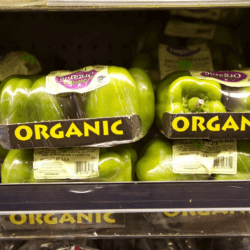
Organic products are all over grocery store shelves and menus, but consumers don’t have much faith in the “o” word, according to a study from market research firm Mintel. More than half of shoppers say they believe that labeling something as organic is “an excuse to charge more,” and more than one-third say they believe “organic” is just marketing jargon “with no real value or definition.”

The word has, however, had a strict definition overseen by the federal government since 2002. Back then, fresh off the heels of public debate about the term, a report on Oregon shoppers found that just 7 percent had no trust in the label. “It’s about an erosion of confidence,” says Billy Roberts, an analyst with Mintel, which surveyed 2,002 U.S. adults for the new study. “It’s a question of whether the whole supply chain is delivering on an organic promise.”

Roberts says that highly visible food recalls, along with a perennial distrust of big corporations and the government, has led people to feel less certain about what they’re getting when they buy something at the local grocery store. The entrance of bigger players into the organic scene—companies such as Wal-Mart, Target and PepsiCo have all been expanding their selections in recent years—has also driven down prices, Roberts notes, “and those high prices were almost a certain reassurance to consumers that what they were buying was what had been promised to them.”
The GLP aggregated and excerpted this blog/article to reflect the diversity of news, opinion and analysis. Read full, original post: Why Consumers Don’t Trust ‘Organic’ Labels

Related Articles

Infographic: Global regulatory and health research agencies on whether glyphosate causes cancer

Infographic: Global regulatory and health research agencies on whether glyphosate causes cancer

Does glyphosate—the world's most heavily-used herbicide—pose serious harm to humans? Is it carcinogenic? Those issues are of both legal and ...

Most Popular

Screenshot-2026-11-17-at-12.18.09-PM
Challenging glyphosate fear-mongering: Statewide Nebraska study finds no link between weedkiller use and non-Hodgkin lymphoma
Screenshot-2026-11-16-at-2.37.32-PM
30 years of GMO farming: Is the boom in glyphosate and glufosinate use harming the environment? Data show they’re the most sustainable choice
Soybean Harvest in Cupped Hands
30 years of GMO farming: Defying cynics, we’ve had larger harvests, lower costs, and $385 billion in added global farmer income
ChatGPT-Image-Mar-10-2026-01_39_01-PM
Viewpoint—“Miracle molecule” debunked: Why acemannan supplements don’t work
Stormlit Portrait Over Golden Mountains
Searching for life where no one thought to look: A renowned astrophysicist’s seemingly quixotic quest to explore Venus’s clouds
Screenshot-2026-11-13-at-10.02.02-AM
Viewpoint: Why it’s such a big deal that under Trump-RFK Jr., the U.S. has lost its ‘measles-free’ status  
Screenshot-2026-11-19-at-7.54.57-PM
European General Court sides with scientists, dismisses activist claims that glyphosate is toxically dangerous
Screenshot-2026-11-09-at-3.01.19-PM
Are Texas data centers killing calves? Debunking viral AI claims
Screenshot 2026-07-29 at 10.40
The COVID vaccine turbo cancer scare is back. Science still proves it’s wrong.
glp menu logo outlined

Get news on human & agricultural genetics and biotechnology delivered to your inbox.