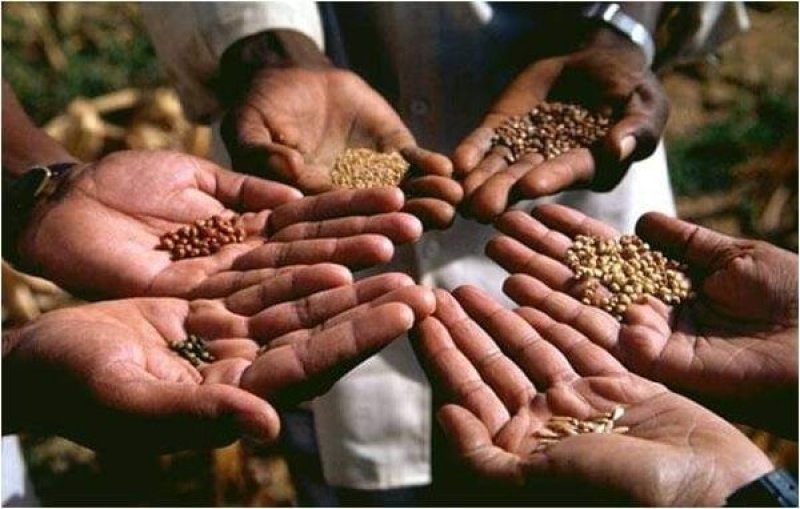
Why seed saving and traditional farming may not be the most sustainable way to farm

adopt a seed

Trying to protect farmers’ rights to save seeds only has an economic importance in low productivity systems where the benefits of specialization haven’t kicked in. By and large modern farmers don’t save seed because it isn’t a good use of their time and it would yield an inferior seed. If the pre-breeder’s rights seeds were so great, they would still be around to save and share.

If saving seeds is an economical use of a farmer’s time, that’s a bad sign. Energy and resources should be invested to help them raise productivity going forward rather than a backward looking approach of trying to preserve traditional farming. The right to save seed should be protected, and it’s hard to imagine instances where it won’t be. There may be improved seeds that come with strings attached, but if farmers don’t find those a fair bargain, they should be able to fall back on seed in the public domain or covered by more permissive agreements that allow for seed saving.

The bottom line is that if farmers are mired in such unproductive farming systems that saving and cleaning old seed is an economical use of their time, that should be seen as a sign that they need access to better infrastructure, risk management, non-predatory credit. It shouldn’t be a call to arms to defend low productivity farming.

But saving seed exerts a strong pull on the imagination of pastoral sentimentalists. There is a very appealing parsimony and self sufficiency associated with saving seeds. But in reality it’s a parsimony and self sufficiency forced by bad circumstance, not embraced through the farmer’s individual agency.

The GLP aggregated and excerpted this blog/article to reflect the diversity of news, opinion and analysis. Read full, original post: The Need to Save Seeds is a Bad Sign

{{ reviewsTotal }}{{ options.labels.singularReviewCountLabel }}
{{ reviewsTotal }}{{ options.labels.pluralReviewCountLabel }}
{{ options.labels.newReviewButton }}
{{ userData.canReview.message }}

Related Articles

Infographic: Global regulatory and health research agencies on whether glyphosate causes cancer

Infographic: Global regulatory and health research agencies on whether glyphosate causes cancer

Does glyphosate—the world's most heavily-used herbicide—pose serious harm to humans? Is it carcinogenic? Those issues are of both legal and ...

Most Popular

Screenshot-2026-05-01-at-1.29.41-PM
Viewpoint: What happens when whole grains meet modern food manufacturing? Labels don’t tell the whole story.
S
As vaccine rejectionism spreads, measles may be taking a more dangerous turn
Screenshot 2026-05-06 at 2.56
Singularity crisis ahead? Can super babies save us from rogue AI geniuses?
Screenshot-2026-05-06-at-2.07.43-PM
Manufacturing a conspiracy: The timeline of how  the White House embraced the fringe claim that scientists are being mysteriously murdered
Screenshot-2026-03-13-at-12.14.04-PM
The FDA wants to make many popular prescription drugs OTC—a great idea. Here’s why it’s unlikely to happen
Screenshot-2026-04-20-at-2.26.27-PM
Viewpoint — Food-fear world: The latest activist scientists campaign: Cancer-causing additives
Screenshot-2026-04-30-at-2.19.37-PM
5 myths about summer dehydration that could damage your health — or even kill you
Screenshot-2026-05-01-at-11.56.24-AM
‘Science moves forward when people are willing to think differently’: Memories of DNA maverick Craig Venter
Screenshot-2026-04-03-at-11.15.51-AM
Paraben panic: How a flawed study, media hype, and chemophobia convinced the public of the danger of one of the safest classes of preservatives
ChatGPT-Image-May-6-2026-03_41_05-PM
‘Protecting the integrity of science’: Kennedy’s FDA blocks release of taxpayer-funded studies finding COVID and shingles vaccines safe
glp menu logo outlined

Get news on human & agricultural genetics and biotechnology delivered to your inbox.