Where did humans get their unique genes from?

The GLP aggregated and excerpted this blog/article to reflect the diversity of news, opinion and analysis. 

The human genome contains between 20,000 and 25,000 genes. Most of these pre-date our species by millions of years, and have counterparts in chimps, mice, flies, yeast, and even bacteria. But some of our genes are ours alone. They are human-specific innovations that arose within the last few million years.

These genes might have contributed to the distinctive traits that make us human, but ironically, they are also very hard to study and often ignored. Many are missing from the reference human genome, which was supposedly “completed” in 2003.

One such unique human gene is HYDIN2. It first appeared around 3.1 million years ago, as a duplicate of an existing gene called HYDIN. During the duplication process, “the head got chopped off and the tail got chopped off,” explains Max Dougherty from the University of Washington. It was as if someone had transcribed a book but neglected the prologue and epilogue.

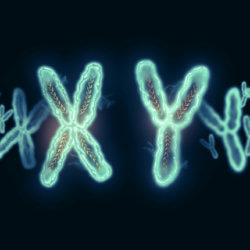
Then, it fused with a copy of another gene, which gave it a new lease on life. The fusion, which Dougherty described at the American Society of Human Genetics 2015 conference, created an entirely original gene, which looks like HYDIN but with a new prologue and a new first chapter. And while HYDIN, like most of our genes, exists in many other animals, its wayward daughter — HYDIN2 — is a human-only innovation.

Read full, original post: Searching for the Genes That Are Unique to Human

Related Articles

Infographic: Global regulatory and health research agencies on whether glyphosate causes cancer

Infographic: Global regulatory and health research agencies on whether glyphosate causes cancer

Does glyphosate—the world's most heavily-used herbicide—pose serious harm to humans? Is it carcinogenic? Those issues are of both legal and ...

Most Popular

Screenshot-2026-11-17-at-12.18.09-PM
Challenging glyphosate fear-mongering: Statewide Nebraska study finds no link between weedkiller use and non-Hodgkin lymphoma
Screenshot-2026-11-16-at-2.37.32-PM
30 years of GMO farming: Is the boom in glyphosate and glufosinate use harming the environment? Data show they’re the most sustainable choice
Soybean Harvest in Cupped Hands
30 years of GMO farming: Defying cynics, we’ve had larger harvests, lower costs, and $385 billion in added global farmer income
ChatGPT-Image-Mar-10-2026-01_39_01-PM
Viewpoint—“Miracle molecule” debunked: Why acemannan supplements don’t work
Stormlit Portrait Over Golden Mountains
Searching for life where no one thought to look: A renowned astrophysicist’s seemingly quixotic quest to explore Venus’s clouds
Screenshot-2026-11-19-at-7.54.57-PM
European General Court sides with scientists, dismisses activist claims that glyphosate is toxically dangerous
Screenshot-2026-11-13-at-10.02.02-AM
Viewpoint: Why it’s such a big deal that under Trump-RFK Jr., the U.S. has lost its ‘measles-free’ status  
BEMT Lotion for Freckled Skin
Burned by FDA bureaucracy: Why Americans waited decades for cancer-preventing sunscreen
Prescription Capsules Scattered on Twenty-Dollar Bills
Facts & Fallacies podcast: America's health care system is broken. A doctor explains how to fix it, Part 2
Screenshot-2026-11-09-at-3.01.19-PM
Are Texas data centers killing calves? Debunking viral AI claims
glp menu logo outlined

Get news on human & agricultural genetics and biotechnology delivered to your inbox.