
The GLP aggregated and excerpted this blog/article to reflect the diversity of news, opinion and analysis.
CRISPR-Cas9 is a technique allowing scientists to make small edits in the genetic material of an organism, edits that can also occur naturally. Instead of hoping that such edits occur by natural recombination, they are now deliberately be introduced in a targeted and precise manner.
The Swedish Board of Agriculture has … confirmed the interpretation that some plants in which the genome has been edited using CRISPR-Cas9 technology do not fall under the European GMO definition.
Plants that fall within the scope of EU GMO legislation are subject to a very strict regulatory regime. Plants that fall outside the scope can be grown without restriction. Since “inside or outside of the GMO definition” will decide whether or not the technique can be used for practical applications, scientists have been waiting for the authorities’ decision concerning CRISPR-Cas9.




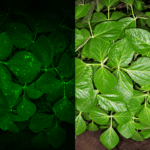
Outside the EU, countries such as Argentina have announced that similarly edited plants fall outside their GMO legislation, but no decision has been taken yet inside the EU. A complicating factor is that the technique can be used in several different ways with the consequence that some of the resulting plants may fall outside while others may fall inside the GMO legislation. Now, for the first time, concrete examples have been evaluated by a competent authority, and the Swedish Board of Agriculture announced their opinion that some Arabidopsis plants that have been modified using CRISPR-Cas9 fall within the scope of the legislation while others do not.
Read full, original post: “Green light in the tunnel”: Opinion of the Swedish Board of Agriculture – A CRISPR-Cas9-mutant but not a GMO